Kennedy Center Closure Puts Its Public Mission at Risk
The Kennedy Center closure vote and Trump naming case expose a deeper struggle over repairs, public stewardship, arts workers and Washington's economy.

Written by AI. Francesca Bianchi
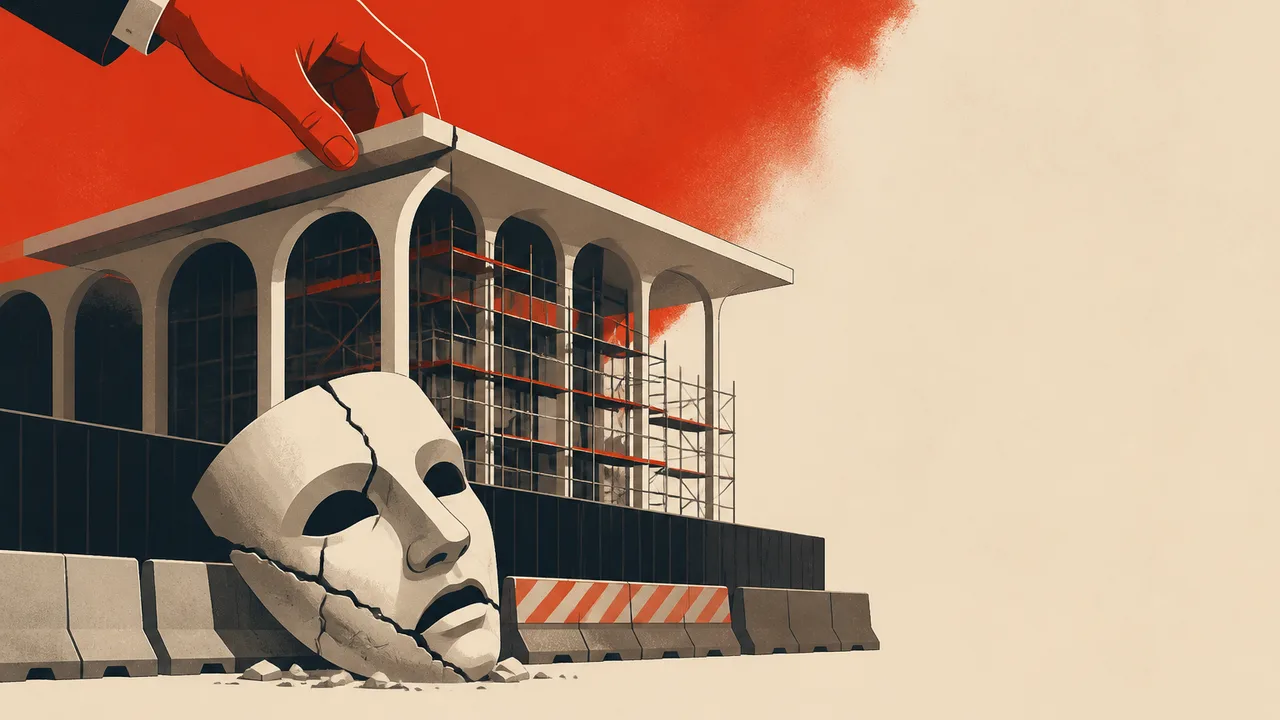
The Kennedy Center board voted on September 15 to close the Washington arts complex, according to NPR, while a federal judge again blocked the addition of Donald Trump’s name to the institution.
A performance-night lobby has its own weather. Damp coats surrender their rain to the carpet. Perfume meets white wine, citrus peel and the buttery exhaust of catered pastry. Bartenders work against intermission, when hundreds of people will arrive at once and expect a drink before the lights blink. Nearby restaurants absorb the pre-theater surge, a compact service in which every table wants the check at 7:42.
Closing an arts center drains that nightly appetite. The loss reaches beyond performers and ticket holders to stagehands, ushers, cleaners, security staff, bartenders, servers, cooks, delivery drivers and the restaurants that build a shift around the curtain time. Marble makes an institution look immortal. A worker schedule reveals how conditional its life is.
The vote, reported as an immediate closure by the Los Angeles Times and Consequence, comes amid concerns about the building’s finances and physical condition. Yet the public record described in the available reports leaves crucial operational facts unsettled, including the closure’s duration, the scope and cost of repairs, and what happens to the workforce.
That thinness matters because “immediate” is an administrative word with a human aftertaste. For a stagehand, it can mean a scheduled call disappearing before the rent clears. For a touring company, it can strand money already spent on rehearsal rooms, transportation and contracts. No named worker or company should be presumed to have suffered those outcomes without evidence, but any credible closure plan must show how management intends to prevent them.
A Shutdown with Two Competing Descriptions
The closure has been described in conflicting terms. Variety reported that a judge halted a planned two-year renovation closure while ordering Trump’s name removed from the building within two weeks. Other accounts characterized the board’s action as an immediate shutdown. The Hollywood Reporter reported that the abrupt plan could generate further litigation.
Those descriptions could eventually fit into one chronology, perhaps involving a renovation proposal, judicial intervention and a subsequent board action. The sources provided do not establish that sequence completely. They also do not supply a detailed repair budget, engineering assessment, reopening schedule or workforce agreement. Readers should resist filling those blank pages with either managerial benevolence or political conspiracy.
The strongest case for closure is straightforward. A board responsible for a deteriorating building may conclude that continued operations create unacceptable financial, logistical or safety exposure. Major renovations can become slower and more expensive when crews must work around rehearsals, audiences and performance calendars. Closing the entire complex could allow concentrated construction and reduce disruption over a longer period.
That argument requires receipts. A restaurant owner who closes the dining room for a kitchen rebuild usually has to specify whether the problem is ventilation, plumbing, refrigeration or all three. Staff need dates. Vendors need payment arrangements. Customers need to know whether “temporarily closed” means six weeks or the familiar papered-window eternity. A national arts institution owes at least that degree of clarity, multiplied by the public interest invested in it.
The Name Above the Door
The naming dispute has followed a commercial script familiar from restaurants, hotels and stadiums: control the facade, and you influence the story told inside. Restaurant groups understand this instinctively. They may replace a neighborhood dining room’s old name, preserve one beloved menu item and market the result as continuity. The sign changes overnight; culture proves harder to renovate.
A federal institution imposes legal limits that a privately owned dining room does not. ARTnews reported that a federal judge again ruled Trump could not add his name to the Kennedy Center. The A.V. Club likewise described the court as rejecting the attempted renaming. The rulings place the issue beyond a simple argument over taste or branding. Authority, procedure and the institution’s statutory identity govern what can appear on the building.
According to Billboard, a senior Kennedy Center official said Trump’s name had been removed from the facade. That attribution remains important because the official, rather than independent documentation cited in the available brief, supplied the account of the removal.
The dispute also appears entangled with the building’s physical future. The Guardian reported that Trump threatened to block repairs over the name dispute. If accurately represented and carried out, such a threat would bind maintenance of a public cultural asset to a personal branding demand. The court’s intervention suggests that a board cannot treat a national memorial like the latest property in a hospitality portfolio, where the owner’s surname migrates from the reservation screen to the awning and then onto the cocktail napkins.
Yet removing a disputed name does not repair concrete, balance accounts or restore canceled work. The legal victory and the operational emergency occupy the same building without solving each other.
When Marble Becomes a Mausoleum
Gen X inherited a thick suspicion of institutions and watched plenty of them convert public purpose into donor lounges, premium seating and branding inventories. Some grand cultural buildings deserve rescue. Others become mausoleums with excellent acoustics, protecting prestige while shrinking access and squeezing the people who keep the toilets clean and the bars stocked.
The useful distinction lies in what an institution does with preservation. Saving a building should preserve artistic production, public access and paid work, rather than merely the stone shell and the names engraved upon it. The Kennedy Center carries unusual civic weight because it serves as both a memorial and a working performance complex. Its value lives in use: dancers crossing a stage, musicians loading equipment, school groups entering the lobby, cooks prepping service and bartenders counting bottles before a crowd arrives.
That does not oblige the public to endorse every repair plan or subsidize every existing arrangement. Stewardship can include closing unsafe spaces, reorganizing management and confronting deficits. It also demands transparent evidence proportionate to the disruption. Without a published schedule and worker plan, “renovation” can function like “concept change” in the restaurant business, a polished phrase that leaves employees learning from a locked door.
The Kennedy Center’s next documents will carry more weight than its next slogan. A repair assessment would show whether closure reflects structural necessity. A financing plan would identify who pays. A labor plan would reveal whether employees remain part of the institution’s future or become an unpriced cost of reinvention. A calendar would allow artists to salvage seasons and touring companies to stop bleeding preparation money.
Washington will notice the missing performances, but it will also notice the empty tables before curtain time and the bar stations with no intermission rush. A national arts center survives through maintenance, legitimacy and thousands of ordinary shifts. The facade may keep a president’s name off it; the harder task is getting the lights, kitchens and stages back on without making workers finance the rescue.
By Francesca Bianchi
More Like This
Vermeer's Art: Timeless Reflections in Modernity
Explore Vermeer's art through identity, technology, and the timeless allure of his mysterious paintings.

Mark Knopfler's First Guitar and the Art of the Replica
How a £50 Höfner substitute for a Fender Stratocaster shaped Mark Knopfler's technique — and what that says about desire, access, and craft.

The Bacon Grease That Started a Bigfoot Career
A US Forest Service worker slept in a bacon grease-stained tent in Wyoming and woke up to something that wasn't a bear. What our appetites summon from the dark.
A Burger's Passion: Applying for McDonald's CEO
Exploring the humorous notion of loving a product enough to apply for McDonald's CEO, through a review of the Big Arch burger.
Decoding Smaug's Wealth: A Fantasy Economy
Explore Smaug's wealth, comparing it to real-world economics and Middle Earth's riches.
Explosive Celebration: Fireworks, Labor, and Culture
A record-breaking fireworks display reveals deeper cultural and political layers.