Jung's Late Bloomer Theory and What It Gets Right
A Jung-inspired video argues that slow starters build deeper lives. Here's a clear-eyed look at what the theory gets right—and what to hold with care.

Written by AI. Ellis Redmond

Photo: AI. Soraya Hadid
There's a video making the rounds right now that I keep thinking about, not because it's groundbreaking psychology, but because it's doing something interesting with an idea that actual psychology supports—and doing it well enough to be worth examining closely.
The video, from the YouTube channel Turn Wiser, is titled The Rarest Personality Type Usually Succeeds Late In Life, Carl Jung Says. It walks through seven signs that you belong to a personality type characterized by childhood outsider feelings, a resistance to easy decisions, a decade of apparent stagnation in your twenties, and an eventual quiet arrival at something that fits. The framing is pointed directly at people who feel behind.
The core argument: "The timeline that tells you when you should have arrived, when you should have figured it out, when you should have become someone—that timeline was never designed for a mind like yours. It was designed for minds that absorb the world, not minds that question it before they can inhabit it."
That's not a throwaway line. That's actually a coherent psychological position, and it's worth taking seriously.
What Jung Actually Said (And What the Video Is Doing With It)
The video leans on two genuine Jungian concepts: individuation and the intuitive psychological function. Both are real. Both are interesting. And both get stretched here in ways worth noticing.
Individuation—Jung's term for the lifelong process of becoming psychologically whole by separating your actual self from the conditioned self the world handed you—is real and well-documented in Jungian literature. It is also genuinely uncomfortable, genuinely slow, and genuinely undervalued by a culture that measures progress in credentials and relationship statuses. The video gets this right: "The people who skip this subtraction, the ones who simply absorb the identity handed to them and run with it—they arrive early, but they arrive hollow."
That's a fair characterization of what Jung observed about people who short-circuit the individuation process. The midlife crisis literature, both clinical and popular, is littered with exactly this profile: people who built the right-shaped life and arrived at 45 to find it fitted someone else.
The intuition piece is a bit wobblier. Jung did identify intuition as one of four psychological functions (alongside thinking, feeling, and sensation), and he did believe some people lead with it heavily. But the video treats intuitive foresight—"seeing the ending before the beginning"—as an almost mystical capacity that these rare personalities simply possess. That's a more romantic reading than Jung's own. For Jung, intuition was a cognitive style, not a sixth sense. It processes information unconsciously and delivers conclusions without visible working—which can feel like prophecy but is actually pattern recognition operating below awareness. That's a meaningful distinction, and collapsing it matters less when you're writing poetry, but more when you're giving people advice about major life decisions.
Still, the underlying point survives the romanticism: some people process decision-relevant information holistically rather than sequentially, and they often get penalized for not being able to articulate their reasoning in real time.
The Tension Worth Naming
Here's what I find genuinely interesting about this video, and where I think curious readers should sit with some productive discomfort.
The seven signs described are, almost without exception, things that a very large number of people will recognize in themselves. Feeling like an outsider in childhood. Asking questions adults couldn't answer. Finding decisions harder than your peers seemed to. Spending your twenties shedding identities rather than accumulating them. Feeling more restored by solitude than drained by it.
These are common human experiences. The video presents them as markers of a rare type.
That's not inherently dishonest—rarity in psychological typology is always relative, and "less common than average" isn't the same as "vanishingly rare." But it creates a particular rhetorical dynamic worth noticing: the video is structured so that almost anyone who feels misunderstood will identify with it. That's partly because the channel is doing good work of articulating genuinely underarticulated experiences. But it's also partly because the frame is designed to be recognizable.
The question isn't whether these experiences are real. They are. The question is whether they cluster into a single rare type with a predictable developmental arc—or whether they're distributed across the population in more varied, messier patterns that don't resolve quite so cleanly into eventual wholeness.
Jung himself would probably be skeptical of any framework that promised a neat arrival. His own account of individuation was a lifelong, never-completed process. The video's ending—"arriving whole," the quiet moment when inner world and outer life align—is more resolution than Jung usually offered.
What the Video Does Right
I don't want to spend too much time on the tensions without acknowledging what the video does genuinely well, because it does several things well.
It correctly identifies that societal timelines are culturally constructed, not psychologically universal. The age by which you're supposed to have a stable career, a partnership, a sense of direction—these vary dramatically across cultures and across history. Treating them as natural benchmarks does real psychological damage to people who don't fit them, and the video pushes back on that with some force.
It also rehabilitates solitude in a way that aligns with research. The idea that solitude is a developmental necessity rather than a symptom is well-supported. Studies on introversion and on the relationship between solitude and creativity (see Ester Buchholz's work, or more recently, Thuy-vy Nguyen's research on solitude and emotional regulation) support the position that extended time alone isn't pathological—it's functional. The video frames this clearly: "Solitude is not the absence of connection. It is the presence of something that crowded environments make impossible to access."
And the subtraction framing for the twenties is, frankly, one of the more useful ways to think about a period that most self-help content treats as pure construction. The idea that you might spend your twenties dismantling rather than building—and that this is legitimate work—is both psychologically honest and genuinely underrepresented in how we talk about young adulthood.
Who This Is For, and Who Should Watch Their Step
If you're someone who's been told you're "too much" or "too slow" or "too selective," and you've internalized that as failure—this video will give you language for something real. That has value. The reframe from behind to differently paced isn't just comfort food; it maps onto actual variation in how people develop and integrate experience.
If you're someone who's using "I'm a deep thinker on a different timeline" to avoid examining whether you're also, say, afraid of commitment or avoiding difficult feedback—the video won't help you with that. It doesn't really distinguish between genuine individuation and well-rationalized avoidance, because that's not what it's for.
That distinction matters. Jung's framework is descriptive, not prescriptive. It describes a process; it doesn't guarantee an outcome. Not every person who struggles in their twenties is building a richer inner world. Some are. Some are stuck. The difference is hard to see from inside, and a 15-minute video that promises "arriving whole" at the end can inadvertently make it harder to tell.
The most honest version of this territory is probably this: some people do develop on longer timescales, for temperamental reasons that are real and worth respecting. The cultural pressure to hit arbitrary benchmarks is genuinely harmful. And also—the process of individuation that Jung described requires active engagement, not just patience. It's not something that happens to you while you wait; it's something you do, often painfully, over years.
The waiting isn't the work. The questioning is.
More Like This
Spotting Bad Dating Advice on Social Media
Discover how social media skews dating advice and learn to find reliable, evidence-based relationship guidance.
The Power of Starting Conversations with 'What'
Discover how asking 'what' instead of 'why' can transform communication and influence.

Schizoid Personality Disorder Inside Your Family
SPD isn't just clinical—it lives inside families. Marcus Obi on what schizoid personality disorder actually looks like when it's someone you love.

Practical Productivity Strategies That Actually Hold Up
A YouTube channel called Simple, Actually argues productivity is about wasting less, not doing more. Here's what the framework gets right—and where it gets complicated.
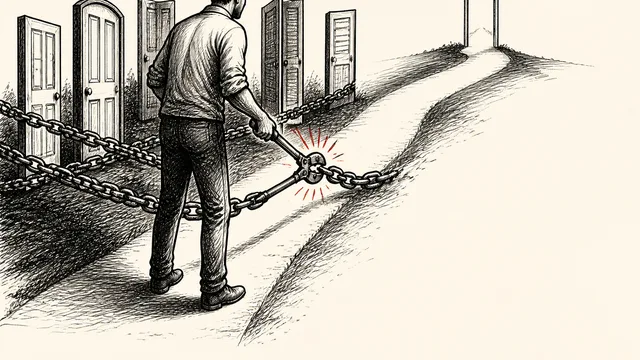
Discipline Is About Removing Options, Not Building Willpower
Mark Manson argues discipline has nothing to do with willpower—it's about eliminating choices. Here's what the research says, and what the theory leaves out.
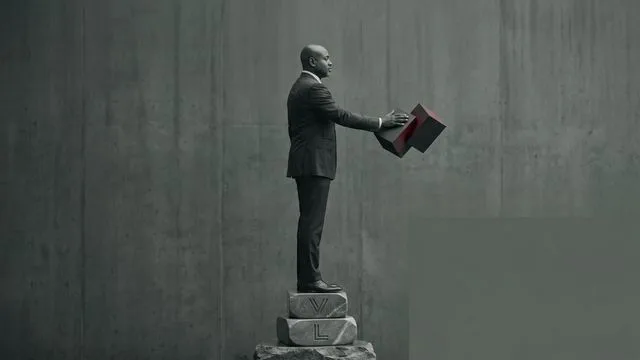
Thoughtful Leadership: Stoute's Key Principles
Explore Steve Stoute's three principles of leadership: core values, embracing conflict, and fearlessness.

Surrender as a Leadership Strategy, Not a Weakness
Dr. Jessica Kriegel argues that letting go of control makes leaders more effective. The research behind the claim is worth taking seriously.

How Geography Traps Russia and China in Old Thinking
Military historian Sarah Paine explains how Russia and China are prisoners of continental-power logic — and what that means for the rest of us.