Schizoid Personality Disorder Inside Your Family
SPD isn't just clinical—it lives inside families. Marcus Obi on what schizoid personality disorder actually looks like when it's someone you love.

Written by AI. Marcus Obi
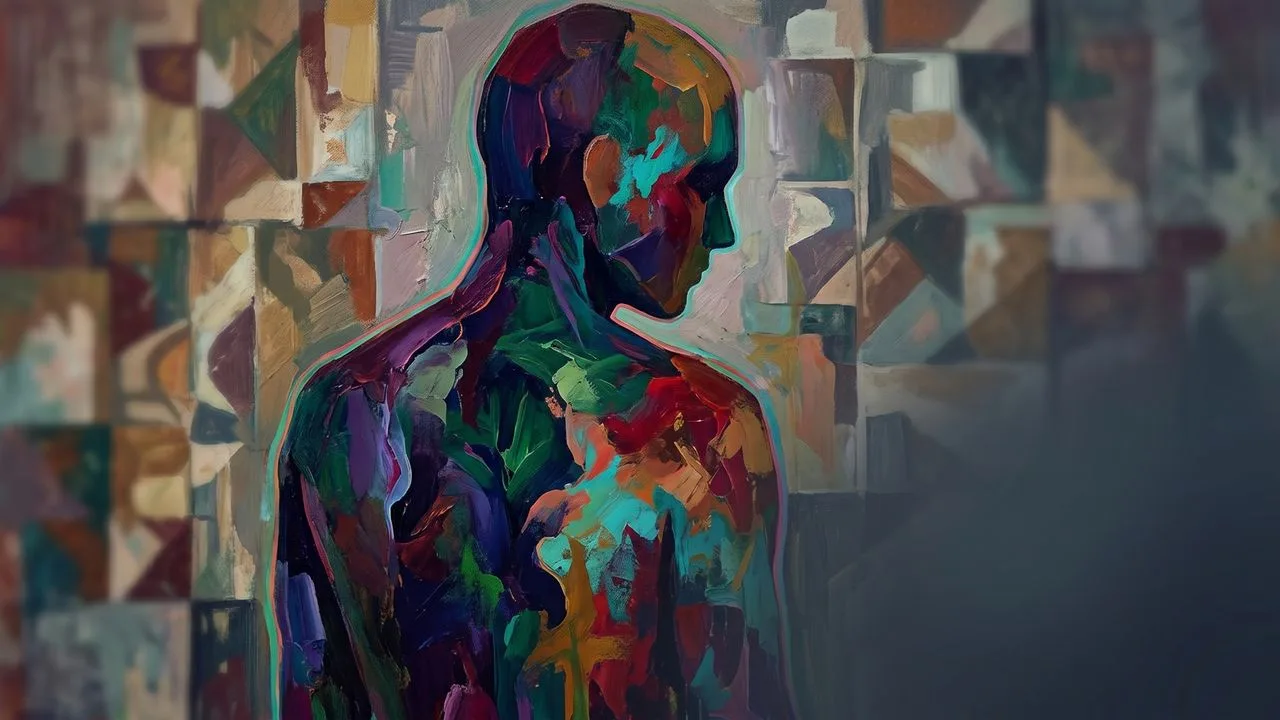
Photo: AI. Yuna Blackwood
My uncle Danny never came to birthday parties. Not just mine — anyone's. He'd send a card, sometimes cash, occasionally a gift that was weirdly perfect because he'd actually been listening the one time you mentioned something you wanted. But he wouldn't show up. And for most of my childhood, the family explanation was simply: Danny's like that. Meaning: cold. Meaning: doesn't care.
It took me embarrassingly long — I'm talking mid-thirties, two kids of my own, and a lot of reading I should have done earlier — to consider that maybe Danny wasn't withholding something. Maybe he just was something, and we'd spent thirty years calling it a character flaw because it made us feel better than calling it a mystery we couldn't solve.
I thought about Uncle Danny a lot while watching a recent Psych2Go video on schizoid personality disorder. It's a good explainer — thorough, compassionate, careful with its caveats. But it's written for a general psychology audience, and the families watching it? We need a slightly different conversation. Because SPD doesn't just live in the person who has it. It lives in the people who love them, and have spent years doing the emotional math wrong.
What it actually is (and what it keeps getting confused with)
Psych2Go does something genuinely useful here, which is to separate schizoid personality disorder from its lookalikes. Social anxiety disorder, introversion, autism spectrum disorder — all of them can look like SPD from the outside. The person is alone. The person is quiet. The person didn't come to your party.
But the why is completely different, and the why is everything.
Someone with social anxiety wants connection desperately and is terrified of being judged. An introvert enjoys connection, just needs to recover from it afterward. Someone on the autism spectrum may want to connect but struggle with the unwritten rules of how. A person with schizoid personality disorder — and this is the part that genuinely reoriented how I think about Danny — isn't afraid, isn't depleted, and isn't confused. As Psych2Go puts it: "Their solitude is not a strategy to cope with fear or exhaustion. It's their natural preferred state of being."
That's the thing I'd been misreading for decades. I assumed Danny's absence was about something — about us, about conflict, about some wound we'd given him that we didn't know how to acknowledge. Turns out I was narrating a story that wasn't there. He just... preferred his own company. Genuinely. Not as a defense mechanism. As a personality.
The DSM-5-TR criteria for SPD require four or more of seven traits, including: no desire for close relationships, almost always choosing solitary activities, little interest in sexual experiences, few pleasurable activities, no close friends or confidants, indifference to praise or criticism, and emotional coldness or flattened affect. (The Psych2Go video draws from the DSM-5-TR directly for this list, and it tracks with what the DSM-5-TR describes — though if you're navigating an actual diagnosis for yourself or someone you love, please go straight to a qualified clinician, not a YouTube video or, for that matter, this article.)
On prevalence: the video cites roughly 3.1% of the general population, a figure that falls within the 1–4.9% range epidemiological reviews typically report, though the specific figure isn't traceable to a single study. It's plausible; treat it as a ballpark rather than a hard number.
The part where families get it wrong
Here's my embarrassing confession. When I finally started learning about SPD, my first instinct was still the parenting-brain instinct: okay, so how do we help them connect more? Like the goal is still connection, we just need a better strategy.
That impulse — and I say this as someone whose entire job is basically to find better strategies for raising humans — is exactly backwards. It's treating SPD like social anxiety with a different cause, which means applying all the same interventions (draw them out! make them feel safe! build the relationship slowly!) and wondering why nothing sticks.
Psych2Go quotes one person who identifies with SZPD, and I keep coming back to it: "People think I'm cold or broken because I don't want to go out, but I'm not broken. I'm just full. My own thoughts, my own world, my own quiet peace is enough."
Full. That word stopped me. Not empty. Not afraid. Not shut down. Full.
I had been reading Danny's absence as depletion — something taken from him that left him unable to show up. The more accurate read is that he was already complete. Our parties weren't what was missing from his life. We just couldn't imagine a life where they weren't missing, so we assumed they must be.
This is also where families with kids bump up against something uncomfortable. Because if your child shows these traits — genuine indifference to peer relationships, contentment in solitude that doesn't look like depression, no apparent distress about their aloneness — the reflex is still to problem-solve. To worry. To call the pediatrician. And sometimes that's right, because some of those presentations are depression, or trauma, or ASD, and those deserve attention. But sometimes the kid is just Danny. And spending years trying to fix something that isn't broken does real damage to both the kid and the relationship.
The video is good on this: "Their solitude is not a problem to be fixed. It's a fundamental part of who they are." Which sounds obvious until you're the parent at the school social event watching your kid sit alone by the fence and feeling your stomach drop.
The hikikomori thread worth pulling
One piece of the Psych2Go video I found genuinely interesting — and underdeveloped — is the comparison to hikikomori, the Japanese phenomenon of near-total social withdrawal, sometimes lasting years. Researchers including Kato, Kanba, and Teo have written about hikikomori as a culturally shaped expression of a more universal psychological pattern (their 2019 paper in Psychiatry and Clinical Neurosciences is cited in the video's description, though I haven't been able to verify the full citation independently).
The SPD-hikikomori comparison is intriguing but not clean — not all people who withdraw into their homes have SPD, and the drivers can be completely different. But it does raise something worth sitting with: how much does culture shape whether a personality like this becomes a lived identity versus a clinical presentation versus a crisis? In a society that pathologizes aloneness, what happens to people who are constitutionally, genuinely fine with it?
I don't have a clean answer. But I think about Danny in a different American moment — one where every unreturned text is a micro-aggression and every cancelled plan requires a text apology — and I wonder how much harder it is now to just be someone who keeps their own company without everyone around them deciding it means something about them.
The one genuine tension the video doesn't quite land
There's a place in the video where Psych2Go says therapy for someone with SPD "should never be about forcing someone to be someone they're not" and that the goal is "to live authentically." I believe that. I also know that the person quoted above — the one who said they're "just full" — specifically mentioned that their therapy was about learning how to explain this to my family without them thinking I hate them.
And that's real work. Not because something's wrong with them. But because they live in a world full of Dannys' families, people like me who read the absence as rejection, who take the unreturned texts personally, who show up to the quiet with worry and repair attempts that aren't needed. Navigating that gap — between what you actually need and what the people who love you can't stop offering — seems genuinely hard, even if you're at peace with yourself.
The "accept yourself" message is right. It just quietly leaves the relational labor in place, and that labor falls disproportionately on the person who needs less from others than others need from them. That's not an argument against self-acceptance. It's just the part that deserves more room than a single sentence.
Danny is in his seventies now. He still sends cards. I've stopped waiting for him to show up.
I think I finally understand: he already has.
More Like This
Lower Your Expectations, Not Your Standards
Dr. K's framework for separating expectations from standards is sharp—and as a stay-at-home dad, I found it uncomfortably close to home.
Eckhart Tolle Says You're Not Who You Think You Are
Eckhart Tolle's 'historical self' vs 'deep eye' framework is either profound or a very elegant dodge. A parenting writer tries to figure out which.
Dr. K Walked Into Chaos and Won the Room
Dr. K's Tiger Belly appearance is a masterclass in social dynamics. Here's what the Charisma on Command breakdown gets right—and what it glosses over.

Why Introverts Intimidate People Without Trying
Psychology explains why introverts come across as intimidating—and it has less to do with their behavior than with how others respond to it.
Your Body Already Knows How to Break the Ice
A movement science writer digs into the viral 'social scripts' video — and finds an embodied cognition argument hiding inside a charisma sales funnel.
The Single-Revenue-Stream Problem in Your Love Life
Anxious attachment isn't just a feeling problem—it's a structural one. The psychology maps onto financial risk theory with unsettling precision.

How to Make a College Tour Actually Matter
College tour season is here. Here's how families can shift from passive observers to active explorers—and why who leads the visit changes everything.
Public Trust in Science Is Fragile and Complicated
Trust in science is eroding—but the data is more complicated than the panic suggests. Here's what's actually happening, and why it matters.