Exploring Time: Physics, Parenting, and Paradoxes
Jim Al-Khalili delves into time's mysteries, from physics to parenting. Discover how our perception of time changes with life's stages.

Written by AI. Marcus Obi

If you're anything like me, you've probably experienced the bizarre elasticity of time. One minute you're changing diapers and the next, your twins are asking complex questions about cosmic mysteries. Time doesn’t just fly when you’re having fun; it’s more like it hits warp speed when you're not looking.
This perception of time's slipperiness isn't just a parental illusion. In his recent interview with Big Think, physicist Jim Al-Khalili explores the mind-bending nature of time, a journey that takes us beyond the everyday and into realms where our intuitive grasp of past, present, and future gets a quantum makeover.
Time: A Parent's (and Physicist's) Nightmare
Al-Khalili tackles the so-called "problem of time" head-on, dissecting it into four key questions. First up, does time flow? As a parent, I can assure you that it feels like a raging river, especially when you're trying to get the kids out the door. But Al-Khalili suggests that this is more of a psychological construct than a physical reality.
He introduces the idea of 'manifest time' versus 'physical time', where manifest time is our subjective experience that things are constantly changing. Meanwhile, in the realm of physics, time is merely a coordinate in the equations—a far cry from the relentless ticking we feel in our day-to-day lives.
Einstein and the Elasticity of Time
Al-Khalili points out how Einstein revolutionized our understanding, showing that time is not absolute. It's relative, affected by speed and gravity. This isn't just theoretical musings; it's the reason our GPS systems work, compensating for the time differences caused by satellites orbiting Earth. "Time is the fourth dimension," Al-Khalili notes, reshaping how we visualize our universe.
This relativity of time is something every parent can relate to. Remember those endless nights with a newborn? Einstein might have said time bends, but try explaining that to a sleep-deprived parent!
The Block Universe: A New Way to See Time
One of Al-Khalili's intriguing proposals is the block universe theory, which suggests all points in time exist simultaneously. Imagine your life as a loaf of sliced bread, where each slice is a moment in time. This concept might make that last interminable family road trip feel a bit more bearable—every second coexists in this cosmic loaf.
And then there's the ongoing debate between eternalism (where past, present, and future coexist) and presentism (only the present is real). As parents, we're often caught between these worlds—living in the ever-demanding present while haunted by past decisions and anxious about future ones.
Lessons from Physics for Life
If time's true nature is elusive, so too is perfect parenting. Much like the universe, mastery is a constantly moving target. Maybe the key is to embrace the chaos, just as physicists embrace the paradoxes of time.
As Al-Khalili explores these mysteries, we're reminded that our perceptions are just a piece of the puzzle. The universe might not be on our schedule, but understanding its rhythms can offer a new perspective on our own chaotic timelines.
In the end, whether you're navigating the cosmos or just trying to keep up with school pickups, remember: time might be relative, but every moment is uniquely yours. So, as I sit with my kids, pondering the vastness of time and space, I’m reminded that maybe, just maybe, the universe is in on the joke.
More Like This

Breaking Free from Limiting Cognitive Scripts
Explore how cognitive scripts impact decision-making and learn strategies to break free from limiting patterns in life, career, and relationships.

Lower Your Expectations, Not Your Standards
Dr. K's framework for separating expectations from standards is sharp—and as a stay-at-home dad, I found it uncomfortably close to home.

Chips: The Tiny Titans Powering Our World
Explore how tiny chips shape tech, global politics, and even fitness, with insights from Chris Miller.
Eckhart Tolle on Mindfulness: Parenting Edition
Explore how Eckhart Tolle's mindfulness concepts can transform parenting and family life.

Living in the Now: Eckhart Tolle's Wisdom for Parents
Discover Eckhart Tolle's insights on mindfulness and presence, and how they relate to parenting.
How Roman Virtues Sparked a Renaissance Revolution
Explore how resuscitating Roman virtues in Renaissance Italy led to cultural shifts and the scientific revolution.

How to Make a College Tour Actually Matter
College tour season is here. Here's how families can shift from passive observers to active explorers—and why who leads the visit changes everything.
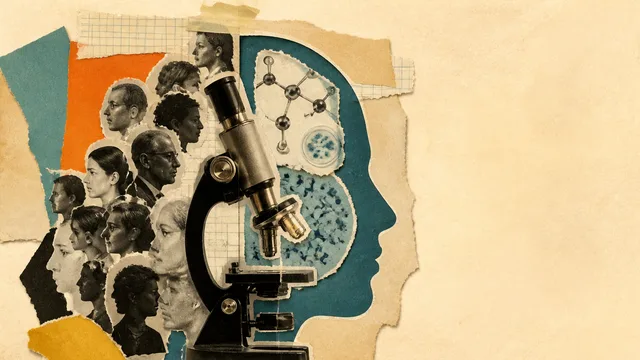
Public Trust in Science Is Fragile and Complicated
Trust in science is eroding—but the data is more complicated than the panic suggests. Here's what's actually happening, and why it matters.