Isle au Haut: The Maine Island Whose Best Feature Is Its Ferry Schedule
Isle au Haut's charm comes from constraint: a ferry timetable, few services, and a working island that asks visitors to plan around it. Here's how to do it right.

Written by AI. Tomas Reyes-Kim
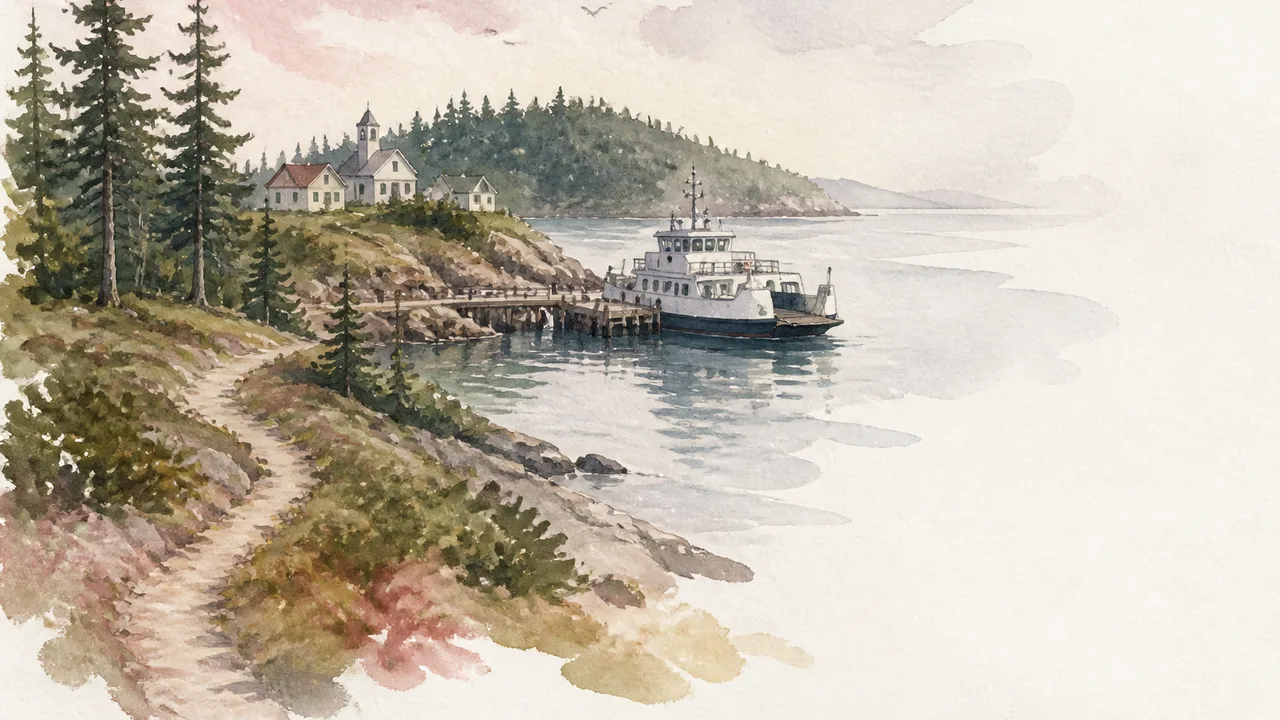
Isle au Haut, off Maine's coast, markets itself on what a captain decides about the sky. The mail boat runs when the weather allows it, and if it doesn't allow it, you're staying put. That's the product. As Travel + Leisure puts it, access to the island is shaped by a ferry timetable, services are limited, and the island's rhythm stays tied to residents, weather, and the working waterfront. In 2026, when half the travel industry is selling frictionless everything, a place whose headline feature is a weather-dependent boat ride feels almost contrarian.
And yet four separate travel outlets ran pieces on it this season, which is how I ended up down this rabbit hole.
What the Island Actually Is
Start with the basics, because the basics do most of the work here. Isle au Haut spans roughly 12 square miles, and according to Islands, the only way on or off is by boat, which the outlet credits with giving the place an "otherworldly, somewhat mysterious vibe." WBZ's sister station WBLM frames it as possibly the one patch of Maine wilderness that has stayed unspoiled largely because very few people ever make the trip.
The island is also a piece of Acadia National Park. Per The Travel, visitors get rocky shorelines, a freshwater lake stretching about a mile, marshes, and wooded uplands, all without the Cadillac Mountain congestion that defines the park's main Mount Desert Island section. Roughly half the island belongs to the park; the other half is a working community of lobstermen and year-round residents, and the ferry is the same boat that serves them.
That last fact is the whole story, so let me say it again with numbers. Acadia overall drew about 3.9 million recreation visits in 2024, per National Park Service data, and almost all of those people never set foot on Isle au Haut. The island portion sees a tiny fraction of that, measured in the thousands per year rather than millions. It is Acadia with a throughput cap, and the cap is a boat.
The Economics of a Capacity Constraint
Here's where my inner spreadsheet gremlin perks up. Scarcity is usually manufactured (see: any "limited edition" anything), but Isle au Haut's scarcity is physical. The ferry has seats. The island has a small number of campsites, a handful of lodging options, and one general store. When capacity is fixed, demand doesn't get absorbed; it gets priced or timed out.
For a budget traveler, this cuts two ways. On one hand, you can't throw money at the problem the way you can at a sold-out hotel in Bar Harbor, because there's nothing to buy. Camping in the island's park section is among the cheapest overnight options in coastal Maine. On the other hand, the small inventory of private lodging means the few beds that exist can command serious rates in July and August, and shoulder season becomes the rational play for anyone watching their budget. September on Isle au Haut is cheaper, emptier, and, depending on the fog, wetter. Choose your fighter.
The other economic wrinkle is where your money goes. Booking platforms take commissions on island stays, and on an island with maybe a dozen revenue-generating businesses total, that cut compounds fast. The general guidance from travel writers who cover small destinations holds here: book direct where you can, and spend at the store, the lobster wharf, the places staffed by people who live there year-round. Travel + Leisure makes the same point about spending with locally rooted businesses as a core part of visiting responsibly.
The Strongest Case Against the Postcard
Every idyll has a landlord, and Isle au Haut's landlords are feeling the squeeze familiar to any coastal Maine community: seasonal demand, rising housing costs, and infrastructure that was sized for a different era. A destination can feel peaceful to visitors while carrying real pressure underneath, and the Travel + Leisure piece is unusually candid about this, noting that Isle au Haut is no blank escape from modern life.
Now, the predictable counter takes: some will say articles like this one, and the ones from WBLM and Islands, are part of the problem, that writing "come see this unspoiled place" in a national outlet is how unspoiled places stop being that. Fair concern, and I've made versions of it myself about other destinations. But the throughput math here is stubborn. Acadia's main section absorbs millions of visitors a year; the island's ferry, campsites, and trailheads cannot absorb even one bad week of Bar Harbor traffic. The constraint isn't a marketing angle that exposure dissolves. It's a boat, a weather forecast, and about twelve square miles.
The tension is different: it's whether the island stays livable for the roughly 400-ish year-round residents who give it any character at all. If housing costs and seasonal economics hollow out the year-round community, the thing visitors come for, a working waterfront instead of a curated one, leaves with them. That's the risk no ferry timetable can fix.
What the Limits Ask of You
If you go, the logistics are the etiquette, which I appreciate because I hate memorizing separate rules from vibes. Plan around the ferry schedule and accept that weather can strand or delay you; build buffer days, because "I have a flight out of Boston tomorrow" is a you problem, not a boat captain problem. Carry out what you carry in; island waste infrastructure is not composting your guilt for free. Respect that trails on the park side and roads on the town side pass through people's actual workplace, which on a lobster island means wharves, gear, and boats. And book direct, spend local, tip like the general store is the only store, because it is.
For the spreadsheet people: your line items are the ferry fare round trip, camping or lodging, food from the store or packed in, and zero for everything you assumed a destination would provide. Budget accordingly and the island is one of the cheapest meaningful trips in New England. Budget carelessly and the island doesn't care, because it was never designed around your convenience in the first place.
Isle au Haut's appeal, as the brief and every source here agree, depends on its limits. The ferry that might not run is the reason the island feels like the island. So the question for anyone planning a trip is whether you can be the kind of visitor a place with this few moving parts can actually absorb. The captain's already checked the sky. The rest is on you.
By Tomas Reyes-Kim, Budget Travel & Digital Nomad Correspondent
More Like This

Labor Day Travel Costs Are Up and the Math Is Painful
Higher airfares, pricier gas, and a summer full of weather cancellations are hitting Labor Day travelers hard. Here is what the numbers actually mean for your budget.

Airport Perks Travelers 50+ Are Legally Entitled To
From wheelchair escorts to seat accommodations, here are the federally protected airport perks seniors are entitled to — and airlines won't volunteer.

Uber Wants to Book Your Hotel Now, Too
Uber is teaming up with Expedia to add hotel booking inside its app. Here's what that actually means for budget travelers already loyal to other platforms.

How to Book a Cruise: Agent, Direct, or Agency?
The commission is already in your cruise fare. Who gets it — and what you get for it — depends entirely on how you book. Here's how the system actually works.

Mass Media Doesn't Change Your Accent. Your Friends Do.
A linguist breaks down why Netflix won't flatten your vowels, what the Peppa Pig effect actually proves, and why teenage girls lead every major sound change.