Fitness Is Reshaping How Travelers Choose Hotels
Hotels are redesigning around fitness and wellness as booking priorities shift. Here's what's driving the trend and what it means for the industry.

Written by AI. Priya Chandrasekaran
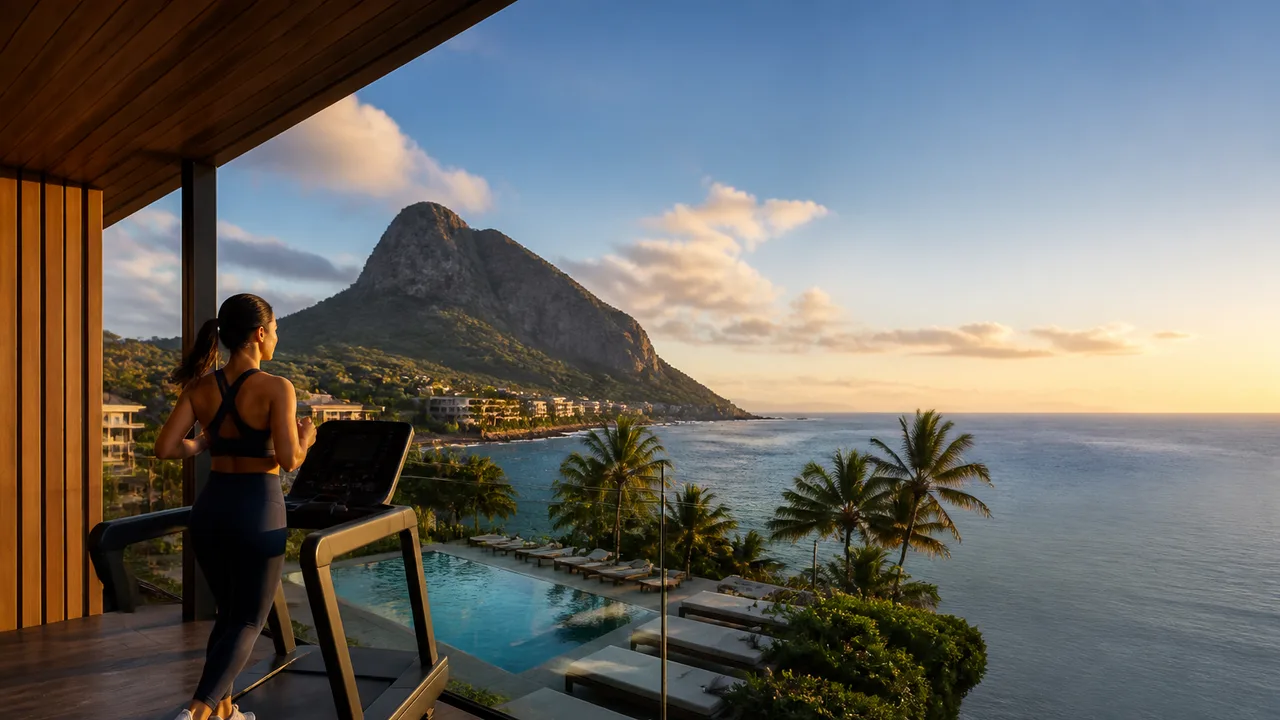
There is a moment, familiar to anyone who has opened a hotel room curtain onto a grey Tuesday in an unfamiliar city, when the question of what to do with your body becomes surprisingly urgent. You packed your trainers. You maybe packed a resistance band. And the quality of the hotel gym — that low-lit, treadmill-smelling afterthought wedged next to the ice machine on the third floor — will determine whether those trainers ever leave the bag.
The hospitality industry has noticed. And increasingly, it is responding not by upgrading that afterthought but by rethinking the entire proposition.
From Amenity to Architecture
For decades, the hotel gym occupied roughly the same psychological space as the hotel bar: nice to have, rarely decisive. A treadmill and a cable machine, maybe a rack of dumbbells that ran out at 30 lbs — enough to say the box was ticked.
That era appears to be closing. According to Hospitality Net, fitness has moved from a supporting amenity to a primary booking driver for a meaningful segment of travelers. The distinction matters: a supporting amenity influences satisfaction after you've already chosen a hotel; a primary booking driver shapes the selection process itself — it puts some properties in the consideration set and takes others out entirely.
Hotel Online frames this shift precisely: "When we're talking about wellness — or fitness as a subcategory of wellness — as a 'primary booking driver', what we mean is that this brand equity or specific features are salient enough in the consumer's mind that they influence the selection process ahead of the comp set." In plain terms: some travelers now eliminate hotels on fitness grounds before they ever compare prices or locations.
The scale of what's pulling this is substantial. Hospitality Net reports that the global wellness tourism market reached $894 billion in 2024. That figure encompasses a broad category — spa visits, meditation retreats, thermal baths, sleep tourism — but it signals the economic momentum behind a traveler who no longer separates physical maintenance from the travel experience itself.
Who Is Building for This Traveler?
The brands leading this shift vary in approach but share a common strategic logic: fitness is not a department you fund, it's an identity you build around.
Equinox Hotels are perhaps the most legible example of this logic taken to its conclusion. The brand — which emerged from the fitness club chain — has essentially inverted the traditional hotel model. Where a conventional property might allocate a few hundred square feet to a gym, Equinox builds its programming, staffing, and spatial design around movement and recovery, with rooms that support sleep quality as part of the performance ecosystem. The hotel becomes a container for the fitness brand, not the other way around.
SIRO Hotels, developed in partnership with professional athletes and backed by Kerzner International, operates on similar logic in different geographic markets, with facilities oriented around training, recovery science, and sports nutrition. Canyon Ranch — which has operated wellness destination resorts for decades — represents the longer arc of this market, now seeing its model validated by broader industry movement toward it. EVEN Hotels, IHG's wellness-oriented midscale brand, demonstrates that the strategy isn't confined to the ultra-luxury tier.
That last point is worth pausing on. HotelSpeak identifies what it calls a "limiting belief" in the industry: the assumption that strong wellness branding belongs only to grand-spa luxury properties or secluded ultraluxury resorts. The fitness-primary traveler, the analysis suggests, exists across price points, and the brands that assume otherwise are ceding ground unnecessarily.
What "Fitness" Actually Means Here
It is worth being precise about the terrain, because "fitness" and "wellness" are not the same word in hotel marketing even when they are treated as synonyms.
Wellness, in the older hospitality sense, meant passive restoration: spas, thermal pools, massage, a certain quality of quiet. It was about subtraction — removing stress, removing noise, removing the world for a while. The fitness shift that industry analysts are now tracking is more active and more specific. GymPros' 2026 guide to hotel fitness equipment describes a traveler who views high-end wellness facilities as a primary booking consideration rather than an optional extra — and who is arriving with performance expectations shaped by premium gym culture.
This traveler knows the difference between a Technogym treadmill and a department-store belt. They know what a Peloton screen should look like. They have probably used a cold plunge and expect to find one. They are tracking sleep data and want a room environment that supports their metrics. This is not the traveler who will be satisfied by a treadmill next to the ice machine; this is the traveler who will review the gym on a fitness-specific platform before they book.
Hotel Mogel puts the shift plainly: "While fitness was once considered a supporting amenity, it is increasingly becoming a primary booking driver for many travelers." The observation is straightforward, but its implications for capital allocation are significant. A hotel that repositions fitness from a cost center to a revenue driver changes how it budgets, staffs, and designs — not just the square footage of the gym, but the programming calendar, the food and beverage menu, the recovery suite bookings, the staffing credentials.
The Questions the Data Doesn't Answer
The market evidence points in one direction, but some of the harder questions remain genuinely open.
The first is whether this shift is structural or demographic. The cohort driving fitness-primary booking tends to skew younger, urban, and high-income — a profile that hospitality brands have strong incentive to pursue and equally strong incentive to project onto the broader market. There is a meaningful difference between a structural shift in how all travelers value fitness and a specific, profitable demographic that hotels are now correctly targeting. The industry commentary conflates these at times, and readers are right to apply some skepticism.
The second question is what happens at the midscale level, where the economics of fitness investment are far tighter. Equinox Hotels can charge rates that justify a recovery suite staffed by a certified physiotherapist. A 200-room business hotel in a secondary market is operating with different math. Whether fitness-primary branding is a strategy that travels down the rate ladder — or whether it remains a premium positioning play — will determine how broadly this actually reshapes industry standards rather than just creating a well-funded niche.
The third is the labor question, which the industry conversation largely sidesteps. A fitness-forward hotel requires certified instructors, recovery specialists, nutritionists, and performance-oriented kitchen staff. These are not roles that can be filled at standard hospitality wage structures, and the wellness-hospitality workforce pipeline is still being built. The brands doing this well are competing for talent with fitness studios, medical practices, and corporate wellness programs. What they pay, and what conditions they offer, will determine whether the model scales or stalls.
The Gym as Story
Here is what I find genuinely interesting about this shift, beyond the market signals: a hotel's fitness offering is now a legible text. Walk into a gym and you can read the property's actual investment in this demographic. The equipment tells you when it was purchased. The programming calendar tells you whether anyone is actually expected to show it. The presence or absence of recovery infrastructure — the cold plunge, the infrared sauna, the stretching space — tells you whether the hotel understands what this traveler does after the workout.
The traveler who uses that information to choose a hotel is, in a meaningful sense, doing something travelers have always done: reading a place for signals about whether they'll be understood there. The gym has just become one of the pages they read first.
Whether that pages stays primary in the consideration set, or whether it becomes the new treadmill-next-to-the-ice-machine — expected, invisible, insufficient — will depend on whether the industry builds around the insight or merely around the equipment.
More Like This

Small Group Italy Tours Are Reshaping Travel
Small group Italy tours promise authenticity over crowds. But do they deliver — and at what cost to the communities they claim to honor?
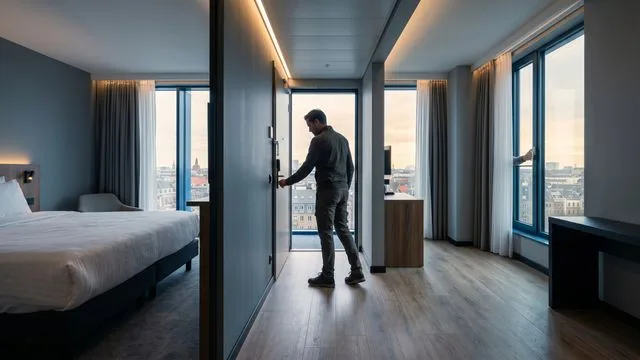
The 30-Second Hotel Safety Check You're Not Doing
A quick hotel room safety check—doors, locks, windows, exits—could prevent theft or worse. Here's what travel creator Mark Wolters says to do first.

A New Object in the Sky: The JetBlue Drone Strike
A JetBlue pilot reported hitting a drone on approach to JFK. What the incident reveals about airspace rules built before drones existed.

France Tests Low-Cost Rail Signalling for Rural Lines
France's NS2F consortium is trialling digital signalling tech to cut rural rail costs by 30%. Here's what's at stake for the towns trains forgot.

Accor and H World Link 19,000 Hotels in Loyalty Deal
Accor and H World are linking loyalty programs across 19,000 hotels and 430 million members. Here's what it means for travelers—and why execution is everything.

How AI Is Reshaping Hotel Visibility and Revenue
AI is deciding which hotels travelers consider before they ever open a booking site. Here's what the data shows and what hospitality leaders are doing about it.

Visaible.ai Bets A$1M That Hotels Are Lost in AI Search
Visaible.ai raised ~A$1M to help hotels stay visible as AI chatbots reshape travel discovery. Here's what the bet reveals about hospitality's next distribution war.

Tauck's Seine River Cruise: What $10,000 Actually Buys
Travel + Leisure boards Tauck's MS Serene for a nine-night Seine cruise. Here's an honest look at what luxury river cruising delivers — and what it costs.