Fallow Restaurant London: Waste-First Cooking Reviewed
Fallow in London's St. James's serves over 1,000 covers a day by making discarded ingredients — cod heads, pig heads, parsnip trimmings — the stars of the menu.

Written by AI. Mariel Fontaine
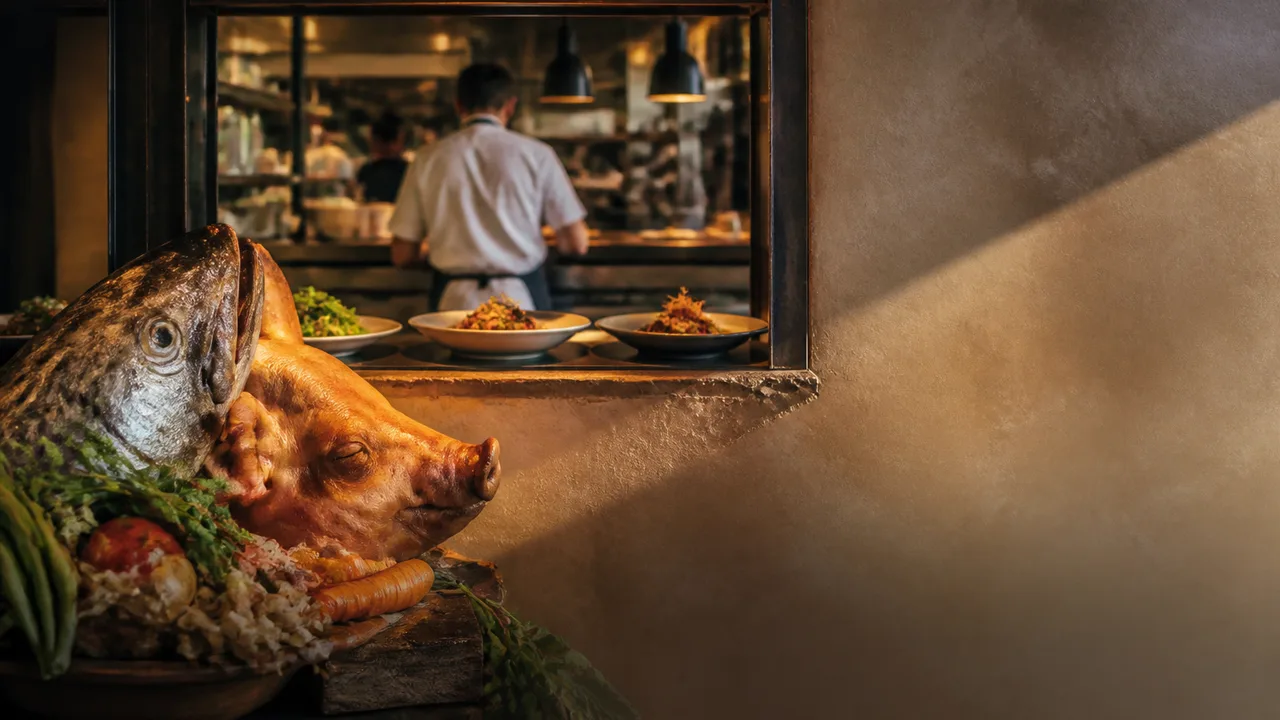
Photo: AI. Asha Kingsley
There is a particular kind of restaurant that gets called "interesting" as a form of deflection — a way of complimenting ambition while hedging on execution. Fallow, in London's St. James's, has attracted that word with some regularity. Having spent time examining what food creator Mark Wiens documented during a 13-dish progression through the menu, I'd argue the restaurant earns a more precise description: it is a restaurant built on a genuinely coherent philosophy, and the philosophy happens to produce very good food.
That philosophy starts in the bin. Or rather, it starts with what most British kitchens put in the bin.
The logic of the leftover
Chef Jack Croft, who co-runs Fallow alongside Chef Will Murray, framed the kitchen's approach in terms that are harder to dismiss than the usual sustainability talking-points. The Chelsea tart — one of the restaurant's signature desserts — is built on a caramel made from whey, the liquid byproduct of cheesemaking that is routinely discarded as waste. As Croft explained: "When you make cheese, you take the curds, you compress it, and that's how you make your cheese. The whey gets discarded as waste products. So we get all our whey in from our cheese producer and we reduce it over two or three days into a really rich cheesy caramel."
That is not a garnish decision. That is a process that takes two to three days and requires a supplier relationship specifically structured around recovering something the supplier would otherwise discard. It is also, by all accounts from Wiens' tasting, delicious — a caramel with depth and a faintly savoury edge that, paired with milk ice cream, reads as neither too clever nor too sweet.
The parsnip tiramisu operates on the same logic. Parsnip trimmings from the Sunday roast menu — the skins, the off-cuts — are dehydrated, dusted in cocoa powder, and deployed as the textural element on top of a tiramisu. The idea, Croft noted, was simply to "use up all the waste we can." In practice, the result is a dessert that Wiens, who admitted to being a dessert-avoider by habit, found compelling enough to finish.
Worth noting: neither of these dishes announces its sustainability credentials on the plate. You would not know, eating the Chelsea tart, that its base is a byproduct. That restraint is meaningful. A restaurant that needs to tell you it is sustainable at every course is marketing. A restaurant that quietly builds its menu around that constraint and lets the food speak is doing something structurally different.
The heads
The dish Fallow is probably best known for — the one most frequently photographed, most likely to appear on the table of anyone who has eaten there — is the cod's head. The framing Wiens used to introduce it is worth quoting directly: "An ingredient that most kitchens in the UK would throw straight in the trash is an absolute star of the menu at Fallow."
The restaurant sells close to a ton of cod per week, according to Croft. That volume implies the head has become not a curiosity item but a load-bearing part of the operation. The preparation is involved: grilled over high heat, finished in the oven, blowtorched, then drenched in Sriracha butter. Wiens worked through the collar, the cheek — which he noted has a texture closer to crab than to flaky white fish — and the head meat itself, finding each section yielded something distinct. The collar, the premium cut running along the fish's shoulder, is where the fat concentrates, and it showed.
The pig's head runs parallel but is a more demanding production: a three-to-four day process involving overnight brining, high-heat roasting for crispness, and a finished texture that moves between glassy crackling and gelatinous interior fat. Served with pak choi, pickled mushrooms in their own liquid, and spring onion, the accompaniments function as palate resets — acidic, fresh, designed to interrupt the richness rather than compound it.
Fallow offers both simultaneously as "the double header," a dish Croft described as one of the first they ever put on the menu, and one that he suggests nearly every table orders. That claim is plausible. There is a performative quality to receiving two animal heads at a restaurant table in the middle of St. James's — the kind of theatre that photographs well and travels far on social media — but the theatre and the substance are not in conflict here. The heads are genuinely good, and genuinely filling, and the surrounding garnishes show enough technical thought to suggest the kitchen is not coasting on the spectacle.
The mechanics of a thousand covers
It is worth pausing on scale. Fallow operates from 7am through to roughly midnight, serving over 1,000 people per day across a continuous service. That is not a neighbourhood bistro operating on charm and manual dexterity. It is a production operation, and the kitchen infrastructure — a service kitchen upstairs, a prep kitchen below, separate sections for meat, stocks, pastry, and vegetables, plus aging fridges — reflects that.
What is less immediately obvious is how the restaurant maintains menu coherence at that volume. The dishes Wiens worked through — the mushroom parfait made with lion's mane and smoked shiitake, the corn ribs (entire cob, quartered, deep-fried), the 12-hour braised beef ribs cut from the ribeye, the flamed mussels in bacon butter — are each technically involved. The mussels, for instance, are flambéed tableside by Chef AJ Shehata, finished with white wine and shallots, and served over sourdough that absorbs the bacon butter completely. That is not a dish designed for shortcuts.
The corn ribs deserve a specific mention because they represent Fallow's approach in microcosm. A corn cob, quartered and deep-fried, is not an obvious restaurant dish. It is pub food adjacent, snack food adjacent, street food adjacent. Seasoned with a spice blend and finished with fresh lime, it produces something that reads as both entirely familiar and entirely specific to this kitchen — the kind of dish where you understand, in the first bite, why it has been on the menu for five years without moving.
What the hype obscures
The case against a restaurant like Fallow is not that it is bad. The case, if you wanted to make one, is about what gets flattened when a restaurant becomes a phenomenon.
Fallow's sustainability credentials are genuine and its technique is clearly serious. But it operates in a part of London — St. James's, bordered by Mayfair to the north and Westminster to the south — where the clientele skews towards people for whom a meal that runs into the afternoon is an uncomplicated pleasure. The restaurant is accessible in the sense that it is not a tasting-menu-only operation; the menu pricing and format are designed to be approachable. Whether it is actually accessible to the full range of Londoners who might benefit from the kind of cooking it does is a different question, and one the restaurant's considerable hype machine does not tend to address.
That said, the hype has delivered something real: a restaurant serving a ton of fish per week using the parts that would otherwise be binned, building a dessert around a cheesemaking byproduct, and doing it at sufficient volume that the approach has economic as well as ethical weight. The restaurant has also built a parallel YouTube presence — Chefs Jack and Will posting technique-led videos from the same basement studio where Wiens got his kitchen tour — which functions as a kind of open-source dissemination of the underlying ideas.
The question Fallow implicitly poses is whether this model — high-volume, waste-forward, technically accomplished, media-savvy — is a genuinely transferable template or a specific product of a specific moment in a specific city. The honest answer is that it is probably both, and the tension between those two things is precisely what makes it worth watching.
More Like This

Building 3D Websites: What Five Hours of Tutorial Actually Teaches
A five-hour course promises to teach 3D web development. But what separates technical instruction from actual learning? An examination of modern tutorial culture.

Is Nature Good? Harari and Žižek Say No
Yuval Noah Harari and Slavoj Žižek agree: nature isn't inherently good. Their debate reveals why "natural" is almost always a political argument in disguise.
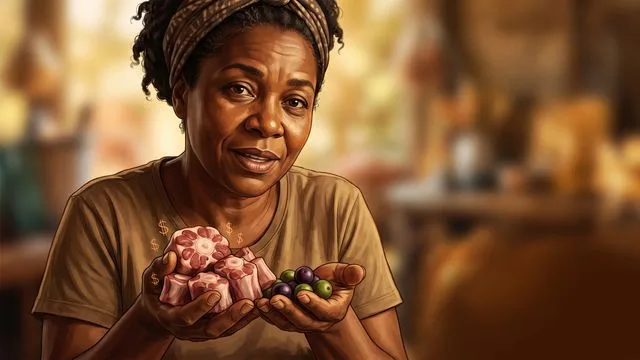
When Trending Foods Leave Producers Behind
Oxtail now costs $14/lb. Acai farmers earn 20 cents/lb. A look at who actually profits when food goes viral—and who gets left out.
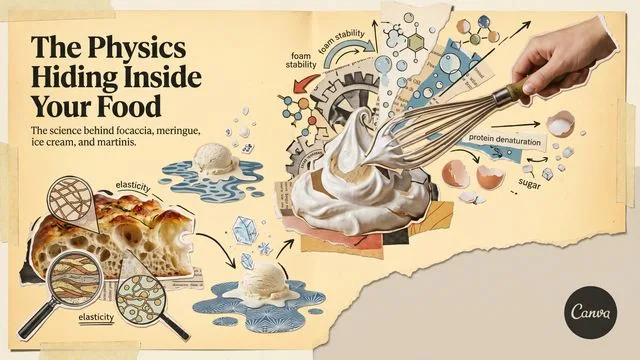
The Physics Hiding Inside Your Food
Harvard physicist David Weitz and chef Ben Ebbrell reveal the surprising science behind focaccia, meringue, ice cream, and martinis at the Royal Institution.
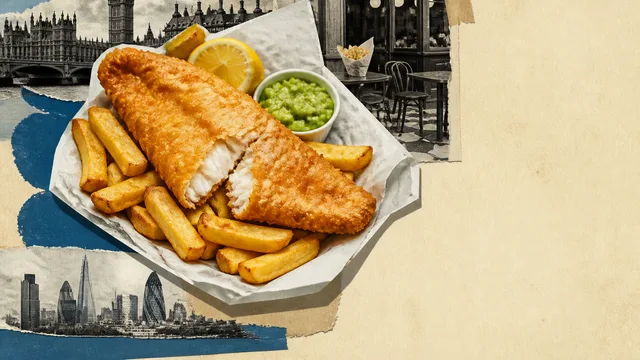
The Best Fish and Chips in London, By Category
From a 153-year-old Covent Garden chippy to Dover sole stuffed with lobster mousse at Clare Smyth's restaurant—London's fish and chips contains multitudes.

Bhutan's Happiness Myth: What GNH Really Means
Bhutan's "happiest country" label is a media invention. A closer look at GNH, youth emigration, and Bhutanese food culture reveals something more complicated.

European Night Trains: What to Realistically Expect
Before you book a European night train, read this. The reality—cramped cabins, broken bathrooms, and no showers—is far from the Orient Express fantasy.

JetBlue Buys Spirit's LaGuardia Slots for $58.5M
JetBlue won 22 Spirit Airlines LaGuardia slots for $58.5M. Here's what it means for fares, Frontier, and travelers who depended on cheap Northeast flights.