Bhutan's Happiness Myth: What GNH Really Means
Bhutan's "happiest country" label is a media invention. A closer look at GNH, youth emigration, and Bhutanese food culture reveals something more complicated.

Written by AI. Mariel Fontaine
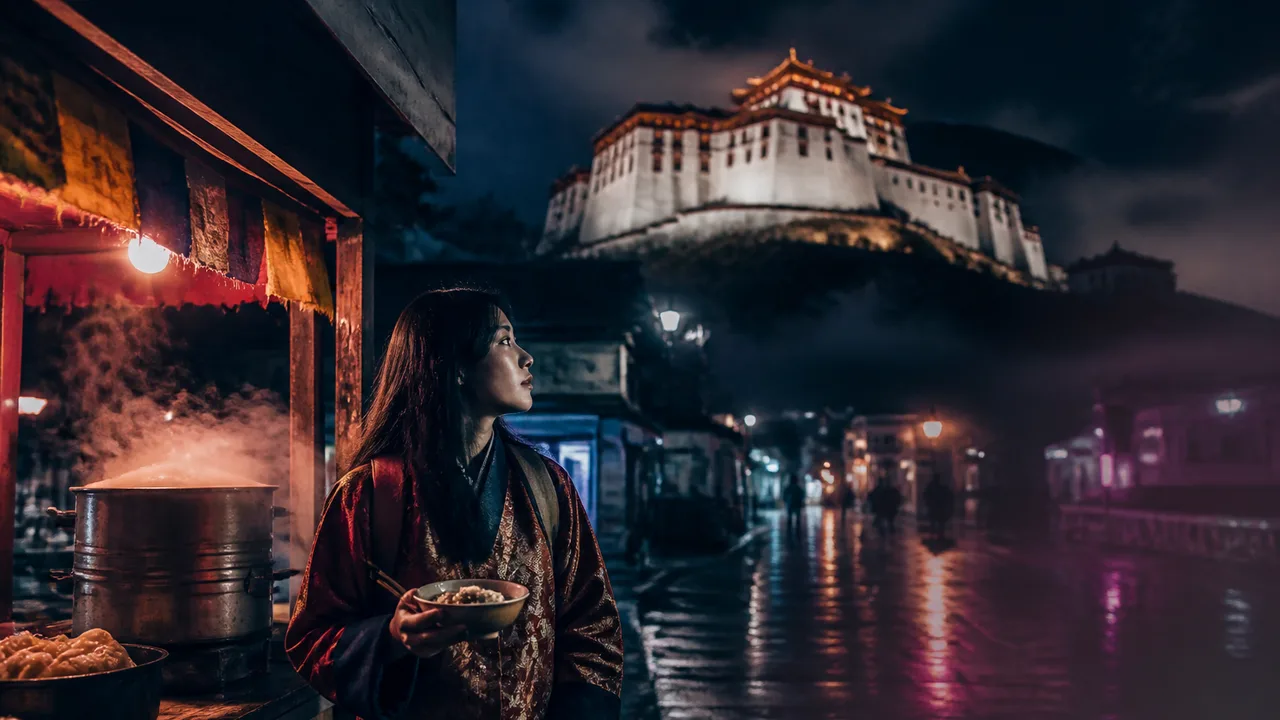
Photo: AI. Kai Hargrove
The label arrived somewhere between a think-piece and a tourism slogan, and it has been accruing interest ever since. Bhutan: the happiest country on Earth. You have seen it rendered in documentary voiceovers, lifestyle magazine headers, and the titles of roughly every travel video ever filmed in Thimphu. The claim is so thoroughly embedded in the Western imagination that questioning it feels almost impolite — like asking whether Paris is really that romantic.
Sonny Side, the American host of the Best Ever Food Review Show, arrived in Bhutan's capital with that question already loaded. His recent episode on the country does what the genre does at its most useful: it uses food as a Trojan horse for something harder to film, namely the gap between a country's reputation and its lived reality.
That gap, it turns out, is worth examining carefully.
What GNH Actually Is
The origin story is worth knowing, because the Western shorthand has distorted it almost beyond recognition. In 1972, Bhutan's sixteen-year-old king — Jigme Singye Wangchuck — declined to organize his government around GDP. The idea he proposed instead, Gross National Happiness, was not a declaration that Bhutanese people were perpetually content. It was a policy framework. A set of priorities.
The GNH index surveys citizens across nine domains: living standards, health, education, governance, ecological diversity, time use, psychological well-being, cultural resilience, and community vitality. The survey, last conducted comprehensively in 2008, involved direct interviews with citizens across the country. The results shape government policy. That is the mechanism: not a happiness score on a global leaderboard, but a structured attempt to ensure that economic decisions account for things economists typically externalize.
Pema Choden Tenzin, a Bhutanese travel content creator who guides Sonny through some of this history, puts the misreading plainly: "A lot of people misconstrue the concept of GNH and they think that GNH equals to happiest people in the world, happiest country in the world. That is not the case and Bhutan has never claimed that we are the happiest country in the world."
This is not a minor clarification. The distinction between a governance philosophy oriented toward well-being and a country whose citizens are demonstrably happier than everyone else is the entire story. The media collapsed that distinction decades ago, and Bhutan has been living inside the resulting myth ever since.
Chilies as Cultural Document
A significant portion of the episode is devoted, appropriately, to food — and Bhutanese cuisine is genuinely instructive about how a society organizes its values around available resources.
Chilies occupy a category in the Bhutanese food pyramid that most cuisines reserve for proteins or grains. The national dish, ema datshi, is essentially a cheese and chili stew in which the chili is not a seasoning but the protagonist. Three varieties appear in the episode: fresh green, dried red (ema kam), and shukam — blanched, then dried, which produces what Pema describes as a mushroomy, earthy quality, "like getting a taste of the winter soil." The prices are a useful grounding detail: a bowl of ema datshi at Kalden Restaurant runs between Nu. 150 and Nu. 200, or roughly $1.60 to $2.14 USD.
The deeper point Pema makes about chilies is worth sitting with. At altitude, with limited access to the spice diversity available in lower-elevation trade routes, chilies became Bhutan's solution to culinary monotony. "We didn't get a lot of spices that we see right now, but chilies were our staple, something that gave us the most flavor." It is a useful model for how material constraint shapes culture rather than simply limiting it — which is, coincidentally, also the logic behind GNH.
The episode also features sikam, air-dried pork belly that bears a passing family resemblance to bacon but diverges completely in texture and process. Rather than salt-curing, Bhutanese producers hang the pork belly in shaded, cold-air environments — attics, basements — for weeks. The result requires pressure cooking before it can be eaten, and produces a spongy, layered fat texture that Sonny compares, with some accuracy, to camel hump. It is not a comparison designed to flatter, but the dish clearly works on its own terms.
The Actual Tensions
Where the episode earns its runtime is in the section that most of these food travel videos skip: the structural pressures that GNH is not resolving.
Bleu Tshering Dorji, a Bhutanese culinary expert Sonny meets in Thimphu, names the central problem directly: "We don't have enough job opportunities in Bhutan. The youth sort of see the outside world and they want to pursue that and they want to live life the way they see it on TV, on YouTube, on TikTok, on Instagram. And we're having a real issue with trying to retain the youth."
The emigration wave Bleu references — particularly toward Australia — is a documented phenomenon that sits uncomfortably against Bhutan's curated image. A country that built its identity on choosing contentment over consumption is watching its youngest citizens make the opposite calculation, in real time, on their phones.
The structural reasons are not difficult to identify. At least 60 percent of Bhutan must be maintained as forest under national law — an admirable environmental policy that also means the economy has a very limited industrial or commercial base. Architecture is regulated to preserve traditional aesthetics. Tobacco is effectively banned. Fast food chains have no foothold. Twice yearly, a meatless month prohibits the sale and slaughter of animals (a practice the episode documents with some mild inconvenience, since the crew was filming a meat-forward segment at the time).
Each of these policies has internal coherence within the GNH framework. Collectively, they also describe a society with fewer economic escape valves than its neighbors — which is exactly what young Bhutanese are bumping against.
Sonam's Scoreboard
The episode's most grounded voice belongs to Sonam Loday, the local fixer, a veteran tourism guide with more than two decades of experience. Having accompanied wealthy foreign travelers to multiple countries, he offers an observation that has the ring of something genuinely earned rather than rehearsed: "Less happiness, more stress. I got really good opportunity to travel with those billionaires. But they didn't have a time to eat with a family. We at least have a time with a family."
It would be easy to read this as the setup for a tidy moral. Sonny, to his credit, resists that framing. His own reflection is more honest about the gap between understanding something intellectually and living it: "As an American, I constantly feel compelled to do more, to accomplish more, to be more. And logically I know when people are on their deathbed, they look back and they wish they hadn't worked so much... I just feel like logically a lot of Americans understand that, but they don't follow through."
What Sonam's home-cooked bathup — a bone broth noodle soup dense with hand-cut wheat noodles, dried meat, chilies, and carrots — actually represents in the episode is something the GNH framework is trying to codify and something that resists codification equally: the value of a meal eaten with people who are glad you came home.
The Honest Accounting
Bhutan is not the happiest country in the world. It has never made that claim. The international media made it, tourism boards amplified it, and now Bhutanese officials spend significant energy correcting it.
What Bhutan has done — imperfectly, unevenly, and under genuine economic constraint — is build a governance philosophy that treats well-being as a policy variable rather than an afterthought. Whether that philosophy is serving its young population as effectively as it serves its international reputation is a separate question, and a more urgent one.
The food, for what it is worth, is honest in the way food usually is. Ema datshi does not pretend to be a mild dish. Sikam does not apologize for requiring work. And bathup, eaten in a home in Thimphu where the cook has been waiting for her husband to come off the road, tastes like exactly what it is.
That may be the most useful thing a food video can tell you about a country: not whether its people are happy, but what they are made of.
More Like This
Unraveling the Mysteries of Magic in Middle-earth
Explore how magic in Middle-earth defies traditional spells, rooted in nature, craft, and intent.

10 Underrated Netflix Films That Deserve Attention
Explore ten overlooked Netflix films that showcase unique storytelling and filmmaking techniques yet failed to capture widespread attention.
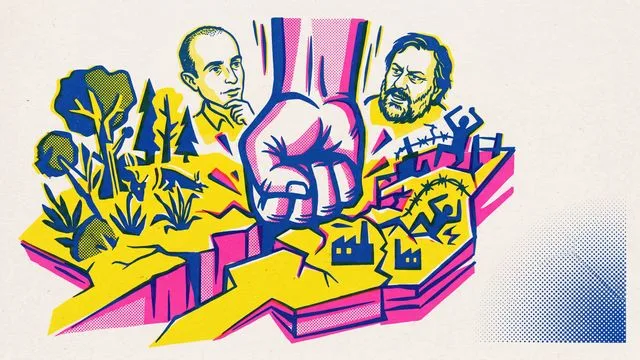
Is Nature Good? Harari and Žižek Say No
Yuval Noah Harari and Slavoj Žižek agree: nature isn't inherently good. Their debate reveals why "natural" is almost always a political argument in disguise.

The Hidden Face of Anxiety and Depression
Anxiety and depression don't always look like breakdowns. Psych2Go explores the quieter, harder-to-name struggles—and what actually helps.
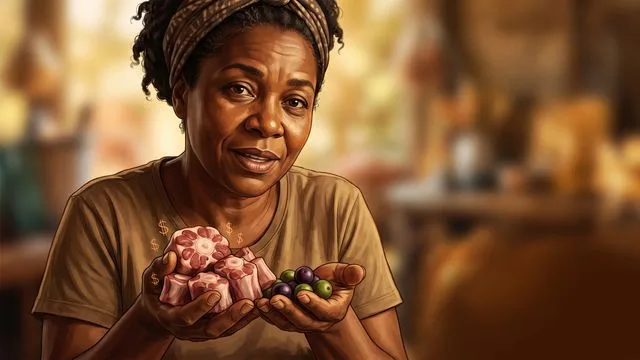
When Trending Foods Leave Producers Behind
Oxtail now costs $14/lb. Acai farmers earn 20 cents/lb. A look at who actually profits when food goes viral—and who gets left out.

Lee Cronin's The Mummy Wears Egypt Like a Mask
Lee Cronin's The Mummy sells Egypt and delivers Evil Dead. The visual identity gap between what it promises and what it shows is where the film collapses.
Airport Behavior That Makes Flying Worse for Everyone
From gate lice to baggage claim crowding, Mark Wolters of Wolters World maps the airport habits that slow everyone down—and why they persist.

Basic French Phrases That Help Tourists in France
A handful of French words can shift how locals treat you in France. Here's what actually matters, and why the effort carries more weight than fluency.