F1 Keeps Las Vegas Grand Prix on Calendar Through 2037
Formula One's Las Vegas Grand Prix deal runs through 2037, giving local businesses a longer planning horizon while annual costs and disruption remain in focus.

Written by AI. Denise Okafor-Williams
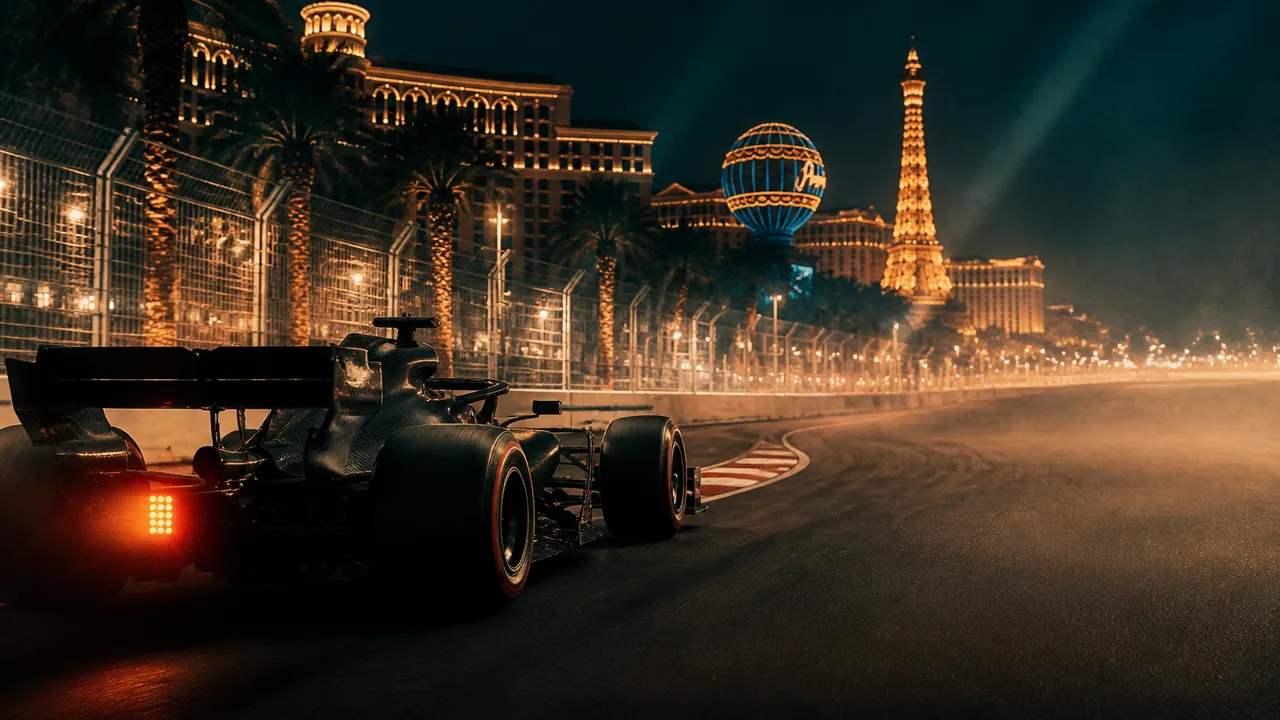
Formula One has extended its Las Vegas Grand Prix commitment through 2037. For a race that has brought disruption along with spectacle, the extension gives F1 and its local partners years to refine an event they now expect to repeat. It also gives businesses around the course a longer horizon for decisions tied to race week.
The long commitment follows more than an initial experiment. Clark County's approval extends beyond the original 10-year outline agreement, with at least 12 more editions given the go-ahead when RACER reported the approval in June. The county's role places the race inside an ordinary civic question, despite the extraordinary production: how much disruption can an annual event impose, and what does the city receive in return?
That answer will differ depending on where a business sits and how it earns its money. A hotel that can sell race-week rooms faces a different calculation from a shop whose customers must navigate event preparations. The extension creates time for both to plan. It does not make their interests identical.
What a Longer Commitment Can Buy
A race that returns year after year can justify planning that a short-lived event cannot. Organizers can work on recurring schedules for setup and removal. Hospitality businesses can make staffing and purchasing decisions with a clearer view of the calendar. Local officials can assess the same event repeatedly rather than treating each edition as an unfamiliar project.
Continuity has a cost advantage only if the people doing the work can use what they learned. A revised access plan, for example, must reach the businesses and workers who depend on that access. An earlier operating schedule helps a restaurant plan a shift only if it stays reliable when race week arrives. Those are mundane tests for a global sports property, but the street-level economics of the event run through them.
F1's case for staying is straightforward. Las Vegas offers a setting built around visitors, hospitality and major events. A long runway gives the race a chance to become a dependable part of that business calendar. The series can also avoid rebuilding local relationships from scratch each season. Those are reasons to commit before every operating problem has been solved: repeated editions offer opportunities to improve the operation.
The race's leaders have described some progress. Better planning and a track that held up better than expected should ease the burden, after criticism of the event's disruptions. Las Vegas Grand Prix president and CEO Emily Prazer has said her team feels more comfortable than it did in earlier years. Comfort inside the operation may help it run more predictably. Residents and businesses will judge the result outside it.
The Calendar is Firm; the Cost Split is Less Clear
The reported extension comes without disclosed financial terms, leaving the division of recurring costs and expected returns unclear. That limits any claim about who gets the better deal. A date on the F1 calendar answers how long the parties intend to keep staging the race. It does not, by itself, assign a price to disruption or show who absorbs it.
Consider the different ledgers involved. The organizer has to make the event work as a recurring business. Hotels, restaurants and other local firms have to decide whether race-related demand covers their own preparation costs. Public officials have to weigh the event against effects on streets and daily operations. Workers encounter another set of calculations: shifts, travel, scheduling and the reliability of hours around a large but temporary production.
Those groups may all participate in the same race week without sharing its proceeds in the same way. A strong hospitality weekend could still leave a business with access problems. A smoother setup could ease the burden on commuters without resolving what workers earn during the event. Conversely, an event that frustrates some neighbors could bring enough trade for others to support its return. The useful measure is more precise than whether Las Vegas, as a whole, won or lost.
This is where a long commitment changes the conversation. A single difficult edition can be explained as a startup problem. Once a race has years of guaranteed runway, organizers have repeated chances to adjust schedules, communicate changes and reduce avoidable friction. Local businesses can ask for clearer plans because they know the event is coming back. Officials can compare each year's operation with the last instead of accepting a fresh set of promises in isolation.
Who Gets to Plan Around the Race?
The benefits of predictability depend partly on who receives it. An organizer with a multiyear horizon can coordinate its own spending. A business owner who learns early about access arrangements can make a practical plan. An hourly worker who receives a shift schedule too late to arrange transport or other work cannot use the race's long-term certainty in the same way.
That is a labor question as much as a logistics question. Major events rely on people to staff hospitality and carry out event operations, often for concentrated periods. The extension could support steadier planning for those jobs. Whether workers receive steadier schedules or better terms will depend on decisions made by employers and contractors, not on the calendar date alone.
The same principle applies to small businesses near event activity. A return through 2037 lets an owner anticipate recurring changes, but anticipation is not compensation. What helps is timely information: when access will change, when preparations will begin and whom to contact if plans fail. F1's effort to reduce disruption will be easiest to evaluate through those repeated, practical encounters.
A long deal also gives local officials a continuing reason to scrutinize operations. Approval of future editions and satisfaction with each edition serve different purposes. The first allows planning; the second has to be earned as residents and businesses experience the race. Keeping those judgments separate leaves room to recognize progress without treating the agreement as a permanent verdict on every street closure or sales week to come.
Las Vegas has given F1 a long runway. Each return will show whether that certainty travels beyond the organizer's calendar to the people who work, trade and move through the city while the race is in town.
More Like This

NFL and NFLPA Negotiate Flag Football at 2028 Olympics
The NFL and NFLPA are negotiating player participation in Olympic flag football. Here's what the labor dynamics and scheduling realities actually mean for athletes.

World Cup Knockout Ticket Prices Drop 39% on Resale Markets
World Cup knockout stage resale prices fell 39% from $2,040 to $1,245. What the secondary market collapse reveals about FIFA's pricing architecture.
USMNT Beats Bosnia, Advances Despite Balogun Red Card
The USMNT beat Bosnia 2-0 to reach the World Cup Round of 16, despite Folarin Balogun's controversial red card. Here's what it means on and off the field.

NFL Plans Heightened Security for Saints-Steelers in Paris
The NFL plans extra security for the Saints-Steelers game in Paris amid unrest. Here is what the decision means for fans, local authorities and event costs.

Chelsea Stake Sale Would Put Clearlake in Full Control
Chelsea's reported £950 million stake sale would give Clearlake full control, raising questions over spending, cash flow, stadium plans and exit timing.
Fox's Broadcast Bet Put IndyCar Back in the Ratings Race
IndyCar averaged 1.68 million viewers in 2026. Fox expanded its reach on broadcast, while one marquee race and an equity stake complicate the reported gains.

CTE Found in at Least 1 in 4 Former NFL Players
A new study of 235 donated brains finds CTE in at least 25% of former NFL players—and researchers say that number is almost certainly an undercount.

McIlroy Backs PGA Tour's 2028 Championship Overhaul
Rory McIlroy has endorsed the PGA Tour's sweeping 2028 Tour Championship reforms. Here's what the two-tier revamp means for players, prize money, and golf's future.