NFL and NFLPA Negotiate Flag Football at 2028 Olympics
The NFL and NFLPA are negotiating player participation in Olympic flag football. Here's what the labor dynamics and scheduling realities actually mean for athletes.

Written by AI. Denise Okafor-Williams
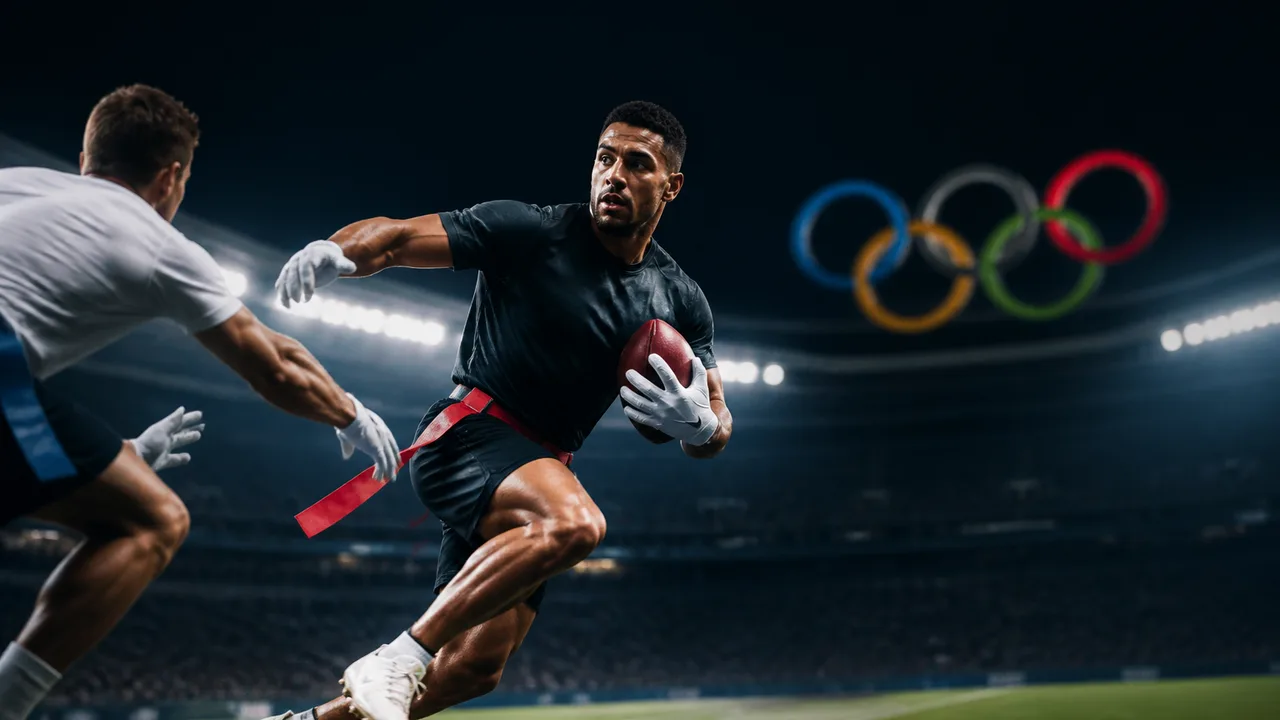
Flag football's inclusion in the 2028 Los Angeles Olympics is not, at its core, a sports story. It is a labor negotiation with a gold medal draped over it.
The NFL and NFLPA are currently in talks over the terms that would govern player participation in the Olympic Games, according to Front Office Sports, and the details of those terms will determine whether this becomes a genuine opportunity for athletes or a brand expansion exercise that asks players to absorb the risk while the league absorbs the reward.
That distinction matters. It matters because the structural dynamics here are genuinely novel, not just for football but for professional sports labor relations broadly.
A Calendar Problem With Real Stakes
Start with the scheduling question, because it is the one that clarifies everything else about where the leverage sits.
The 2028 Summer Olympics are scheduled to take place in Los Angeles from July 14 through July 30. NFL training camps traditionally open in late July, with many veterans reporting in the final week of that month. The overlap is not incidental; it is the central tension in these negotiations. Any NFL player participating in the Olympic tournament would be doing so at the precise moment their employer is beginning its formal preparation for the regular season.
The NFL's current Collective Bargaining Agreement, ratified in 2020 and running through the 2030 season, governs how players' time, bodies, and obligations are allocated. Olympic participation by active roster players would require either explicit CBA accommodation or a negotiated side agreement. Neither is a small ask. The NFLPA will need assurances around roster protection, injury liability during the Olympic competition period, and how any time away from camp interacts with contract guarantees or performance incentive structures.
This is where the league's negotiating interest and the players' negotiating interest diverge, even if both parties publicly endorse the concept. The NFL wants its stars at the Olympics. Stars wearing NFL-branded gear, in an Olympic context, broadcasting American football's reach into Europe, Africa, and Asia, is a marketing event of enormous scale. The question is who pays for that marketing. If players are competing without additional compensation, absorbing injury risk during what the CBA does not currently designate as a protected work period, and potentially showing up to camp physically depleted, then the NFL is effectively asking players to subsidize a global advertising campaign with their bodies and their contract security.
What the Olympics Actually Pays
The Olympic compensation model compounds the issue. USA Olympic and Paralympic Committee athlete stipends are modest by professional sports standards. According to ESPN, U.S. Olympic medalists receive medal bonuses from the USOPC, with gold medals earning $37,500, silver $22,500, and bronze $15,000, but baseline stipends for most athletes outside those payments are not structured around professional salaries.
For an NFL player earning the league minimum (set at $795,000 for a one-year player under the 2024 scale, rising annually through the CBA), an Olympic stipend does not move the needle. For a quarterback or a pass rusher on a market-rate contract, the financial math of Olympic participation is essentially irrelevant to their annual income. What is relevant is the risk calculus: a torn ACL in a flag football tournament in July could void a contract, end a career, or at minimum alter a player's leverage in the next negotiation cycle.
Flag football is a non-contact discipline, and the injury profile is categorically different from tackle football. That is a real and meaningful distinction. But "non-contact" is not the same as "no-risk." Ankle sprains, hamstring pulls, and overuse injuries do not require a tackle to materialize. And at the intensity level required to compete at the Olympic level, those risks are not trivial.
The Globalization Argument, Taken Seriously
None of this means player participation is a bad deal. It means the deal has to be structured correctly.
The NFL's globalization strategy has accelerated significantly over the past decade. The league now plays regular season games in London, Frankfurt, and Mexico City. It has established NFL academies internationally and pursued media rights deals in markets where American football has historically had only marginal reach. Flag football at the Olympics fits this trajectory. It is, from the league's vantage point, a chance to introduce the sport to audiences who may never engage with a three-hour regular season broadcast but will watch a tight, fast-paced Olympic competition in primetime.
That is a legitimate business argument. And if the NFL's international audience grows, the revenues that flow from those markets eventually flow through the CBA revenue-sharing structure, which means players do share in the long-term upside. The mechanism is indirect and deferred, but it is real.
The NFLPA's job is to make that indirect, deferred upside more direct and less deferred. A framework that includes participation bonuses negotiated through the union, guaranteed contract protections for the Olympic period, and joint NFL-NFLPA oversight of team selection and medical protocols would look very different from one that simply waives players through the door and hopes for the best.
The Precedent Problem
The outcome of these negotiations will extend beyond flag football in 2028. Other professional leagues are watching.
The NBA has managed Olympic participation through a long-standing framework built over decades of CBA negotiation. NBA players compete in the Summer Olympics, and that participation now includes detailed agreements about insurance, training camp accommodation, and roster timing. The model works, but it took years to construct and has been litigated through multiple collective bargaining cycles. The NFL is starting that process later, with a tighter timeline, and under a CBA that did not anticipate this specific scenario.
What the NFLPA negotiates now will serve as the floor for every subsequent conversation about international competition. If players secure meaningful protections and compensation structures for 2028, those terms become precedent. If they accept a thin framework because the Olympics feel like a patriotic obligation rather than a labor transaction, they will spend the next decade trying to claw back what they gave away.
Professional athletes competing internationally under their country's flag is one of the more emotionally loaded situations in sports. The flags, the anthems, the opening ceremony, all of it creates a context in which asking for equitable compensation can feel unseemly. The NFLPA's challenge is to conduct a clearheaded labor negotiation inside an event specifically designed to make clearheaded thinking difficult.
Where This Lands
The core question is not whether NFL players should compete in the 2028 Olympics. Most of them probably want to. Flag football is, after all, the version of the game many of them grew up playing, and the Olympic stage is legitimately meaningful.
The core question is what the contract looks like. Specifically: who bears the risk, who captures the value, and what happens to a player who blows out his knee in a flag football quarterfinal in Los Angeles in July and can't report to camp in August.
The answers to those questions will tell you a great deal about whether this is a partnership between the league and its workforce, or a more familiar arrangement where the workers provide the product and the institution captures the return.
More Like This

ESPN Cuts Ryan Clark as Cable Decline Reshapes Sports Media
ESPN let go of NFL analyst Ryan Clark mid-broadcast, signaling a broader restructuring as cable audiences shrink and the network pivots to digital.
MLBPA Rejects MLB's Amateur Draft Overhaul
The MLBPA's first formal draft proposal rejects MLB's sweeping changes to draft timing, eligibility, and signing bonuses. Here's what's actually at stake.

MLS Ticket Sales Surge, But TV Ratings Stay Flat
MLS is riding a World Cup attendance wave, but TV ratings haven't followed. What that gap means for media rights, and MLS player salaries.

Sports Business Digest: NIL Caps, NHL Leverage, and Modular Stadiums
From the CSC's first NIL enforcement numbers to Bettman's media deal patience and the NFL's flag football venue plans, here's what moved the business of sports this week.

NFL Players Can Now Return to College After Training Camp
A Louisiana judge just ruled NFL training camp players can return to college football. Here's what the ruling actually means — and where it falls short.

McIlroy Backs PGA Tour's 2028 Championship Overhaul
Rory McIlroy has endorsed the PGA Tour's sweeping 2028 Tour Championship reforms. Here's what the two-tier revamp means for players, prize money, and golf's future.

How Goalkeeper Gloves Are Made in Sialkot
Inside Matrix Sports' Sialkot factory, where nearly half a million goalkeeper gloves are made each year for professional clubs and national teams.

MLB and MLBPA Deadlocked Over 2028 Olympics
Two years from LA28, MLB owners back Olympic participation but the players' union remains at odds over housing, tickets, insurance, and forced participation rules.