NFL Plans Heightened Security for Saints-Steelers in Paris
The NFL plans extra security for the Saints-Steelers game in Paris amid unrest. Here is what the decision means for fans, local authorities and event costs.

Written by AI. Elena Vasquez-Moreno
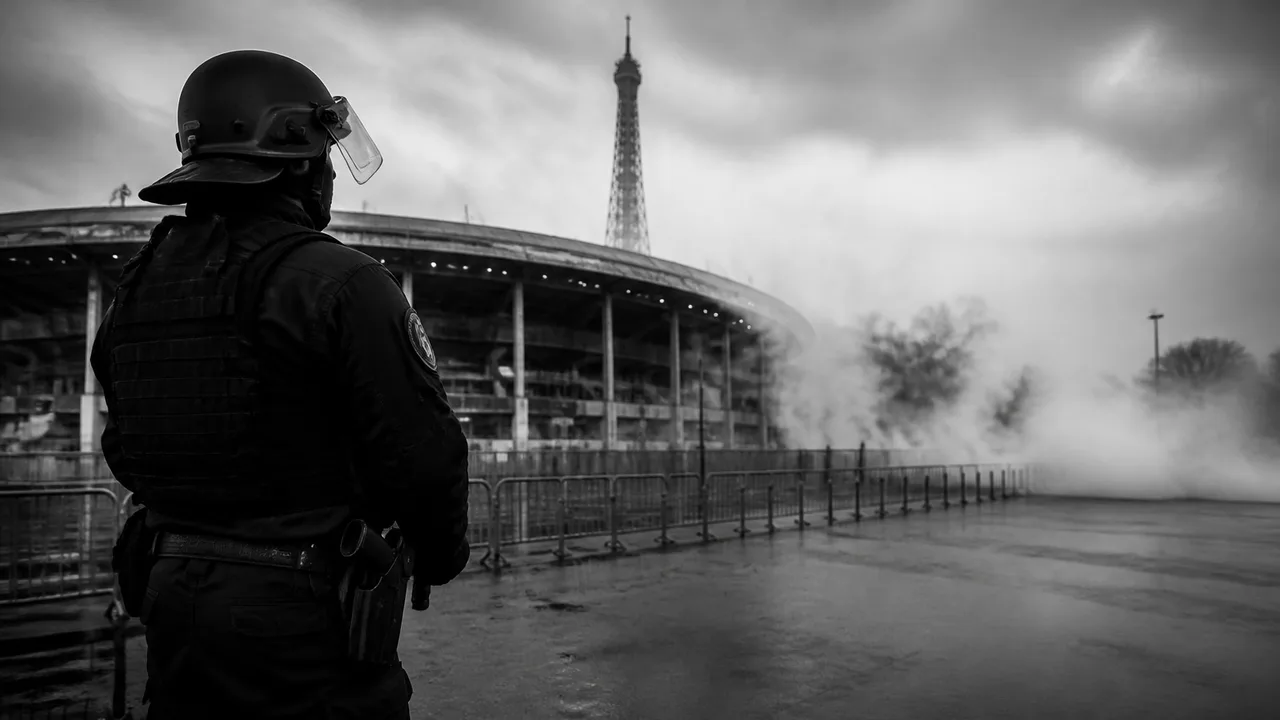
The NFL plans heightened security for the Saints-Steelers game in Paris as civil unrest puts a second contest on the event-day schedule: getting people safely to their seats. The league's plan places a familiar sports-business ambition inside a less familiar operating environment. An international game can introduce the NFL to new fans. Parisian authorities, meanwhile, have responsibilities that extend well beyond the stadium gates.
The league has not detailed the added measures, their cost, any change to entry procedures or the guidance fans should follow. That leaves the central operational question open: how will organizers adapt a large event to conditions on the streets without asking spectators to guess what heightened security means?
For the NFL, the immediate priority is a safe game. For the city, it is public safety across a much larger map. Those objectives can align, but they do not come with the same budget, personnel or chain of command.
A Stadium Has More than One Perimeter
A ticket tells a fan where to sit. It does not get that fan through a train station, along a street or past a crowd outside the venue. Stadium operators can manage screening and access on their property; public authorities make decisions about streets, transit and public spaces. The practical boundary between those roles is where an overseas game becomes a coordination exercise rather than a visiting league's self-contained production.
Extra security could affect staffing, screening or the timing of entry. Each choice has a trade-off. More checks may give staff more opportunities to identify a problem, but they can also lengthen queues and concentrate people outside. Earlier arrival advice can spread demand across a longer period, provided fans know the advice and can act on it. A change to a route or entrance helps only if the people traveling to the game receive clear instructions.
Those are operational possibilities, not announced measures for Paris. They show why a promise of heightened security has to be translated into directions a ticket holder can use. Organizers must also decide who delivers those directions when plans change: the league, the teams, the venue, local officials, or some combination of them. A fan approaching a gate should not have to reconcile five versions of the same instruction.
Unrest, Risk and the Temptation to Predict
Civil unrest gives officials a reason to revisit an event plan. It does not, by itself, say what will happen at the game. Boomer Esiason has raised concern that an NFL game could inspire rioters in Paris. That is a concern about a possible outcome, not a report that the fixture has been targeted.
The distinction has an operational consequence. Officials need to plan for risks they consider credible while giving the public information that reflects decisions already made. Spectators need to know where to go and what restrictions apply. Treating a commentator's worry as a forecast could send fans looking for instructions that do not exist; dismissing every concern because a game remains scheduled would be no better guide.
A separate report on a possible ban on public outings ahead of France's first NFL game points to another distinction: a contemplated restriction is not an enacted one. Any decision affecting movement around the event would require clear communication from the relevant authorities. The league can tell ticket holders about its game operations, but it cannot substitute its own announcement for a local public-safety order.
This division of responsibility can frustrate fans seeking a single answer. It is also how the roles are supposed to work. Local officials assess conditions in public space; the NFL and its event partners adapt the event to those decisions. The test is whether that handoff reaches people before they set out, rather than after they join a line.
Who Pays for a Safer Game?
International fixtures are often discussed through the league's upside: a bigger audience, a stronger foothold in another market, more opportunities for commercial partners. Security is part of the cost of pursuing that upside, even when it rarely appears in the pitch. The accounting depends on who supplies the personnel, who requests the work and what the event agreements require.
Private event staff, venue operations and public police have different employers and budgets. If organizers add staff inside the venue, an event operator may carry that expense under its contracts. If public authorities deploy additional personnel in surrounding streets, taxpayers could bear some cost unless an agreement provides for reimbursement. These are possible arrangements, not a claim about the Paris game's contracts. A bill can move between parties without disappearing.
The more useful financial questions are narrower. Will the league or its partners reimburse any public services tied to the fixture? How will officials separate routine public-safety work amid unrest from resources assigned specifically to the game? If private staffing rises, which organization pays under the event agreement?
Those questions do not presume that the NFL should fund every officer on duty in Paris. Authorities would have public-safety obligations with or without a football game. Nor does the league's potential commercial gain answer every cost-allocation question. The useful distinction is between resources the city would deploy anyway and incremental work the event creates. If officials eventually publish those figures, readers can assess the arrangement rather than choose between a promotional estimate and a guess.
The Overseas Model Meets Its Host City
The strongest case for playing abroad is straightforward. A live game gives prospective fans something a broadcast or merchandise campaign cannot: a local event. Teams and the league can build relationships in a market they want to reach, while supporters get access without crossing the Atlantic. A well-run fixture can serve the host as well as the visitor.
That case depends on accepting the host city as more than a backdrop. The NFL controls the product on the field. It must work with venue operators and local authorities on everything that brings people to the field and takes them home. During unrest, those partners may face demands unrelated to football. A plan that looks adequate inside the gates may still leave travel, queues and public guidance to others.
The Saints and Steelers game therefore has two measures of success. One is whether spectators and staff can attend safely. The other is whether the people responsible for that outcome communicate their roles clearly and account for the resources they use. The first is urgent; the second determines whether an overseas game looks like a durable partnership once the crowd has gone home.
The NFL can promise a more secure event. The next useful announcement will tell a Paris ticket holder what to do, and tell the city who is paying for the work.
More Like This
Stephen A. Smith Tests Sports Media's Political Reach
Stephen A. Smith's 2028 speculation shows how sports media can convert recurring attention into political capital, while creating new risks for ESPN and its audience.

Rays Stadium, US Open Records and Prediction Markets
The Rays finally got their votes. The US Open set a prize record. And prediction markets got a legal gut-punch. Here's what it all means financially.
How an MLB Lockout Could Expand the Bananas' Market
A possible MLB lockout could give the Savannah Bananas more attention, venue leverage and ticket demand, while testing whether fans stay after MLB returns.

NFL Opens in Melbourne, MLS Spends Big: Thursday's Business Ledger
The 49ers and Rams tried opposite jet-lag strategies in Australia, MLS clubs spent a record $370 million, and NFL ownership shifts. What the numbers say.
The NFL’s Rio Ratings Record Had a Sunday TV Advantage
Ravens-Cowboys drew 24.9 million viewers from Rio. Its Sunday CBS slot helps explain the record and raises a tougher question about repeating it overseas.
Jeff Bezos Eyes a $1.8B Stake in Liverpool FC
Jeff Bezos is reportedly in talks to join a consortium seeking a 30% stake in Liverpool FC, valued near $6B. Here's what the deal structure reveals.

Tour de France's 2 A.M. Drug Tests Expose Sport's Core Tension
Overnight anti-doping tests at the Tour de France sparked rider fury and a wider debate about what clean sport actually costs the athletes asked to prove it.