CTE Found in at Least 1 in 4 Former NFL Players
A new study of 235 donated brains finds CTE in at least 25% of former NFL players—and researchers say that number is almost certainly an undercount.

Written by AI. Denise Okafor-Williams
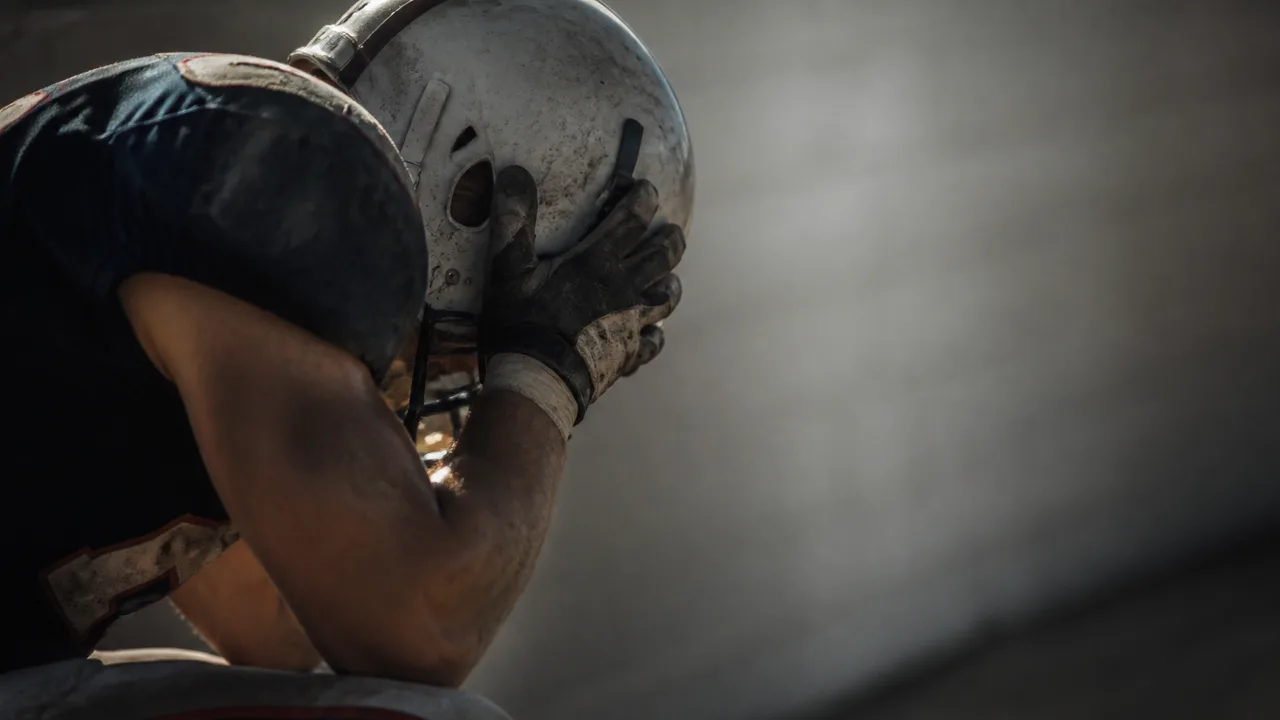
Photo: AI. Renzo Vargas
There is a number sitting at the center of a new study on former NFL players' brains, and it is already being treated as a floor, not a ceiling.
At least one in four former NFL players who died between 2016 and 2021 had chronic traumatic encephalopathy, according to research examining 235 donated brains, as reported by NPR and Medical Xpress. CTE is a progressive brain disease associated with repeated head trauma. It cannot be diagnosed in a living person—only through post-mortem examination of brain tissue. Symptoms across the disease's progression can include depression, anxiety, aggression, memory loss, and dementia.
The 25% figure is, by the researchers' own accounting, almost certainly conservative. Dr. Chris Nowinski, co-founder and CEO of the Concussion Legacy Foundation and a co-author of the study, spelled out the actual range in a PBS NewsHour interview: "Now we know it's somewhere between 25% and 98%." The lower bound comes from the confirmed study sample. The upper bound reflects the rate observed in that sample—more than 90% of the donated brains tested positive—combined with the likelihood that families of severely symptomatic players were more likely to donate in the first place. That selection pressure is real and acknowledged. What it does not do is make the finding less alarming; it just means the researchers are being transparent about the limits of what donated-brain studies can tell us.
Nowinski has been working in this space long enough to have watched the scientific conversation shift. For years, the hope—stated plainly within the research community—was that CTE might turn out to be rare in the NFL population, an artifact of early, extreme cases. This study, he said, is "the final nail in the coffin" for that position. The sample size, now representing more than a quarter of all former NFL players who died in the study period, is large enough that "rare disease" is no longer a defensible framing for what is happening in this population.
What the families knew
Nearly two-thirds of the players whose brains tested positive for CTE had dementia while they were alive. That detail matters for understanding how this data was gathered. Most families reached out because something was visibly, seriously wrong. The players in this study were not, by and large, asymptomatic discoveries. They were men whose families watched them deteriorate and then, after death, chose to donate their brains to science.
The researchers cross-referenced their sample against national death records of every NFL player who died during the study window. What they found was that they had obtained brains from fewer than half of all former NFL players who died of a neurodegenerative disease—meaning a substantial portion of the most likely CTE cases in the population were never examined. The true burden of the disease remains unmeasured, not because the researchers weren't looking, but because post-mortem brain donation is still a voluntary act that requires families to navigate grief and logistics simultaneously.
The pipeline problem
One of the more clarifying moments in Nowinski's PBS interview came when former NFL player Randy Grimes—who spent nearly a decade in the league—raised the question of younger athletes. Grimes pointed out that the research has centered on professional players and expressed concern that high school and college players were being overlooked.
Nowinski's response revealed that the research pipeline is already further along than most public conversation acknowledges. His organization has examined nearly 400 brains from former college football players and more than 100 from former high school players. The preliminary numbers follow what he described as a "clear dose response": CTE was found in roughly two-thirds of the college players studied and about one-third of the high school players. He was careful to note that sampling bias applies here too—those numbers are likely higher than the true population rate. But even discounted, he argued, they are too high to ignore when 20 million men in the United States have played high school football.
"I hope this is the moment where we shift the conversation," Nowinski said, "to one where we say, OK, this is a public health crisis that we need to confront not only in the NFL but throughout football."
That framing—public health crisis rather than professional sports liability—is worth sitting with. The NFL involves roughly 1,700 active roster players at any given time. High school football involves millions. If CTE risk scales even partially with years of exposure and impact volume, the downstream health burden from youth and amateur football could dwarf anything the professional game produces, simply by volume.
The NFL's response and its limits
The NFL issued a statement emphasizing its ongoing safety investments: new rules, improved helmet technology, concussion protocols, and practice restrictions. The league also noted that the average age of the players studied was around 66, suggesting their playing careers predated modern safety measures by decades. The implicit argument is that the sport has meaningfully changed since these men played.
Nowinski did not dismiss the improvements outright. "We've made some modest changes to the game, and that's great," he said. But he pushed back on the conclusion the league appeared to be drawing. Players today are larger, faster, and stronger than in any prior era. Seasons are longer. Players begin organized contact football earlier. The forces involved in collisions have not decreased in proportion to the rule changes implemented.
His counter-evidence was specific: Marshawn Neyland, a Dallas Cowboys player who died by suicide at 24 years old just over a year ago, was found to have CTE despite having played entirely within the modern era of concussion protocols and practice restrictions. One case does not establish a trend, but it does puncture the narrative that safety reforms have brought CTE risk under control for current players.
The honest answer to whether the game is safer today, Nowinski offered, is this: "Is it possible? Yes. Is it probable? No."
A question that doesn't resolve cleanly
Nowinski was asked directly whether the risk is worth it to play football today. He did not answer with a policy position. Instead, he reached for something on his desk—a photograph from a 1999 Harvard football program. His teammate Chris Eitzmann, the study's final subject, died December 29, 2021, with stage 2 CTE. Another teammate, Michael Brooks, their strong safety, died more recently with the same staging. Both deaths appear connected to their brain disease.
"This issue is far worse than the conversation we're having at our kitchen table," he said.
That is not a conclusion designed to send people to one side or the other of a clean debate. It is something more uncomfortable: a researcher who has spent years inside this problem, who played the sport himself, who keeps photographs of dead teammates on his desk, saying plainly that the scale of what is happening has not yet been absorbed by the public or the institutions that profit from the game.
What remains genuinely open is not whether CTE exists in this population at significant rates—that argument is now settled—but what obligations flow from that finding. For the NFL, for the NCAA, for the organizations that run youth leagues, for the parents making enrollment decisions, and for the policymakers who have largely left those decisions unstructured, the study doesn't resolve the question. It just makes it harder to defer.
More Like This

ESPN Cuts Ryan Clark as Cable Decline Reshapes Sports Media
ESPN let go of NFL analyst Ryan Clark mid-broadcast, signaling a broader restructuring as cable audiences shrink and the network pivots to digital.

MLBPA Rejects MLB's Amateur Draft Overhaul
The MLBPA's first formal draft proposal rejects MLB's sweeping changes to draft timing, eligibility, and signing bonuses. Here's what's actually at stake.

MLS Ticket Sales Surge, But TV Ratings Stay Flat
MLS is riding a World Cup attendance wave, but TV ratings haven't followed. What that gap means for media rights, and MLS player salaries.
Jayden Daniels vs. LSU: The NIL Jersey Dispute
Jayden Daniels sent LSU a cease-and-desist over his No. 5 jersey. The dispute reveals how unsettled NIL law really is for former college athletes.

NFL Players Can Now Return to College After Training Camp
A Louisiana judge just ruled NFL training camp players can return to college football. Here's what the ruling actually means — and where it falls short.

McIlroy Backs PGA Tour's 2028 Championship Overhaul
Rory McIlroy has endorsed the PGA Tour's sweeping 2028 Tour Championship reforms. Here's what the two-tier revamp means for players, prize money, and golf's future.

White Sox Pick Cholowsky No. 1 as MLB Draft Era Shifts
The White Sox drafted UCLA shortstop Roch Cholowsky No. 1 overall — possibly in the last MLB draft of its kind. Here's what that means for players and teams.

Bryne, Norway and the Haaland World Cup Economy
Erling Haaland's World Cup run is drawing global attention to Bryne, Norway. What does superstar proximity actually mean for a town of 13,000?