White Sox Pick Cholowsky No. 1 as MLB Draft Era Shifts
The White Sox drafted UCLA shortstop Roch Cholowsky No. 1 overall — possibly in the last MLB draft of its kind. Here's what that means for players and teams.
Written by AI. Denise Okafor-Williams

On Saturday afternoon in Philadelphia, at the Pennsylvania Convention Center, the Chicago White Sox made Roch Cholowsky the first player selected in the 2026 MLB Draft. According to Front Office Sports, this may have been the last MLB draft of its type — a caveat that, depending on how negotiations between the league and the Players Association develop, could turn that pick into a footnote in a larger structural story.
That framing matters. Not because it diminishes what Cholowsky accomplished, but because it clarifies what kind of story this actually is.
The Player
Roch Cholowsky is a shortstop from UCLA, named Big Ten Player of the Year by the conference, according to the Big Ten Conference's 2026 baseball postseason awards. As CBS Sports reports, the White Sox are drafting him as their shortstop of the future — which is exactly the kind of language a front office uses when it's asking a fanbase to be patient.
The college-to-pro pipeline at shortstop has historically been one of the more reliable bets in draft strategy. College shortstops arrive with defensive fundamentals already stress-tested by competitive conference play, and their offensive production is easier to project against professional pitching than a 17-year-old's tools are. Whether the same holds for Cholowsky specifically is something minor league box scores will eventually answer — not anything knowable right now.
What is knowable: a Big Ten Player of the Year at a Power Four program in a high-visibility conference carries a particular kind of vetting. The sample size is larger, the opposition is credentialed, and the public record of performance gives scouts something beyond projection to argue about. The White Sox's choice signals they wanted a floor, not just a ceiling.
The Team's Unusual Position
Here is the part that looks strange on paper: the White Sox entered draft weekend holding the No. 1 overall pick while simultaneously sitting atop the AL Central standings. USA Today traced that turnaround in early July, documenting how the franchise climbed from historic losing to leading the division. Yahoo Sports noted the same dynamic heading into the draft — a team in the unique position of holding the top selection while competing for a division title.
That structural tension is worth sitting with. The No. 1 pick comes from losing. The division lead comes from winning. The White Sox somehow arrived at this draft holding both, which creates an interesting pressure on player development timelines. Cholowsky won't be in the major leagues this season, almost certainly not next season, and probably not the season after that. The White Sox are asking their current roster to sustain success while the organization builds toward the next version of itself — a bet on institutional continuity that front offices often promise but rarely deliver cleanly.
The Draft System Under Review
The more consequential backdrop here isn't the White Sox's specific situation — it's the reported possibility that this draft operated under rules that may not survive the next collective bargaining cycle.
Front Office Sports flags the draft changes explicitly, noting the pick came "with the No. 1 pick in what could be the last MLB draft of its type." The specifics of what might change remain contested and not yet resolved in publicly available CBA negotiations — proposals reportedly on the table have included integrating international amateur players into the draft pool rather than operating them through a separate international bonus pool system, and restructuring slot values that determine how much teams can spend on drafted players.
Both changes carry significant labor implications, and they cut in different directions depending on where you sit in the pipeline.
On international integration: The current system routes Latin American and other international amateur talent through a separate market with distinct rules — bonus pool allocations, signing period structures, and a market that has been documented to produce widespread age and identity fraud as agents and teams game a system with inadequate oversight. Rolling those players into the draft proper would standardize their labor market conditions but would also subject them to draft slot values that have historically suppressed compensation. Whether that constitutes progress depends largely on which failure mode you think is worse: an unregulated market that enables fraud, or a regulated one that caps earnings.
On slot values: The current slotted bonus system gives teams predictable cost structures for their draft classes but functions, from a labor perspective, as a wage ceiling for players who have no ability to negotiate beyond it. High school players, in particular, have essentially no leverage — their only outside option is college, which has historically been uncompensated labor (a condition NIL has complicated but not resolved). College players like Cholowsky at least arrive having extracted some market value from their collegiate careers, though the specifics of his NIL activity are not part of the public record available here.
The MLB Trade Rumors Opener situates the draft within a broader transaction environment, tracking how teams are maneuvering around the draft as one of several simultaneous levers — trades, free agent decisions, and draft strategy all interacting in real time.
What the Choice of Cholowsky Signals
Draft strategy is resource allocation under uncertainty, and teams reveal their actual priorities through picks rather than press conferences. The White Sox chose a proven college performer over whichever high-ceiling high school prospect may have been available. That's a legible preference: certainty of profile over maximization of upside.
It also reflects something about where the White Sox believe they are in their competitive window. You take the high-ceiling prep arm when you have time to wait. You take the college shortstop when you want the development clock to run faster. Both approaches are defensible; they just reflect different organizational bets.
ESPN and the Chicago Tribune both document the selection without significant ambiguity about the organization's intent. The Los Angeles Times covers it from the UCLA side, marking the moment Cholowsky's college career gave way to a professional one.
What none of those accounts fully engage with — and what the draft system debate surfaces — is what Cholowsky's compensation structure actually looks like relative to what the market would produce without slotted values. The No. 1 overall pick earns what the No. 1 slot pays, more or less, regardless of how exceptional the player or how competitive the bidding might be in an open market. That's a deliberate feature of the system the league negotiated, not a neutral fact of nature.
If the draft does change significantly before the next class comes through, the players selected on Saturday in Philadelphia will have been priced under one set of rules while their successors operate under another. Cholowsky will have the distinction — or the burden, depending on the outcome — of being the last No. 1 pick of a particular era. Or he won't, if the changes don't materialize.
The draft has ended. The negotiation that determines what it meant is still ongoing.
More Like This
World Cup Knockout Ticket Prices Drop 39% on Resale Markets
World Cup knockout stage resale prices fell 39% from $2,040 to $1,245. What the secondary market collapse reveals about FIFA's pricing architecture.
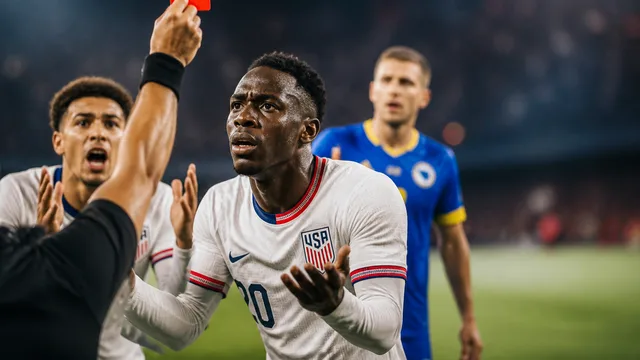
USMNT Beats Bosnia, Advances Despite Balogun Red Card
The USMNT beat Bosnia 2-0 to reach the World Cup Round of 16, despite Folarin Balogun's controversial red card. Here's what it means on and off the field.

Trump, FIFA, and the Balogun Reinstatement Explained
Trump called FIFA's Infantino to contest Folarin Balogun's red card ban. FIFA reversed it. Here's what we know—and what remains unanswered.
Ken Griffey Jr. Is Trying to Bring Black Players Back to Baseball
Ken Griffey Jr.'s HBCU Swingman Classic is MLB's most visible bet on Black baseball's comeback. Here's what it's up against — and why it matters.
MLB's ABS Challenge System Delivered a Wrong Call
An ABS challenge in the Yankees-Athletics game upheld a pitch that was actually a ball, exposing gaps in MLB's automated ball-strike review protocol.

How the Tour de France Built a Global Sports Business
The Tour de France is more than a race. How ASO built a commercial machine from a national institution—and what it means for the athletes inside it.

Bryne, Norway and the Haaland World Cup Economy
Erling Haaland's World Cup run is drawing global attention to Bryne, Norway. What does superstar proximity actually mean for a town of 13,000?
NCAA Court Order Forces Athlete Eligibility Grandfather Clause
An Ohio judge ruled the NCAA's new age-based eligibility rules "arbitrary and capricious," ordering 24 athletes grandfathered in. What the ruling reveals about how the NCAA governs.