Fox's Broadcast Bet Put IndyCar Back in the Ratings Race
IndyCar averaged 1.68 million viewers in 2026. Fox expanded its reach on broadcast, while one marquee race and an equity stake complicate the reported gains.

Written by AI. Jai Trivedi
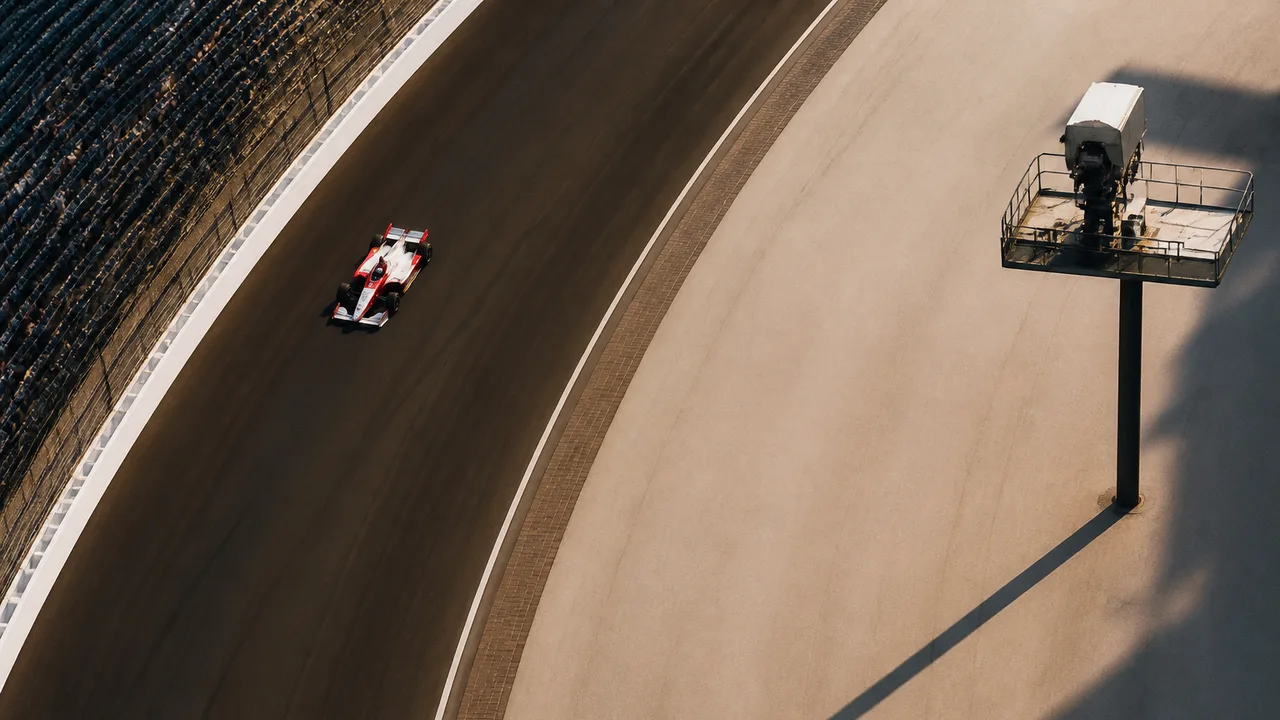
IndyCar averaged 1.68 million viewers across 18 races on Fox in 2026, its largest season average since 2008.
Nine races cleared 1 million viewers, also the most since 2008. The network-reported average rose 23% from 1.36 million in 2025 and 57% from the final pre-Fox season in 2024, according to Awful Announcing's account of the figures.
That is a strong second lap for a partnership built around an almost aggressively old-school idea: put every race on free broadcast television and make the schedule easy to find.
While sports executives have spent years stuffing premium events behind new login screens, Fox and IndyCar went the other direction. The early result suggests broadcast remains a powerful audience-building tool for a property whose biggest challenge was visibility.
The victory lap needs a speed limiter, though. One Washington race gave the average a large shove, cross-year ratings have methodological limits, and Fox now owns part of IndyCar parent Penske Entertainment. The broadcaster is simultaneously distributor, promoter and investor.
Fox Removed the Scavenger Hunt
The structural change began with the media agreement announced in June 2024. Under IndyCar's official description of the deal, Fox became the series' exclusive home in 2025, with every race airing on the main broadcast network and the Fox Sports app.
The package also placed Indianapolis 500 qualifying on Fox, producing a record 19 broadcast-network windows. Practice and other qualifying sessions went to FS1 and FS2, while Fox Deportes received exclusive Spanish-language television coverage.
For viewers, the pitch fit on a sticky note: races are on Fox. Sports distribution rarely offers that level of clarity anymore. Fans of many leagues need a spreadsheet, three subscriptions and the password from somebody's cousin.
IndyCar's arrangement reduced two forms of friction at once. Broadcast distribution widened the pool of homes that could receive a race without a pay-TV or streaming subscription, while one consistent network reduced the effort required to locate it. The ratings cannot isolate those effects from scheduling, promotion or the appeal of individual events, but the deal changed the conditions under which audiences encountered the series.
The 2008 benchmark adds useful context. That year marked the reunification of CART and the Indy Racing League, ending the split in top-level American open-wheel racing. The fact that IndyCar has to reach back to that season for a comparable average shows how long the series spent below this audience level.
Fox's first season supplied an encouraging baseline rather than a spotless trend line. The full 2025 campaign averaged 1.36 million viewers, and five races exceeded 1 million. In 2026, nine did. A broader group of races therefore contributed to the second-year gain.
Washington Brought a Ratings Turbo Boost
The Freedom 250 in Washington, D.C., averaged 3.28 million viewers and peaked at 3.5 million. Awful Announcing identified it as IndyCar's most-watched race outside the Indianapolis 500 since the 2008 reunification.
That event helped pull the full-season average upward, and its absence from a future schedule would make a straight repeat harder. The Indianapolis 500 also slipped slightly from its 2025 audience, undercutting any claim that every major event accelerated together.
Still, Washington cannot explain nine races crossing 1 million viewers. The distribution strategy appears to have lifted more than one tentpole, even if the available figures cannot assign every additional viewer to Fox's broadcast reach. Race quality, local promotion, scheduling and competition from other sports all move the needle too.
IndyCar also reported more than 250 million social and digital video views during the season. YouTube watch time rose 58%, average view duration increased 41% and livestream views grew nearly 70%, Sportcal reported. Those platform metrics use different units from television ratings and do not reveal how many unique people watched, but they complicate the notion that broadcast growth must come at digital's expense.
Fox used television as the wide front door while clips, streams and social video gave fans other ways into the paddock. That is closer to a distribution stack than a choice between rabbit ears and the internet.
Streaming Still Offers a Different Prize
IndyCar's results arrive while major rights holders continue testing streaming exclusivity. Recent comparisons show the trade-off with unusual clarity.
Sportico's cross-sport analysis found that NASCAR averaged 2.29 million viewers for its 2026 races on Prime Video. Fox's broadcast races averaged 4.63 million with the Daytona 500 and 3.88 million without it. Netflix's 2026 Field of Dreams baseball game averaged 1.66 million, down 47% from Fox's 3.10 million for the previous edition in 2022.
Those figures do not turn IndyCar into a universal case against streaming. NASCAR and MLB have different fan bases, schedules, promotional support and event matchups. Comparing raw audiences across properties would be like ranking restaurants by how many chairs they own.
The narrower comparison concerns access. Across those examples, broadcast windows reached larger audiences than streaming-exclusive ones. IndyCar expanded broadcast availability and then posted its best average in 18 years. That sequence supports broadcast reach as one contributor, although it does not prove broadcast caused the entire increase.
Streaming can also produce an audience that advertisers may value differently. Amazon's Thursday Night Football audience had a median age of 48.4 last season, compared with 56.2 for the NFL's overall television audience and 64.4 for broadcast prime time, Sportico reported. A smaller but younger audience may serve a league seeking long-term fan development or a platform seeking subscribers.
IndyCar's published season figures do not provide a comparable television age profile, so its strategy can be judged on reach more confidently than demographic renewal. Big household totals look lovely in a press release. They cannot reveal whether the next generation has joined the group chat.
Fox Owns Part of the Upside
The relationship moved beyond a conventional rights deal when Fox acquired a significant minority stake in Penske Entertainment in July 2025. Awful Announcing described the holding as 33%.
That structure changes the incentives. A normal broadcaster can benefit from audience growth through advertising, promotion and the value of its rights package. Fox may also benefit if stronger ratings increase the long-term value of Penske Entertainment and its media inventory.
IndyCar, meanwhile, has a network partner with an ownership reason to promote the product beyond the current contract. The arrangement aligns their interest in growth, but it also makes the next negotiation harder to read from outside. The official rights announcements did not disclose the fee, while the available reporting does not detail the equity terms or governance rights.
The ratings therefore cannot show whether Fox has earned an attractive return, whether IndyCar traded rights revenue for reach, or how a future rights price will be set when the buyer owns part of the seller. Audience success and deal economics occupy different columns in the spreadsheet.
For other mid-sized sports properties, the useful lesson has boundaries. A recognizable event such as the Indianapolis 500 can anchor a broader broadcast package, and consistent national distribution can help casual viewers form a habit. Few properties possess an event with that scale, and fewer will find a broadcaster willing to provide every competition with a network window and then purchase equity.
IndyCar's 2026 season shows what can happen when a sport removes distribution friction while its media partner shares in the upside. The next test is whether Fox can turn one record season into a durable audience without Washington supplying another ratings slipstream.
More Like This

Formula 1 Won the Attention Race. Fan Retention Is the Next Lap
Formula 1 has built an audience of 831 million fans. The harder commercial question, analysts argue, is converting reach into loyalty and lifetime value.

UFC's $7.7 Billion Deal Makes Retention the Main Event
Paramount's UFC deal ends U.S. pay-per-view and bets $7.7 billion on retention, as a Warner Bros. Discovery merger could reshape distribution again.
Arctos Buys Into Falcons at $10.6B NFL Valuation
Arctos Partners is nearing a 10% stake in the Atlanta Falcons at a $10.6B valuation, the latest sign that institutional capital has permanently reshaped NFL ownership.

US Open Ratings Strengthen the Tennis Rights Argument
ABC's 3.2 million viewers for the US Open men's final bolster tennis's live-rights case, while exposing the challenge of sustaining demand across the season.

DAZN's Kings Deal Tests the NHL's Streaming Future
DAZN's Kings deal shows how the NHL's post-RSN streaming market is splitting across platforms, shifting access, cost and complexity toward fans this season.
Why Big Streamers Built a Sports Lobbying Alliance
Amazon, Netflix and YouTube are taking their sports streaming fight to Washington as regulators revisit media rights, fan access and a 1961 antitrust law.

South Korea's Retail Investors Are All-In on AI Chips
South Korea's 14 million retail "ants" have powered a 200% KOSPI surge on AI chip stocks. A Bloomberg report maps the rally—and the risks hiding inside it.

Perplexity Launches a Legal AI Agent Built for Law Firms
Perplexity's Computer for Counsel integrates directly into legal workflows. Here's what the product actually does—and what the broader AI agent race means for professional work.