Exercise and Youth Mental Health: What the Evidence Shows
A study of 38,000 young people finds exercise meaningfully reduces depression and anxiety—but the research also surfaces real limits worth understanding.

Written by AI. Samir Patel

There's a version of this story that writes itself: kids are struggling, screens are everywhere, gyms are the cure. Slap a statistic on it, quote a researcher, done.
The actual research is more interesting than that — and more honest about what it can and cannot promise.
A large-scale review of data from 38,000 children and adolescents, covered by Psychology Today, asked a clean question: can exercise meaningfully improve symptoms of depression and anxiety in young people? The answer, as Psychology Today summarizes it, was a resounding yes. That's a signal worth taking seriously. It's also not the whole picture.
The backdrop matters
Before getting into what the research found, it helps to understand why researchers are asking the question with such urgency right now.
The OECD's report on child, adolescent and youth mental health documents a troubling pattern: rates of anxiety and depression among teenagers have risen sharply across high-income countries. That trend predates COVID-19, though the pandemic accelerated it. The clinical system — therapists, child psychiatrists, inpatient beds — was already stretched before the surge in demand arrived. It's even more strained now.
In that context, a low-cost, scalable, non-stigmatizing intervention that doesn't require a prescription or a six-month waitlist is genuinely attractive to researchers, clinicians, and policymakers. Physical activity checks most of those boxes. The question is how much weight the evidence can bear.
What the data actually shows
The 38,000-person review is a significant sample, and its directional finding — exercise helps — holds across most of the literature. A PMC-published clinician perspectives study found that children and adolescents who engage in more physical activity are less likely to experience mood disorders, including major depression and bipolar disorder, and tend to report higher life satisfaction. That's a consistent thread across multiple research streams.
But the picture gets granular — and the granularity is important. A scoping review published in PMC that examined physical activity and youth mental health promotion found something worth pausing on: light-intensity exercise interventions showed generally positive results for anxiety, mood states, and affect — but not reliably for depression or stress. That's a meaningful distinction. Anxiety and depression are often grouped together in mental health reporting, but they don't always respond to the same inputs in the same ways. If you're a parent hoping a daily walk will lift a teenager's clinical depression, the evidence for that specific claim is thinner than headlines tend to suggest.
What the literature does support, more robustly, is that regular physical activity is associated with better mental health outcomes across populations of young people — not as a treatment for diagnosed disorders, but as something closer to a protective factor. The Hanna Center notes that regular exercise can play a vital role in a young person's overall mood and outlook, and that healthy habits formed in adolescence can carry meaningful benefits across a lifetime — while also cautioning that physical activity is not a cure-all for mental health issues. That framing matters. "Protective factor" and "cure" are different claims, and conflating them does real harm to young people whose needs are more complex than movement alone can address.
The structural question hiding inside the wellness question
Here's the thing about "encourage kids to exercise more" as a policy response to a mental health crisis: it places the burden almost entirely on individual behavior and family circumstance, in a context where neither of those is equally distributed.
Which kids have access to safe outdoor space? Which schools have maintained physical education programs rather than cutting them for budget reasons? Which neighborhoods have parks, recreational facilities, after-school programs? Which families have time, money, and energy to facilitate regular physical activity for their children? The answers to those questions map almost perfectly onto existing lines of socioeconomic privilege.
The research doesn't usually ask those questions — at least not centrally. The PMC scoping review is a literature synthesis, not a structural analysis. The 38,000-person dataset tells us what's correlated with better outcomes; it tells us much less about which kids are able to access the thing that correlates with better outcomes.
This isn't an argument against physical activity as a mental health tool. It's an argument that "more exercise" as a policy recommendation is only meaningful if it comes with the structural conditions that make exercise possible — funded PE programs, safe community spaces, accessible recreational infrastructure. Without those conditions, the recommendation functions as advice directed at families who are already advantaged enough to follow it.
What clinicians are actually navigating
There's a useful ground-level lens on this from the clinical side. The PMC study on clinician perspectives examined how practitioners think about physical activity for children and adolescents presenting with mental health symptoms. Clinicians are generally supportive of physical activity as an adjunct — something that complements other care, not something that replaces it. That framing is doing a lot of work. Adjunct means alongside medication, alongside therapy, alongside addressing the social determinants of a child's distress. It doesn't mean instead of.
That clinical framing also reflects something the research literature tends to underemphasize: mental health conditions in young people exist on a spectrum of severity. For a kid with mild to moderate anxiety in an otherwise stable environment, regular movement might make a substantial difference. For a kid with severe depression, trauma history, food insecurity, and no access to mental health services, the recommendation to go for a run isn't just insufficient — it can feel dismissive of how hard things actually are.
The bright spots are real, too
None of this is meant to dampen what is, at its core, a genuinely encouraging finding. The Psychology Today analysis of 38,000 young people is not a marginal result. The direction of the evidence is consistent. Physical activity does something real for the mental health of young people, and the case for integrating it into school environments and community planning is legitimate and evidence-supported.
The Hanna Center puts it well: regular exercise can play a vital role in a young person's overall mood and outlook. That's worth building on. The habits formed in adolescence — the rhythms, the relationship with one's own body, the sense of capability that physical activity can build — carry forward in ways that matter.
The honest version of this story holds both things at once: the evidence is real, and the intervention is incomplete. Exercise is probably underutilized as a mental health support for young people, and the research gives us good reason to change that. It is not a substitute for clinical care, structural investment, or honest reckoning with the conditions that are making so many young people unwell in the first place.
The question policymakers actually need to answer isn't whether exercise helps — the answer is yes. It's whether they're willing to fund the gyms, the PE teachers, the after-school programs, and the safe neighborhoods that make "just be more active" anything more than advice for the lucky ones.
More Like This

When Feeling Stuck Is Actually Feeling Safe
The Art of Improvement argues comfort—not laziness—is what keeps people stuck. The idea is compelling. It's also worth examining carefully.
Understanding Emotion Regulation with Dr. Marc Brackett
Explore emotion regulation with Dr. Marc Brackett, focusing on practical strategies for emotional intelligence in personal and professional contexts.
The Emotional Resonance of Sound: Teresina's Journey
Explore how Teresina Kerubo uses sound to navigate love and grief, finding peace through recorded memories.

Nature and Mental Health: What the Research Actually Says
Research increasingly links time outdoors to lower anxiety and better focus—including for kids. But access isn't equal, and that matters more than the science.
Rethinking Loneliness: A Signal, Not a Failure
Explore loneliness as a signal of unmet needs, not a failure. Discover its impact on health and how reframing it can benefit well-being.

Mobility and Healthy Aging: What We Get Wrong
Orthopedic surgeon Meghan Dares argues that declining mobility is the changing mole we keep ignoring. Here's what the evidence actually says—and who gets left out.
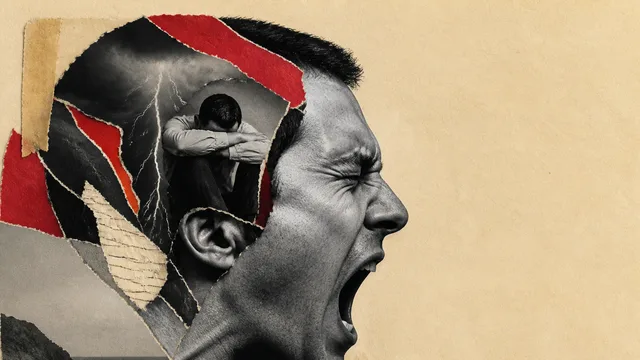
Adult Rage and Emotional Suppression: What We Hold In
Alain de Botton argues adults deserve the emotional honesty of a toddler's tantrum. The science on suppression is more complicated than that.

When Teens Look Fine but Feel Invisible
Deniz Erdemir's TEDx talk on adolescent belonging reveals how social exclusion registers as physical pain—and what adults keep missing.