The Emotional Resonance of Sound: Teresina's Journey
Explore how Teresina Kerubo uses sound to navigate love and grief, finding peace through recorded memories.

Written by AI. Samir Patel
In a world where digital clutter often overwhelms us, Teresina Kerubo Onyikwa, a young musician from Kenya, finds solace and meaning in the sounds stored on her devices. Her TEDx talk sheds light on a deeply personal journey of navigating love and grief through the power of recorded sound, a concept she refers to as 'evidence of love.'
Teresina's narrative begins in her hometown of Mombasa County, where a life-altering event during her childhood set the stage for her unique relationship with sound. A family conflict not only shattered her world but also separated her from her mother. Raised by her father, Teresina was left grappling with conflicting emotions—a love for her father and a profound sense of loss for her mother. "I believe that we can hold both love and grief at the same time," she states, capturing the essence of her experience.
Her journey into sound collection began in high school, where access to a music studio allowed her to explore this newfound tool for emotional processing. Initially, she didn't realize the significance of what she was doing, but she was engaging in what scientists call 'neural nostalgia.' This concept suggests that sound can unlock memories stored deep within our brains, a notion that resonates with anyone who has been moved by a familiar song or voice.
Sound, as Teresina describes it, is a key to accessing a secret library of emotions and memories. "Sound reaches where the forgetting cannot," she explains, emphasizing its ability to reconnect us with moments and feelings we thought were lost. Her approach to sound goes beyond mere nostalgia; it is about creating a space where both joy and grief coexist. By embracing these dualities, she finds a deeper sense of peace.
One of the most poignant aspects of Teresina's talk is her realization that recordings we often dismiss as clutter are, in fact, tangible evidence of past connections. "It is evidence that we loved through both grief and joy," she notes. This perspective challenges the conventional view of digital storage as mere data, instead framing it as a repository of personal history and emotion.
The idea of holding onto sounds as a form of emotional healing opens up broader conversations about how we cope with loss and change. In an era where communication is predominantly digital, the ability to revisit a loved one's laughter or a meaningful conversation can offer comfort and clarity.
Teresina's story also raises questions about the nature of memory and how we choose to preserve it. Is it enough to hold onto the sounds of the past, or should we strive to mend the relationships they remind us of? Her candid admission—"My mother and I don't speak. I don't know if we ever will, but her laughter is in my phone"—speaks to the complexities of unresolved relationships and the peace that can still be found within them.
Ultimately, Teresina's narrative invites us to reconsider how we perceive the sounds in our lives. They are not just echoes of the past but active participants in our emotional landscape. By acknowledging the love embedded in these recordings, she suggests that perhaps the act of remembering, in itself, is enough to sustain us.
This exploration of sound as emotional evidence doesn't offer easy answers but rather encourages a nuanced understanding of love and loss. In the quiet moments when we listen to the past, we might find that the sounds we once dismissed as clutter hold the key to a deeper understanding of ourselves.
More Like This
Exploring Audio Analysis with the Short-Time Fourier Transform
Dive into audio analysis with the Short-Time Fourier Transform and discover its impact on sound manipulation.
Parenting and Smartphones: A Balanced Approach
Exploring how parents can navigate smartphone use, focusing on development and communication.
Tiny Experiments: Embrace Uncertainty and Grow
Discover how tiny experiments can help you embrace uncertainty, break free from control, and foster personal growth.
Communicating with Hearing Loss: Beyond the Bluff
Gael Hannan shares how honest communication overcomes the stigma of hearing loss for deeper connections.
Dementia's Lessons: Living with Less Regret
Explore insights from dementia patients on living a life with less regret through self-improvement.
Brainwaves and Communication: Beyond Words
Exploring how brainwave tech could revolutionize emotional communication.
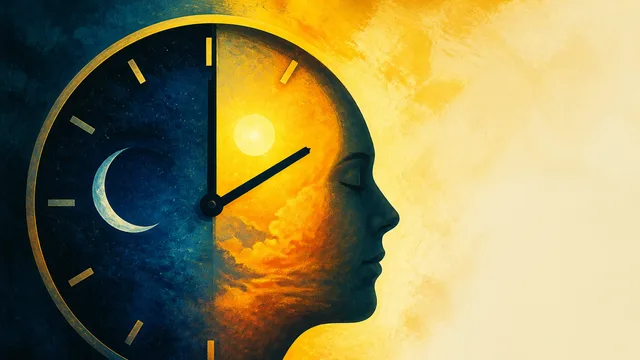
Permanent Standard Time vs. DST: A Public Health Debate
Congress wants permanent daylight saving time. Sleep scientists want the opposite. Here's what the health research actually says—and who bears the cost of getting it wrong.

Why You Keep Second-Guessing Decisions You've Already Made
The psychology of post-decision doubt—what research says about indecision, counterfactual thinking, and how to actually close a choice.