Tiny Experiments: Embrace Uncertainty and Grow
Discover how tiny experiments can help you embrace uncertainty, break free from control, and foster personal growth.

Written by AI. Samir Patel
When Anne-Laure Le Cunff was confronted with a life-threatening diagnosis, her instinctive response was to cling to control. "One second. I need to check my calendar," she told her doctor. This moment of absurdity highlighted a universal truth: our deep-seated need for control often holds us captive, limiting personal growth and self-discovery.
In her TEDxNashville talk, Le Cunff—a neuroscientist, author, and entrepreneur—proposes a transformative approach to life: embracing tiny experiments. These small, deliberate tests in our daily lives help us navigate uncertainty and challenge the identities we've constructed around ourselves. "What if the thing keeping you stuck isn't your circumstances, but your grip on who you think you need to be?" she asks.
The Trap of Control
Our craving for control is a natural psychological response. Termed "compensatory control," this behavior is our brain's way of manufacturing order when real control slips away. Le Cunff notes that in our quest for stability, we often adopt habits and routines that may feel productive but ultimately limit our ability to discover new facets of life and self.
"You can't receive what life is actually offering when you're too busy managing what you think it should be offering," she explains. This need for control not only stifles our circumstances but also entrenches us within a fixed identity, preventing self-growth.
The Power of Experimentation
Le Cunff advocates for adopting an experimental mindset, akin to a scientist's approach to discovery. The beauty of experimentation lies in its detachment from specific outcomes. It's not about achieving success or avoiding failure; it's about learning and expanding your understanding of yourself and the world.
She introduces the concept of "tiny experiments," defined by a simple formula: "I will [action] for [duration]." This framework encourages curiosity and courage, allowing individuals to step outside their comfort zones without the pressure of long-term commitments or expected results.
Real-Life Applications
Le Cunff shares compelling examples from her community to illustrate the impact of tiny experiments. Take Jay, who felt isolated due to work commitments and found it difficult to reconnect with friends. Instead of crafting perfect messages, he decided, "I will message one friend every week for four weeks." This tiny experiment removed the burden of perfection and helped Jay redefine his place in his friendships.
Another powerful example comes from a woman who was paralyzed at the thought of reconnecting with her estranged father. She chose an unrelated experiment: attending pottery classes. This lateral experimentation allowed her to embrace messiness and imperfection, ultimately enabling her to write the long-awaited letter.
Embracing the Unknown
Le Cunff emphasizes that experimentation rewires our relationship with uncertainty. Instead of viewing the unknown as a threat, we begin to see it as an opportunity for growth and discovery. "The uncertainty that once felt threatening starts feeling energizing," she says.
This shift in perspective encourages us to explore beyond our self-imposed limits. It fosters a mindset where we ask not "How can I stay in control?" but "What can I try?" Such curiosity-driven living transforms life into a personal laboratory where each experiment reveals hidden aspects of our identity.
The Invitation
For those hesitant to tackle overwhelming problems directly, Le Cunff suggests starting with low-stakes experiments in unrelated areas. These lateral experiments bypass psychological resistance and encourage new insights and growth. "Every experiment brings you closer to becoming you," she concludes.
So, the invitation is clear: design a tiny experiment this week. Whether it's trying a new hobby, reaching out to a friend, or exploring a new routine, let curiosity guide you. Who knows what you might discover about yourself when you let go of control and embrace the freedom of experimentation?
More Like This

Breaking Free from Limiting Cognitive Scripts
Explore how cognitive scripts impact decision-making and learn strategies to break free from limiting patterns in life, career, and relationships.
Parenting and Smartphones: A Balanced Approach
Exploring how parents can navigate smartphone use, focusing on development and communication.
The Emotional Resonance of Sound: Teresina's Journey
Explore how Teresina Kerubo uses sound to navigate love and grief, finding peace through recorded memories.
Rethinking Attraction: Dr. K's Dating Insights
Explore Dr. K's unconventional advice on why attraction may not lead to healthy relationships and how to rethink your dating patterns.
Mistakes: Your Unexpected Allies in Personal Growth
Explore how mistakes, seen as allies, foster growth and authentic connections.
Brainwaves and Communication: Beyond Words
Exploring how brainwave tech could revolutionize emotional communication.
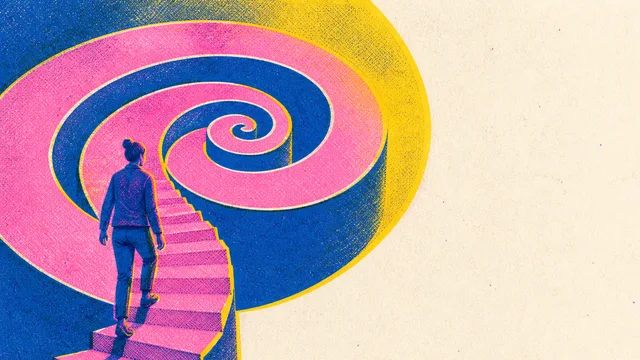
What Pi Can Teach Us About Feeling Stuck
Nehir Kırkgöz's TEDxVUAmsterdam talk reframes the feeling of being stuck—using pi's infinite, non-repeating nature as a lens on personal growth and resilience.
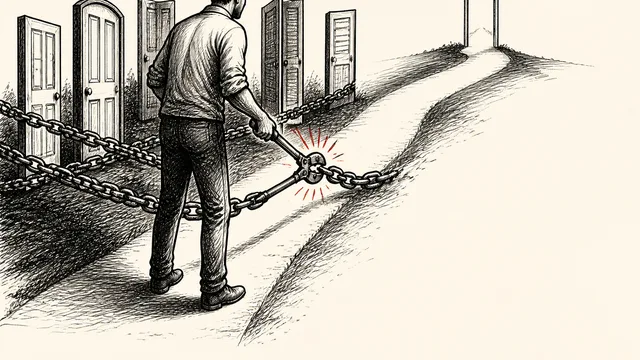
Discipline Is About Removing Options, Not Building Willpower
Mark Manson argues discipline has nothing to do with willpower—it's about eliminating choices. Here's what the research says, and what the theory leaves out.