Europe's Quieter Cities Have Their Own Identity
Ferrara and Ålesund are gaining attention as alternatives to overtouristed Europe. But the quieter label obscures what makes them worth the trip.

Written by AI. Kael Maddox
Last summer in Barcelona, I watched a shop owner on Las Ramblas deploy a water pistol to push tourists off his doorway. He had a system. That detail keeps surfacing as I read through the growing stack of coverage recommending "quieter" European cities as an antidote to overtourism, because it clarifies what we're actually talking about: places where the tourism industry has grown past the carrying capacity of the places themselves, and the residents have started pushing back.
Ferrara and Ålesund kept appearing at the top of that reading stack, and not just because travel editors love them right now. What pulled me toward these two specifically is that they illustrate the same trend from opposite angles: Ferrara sits 50 kilometers from Bologna and gets compared to it constantly; Ålesund is an Art Nouveau port city on Norway's western coast that gets compared to Bergen. Both comparisons are reductive in instructive ways.
The problem with "like X but quieter"
Ferrara was a Renaissance duchy under the Este family. It has its own court culture, its own artistic legacy (Cosmè Tura, Dosso Dossi), its own Este Castle rising from the city center, and a UNESCO designation covering both the historic center and the Po Delta landscape it helped shape. Travel coverage consistently describes it as one of Italy's premier cycling cities, the flat terrain making bikes the dominant form of movement through streets that have not been redesigned for car traffic. None of those details derive from Bologna. The cities share a region and a rail line; the histories diverge well before the medieval period.
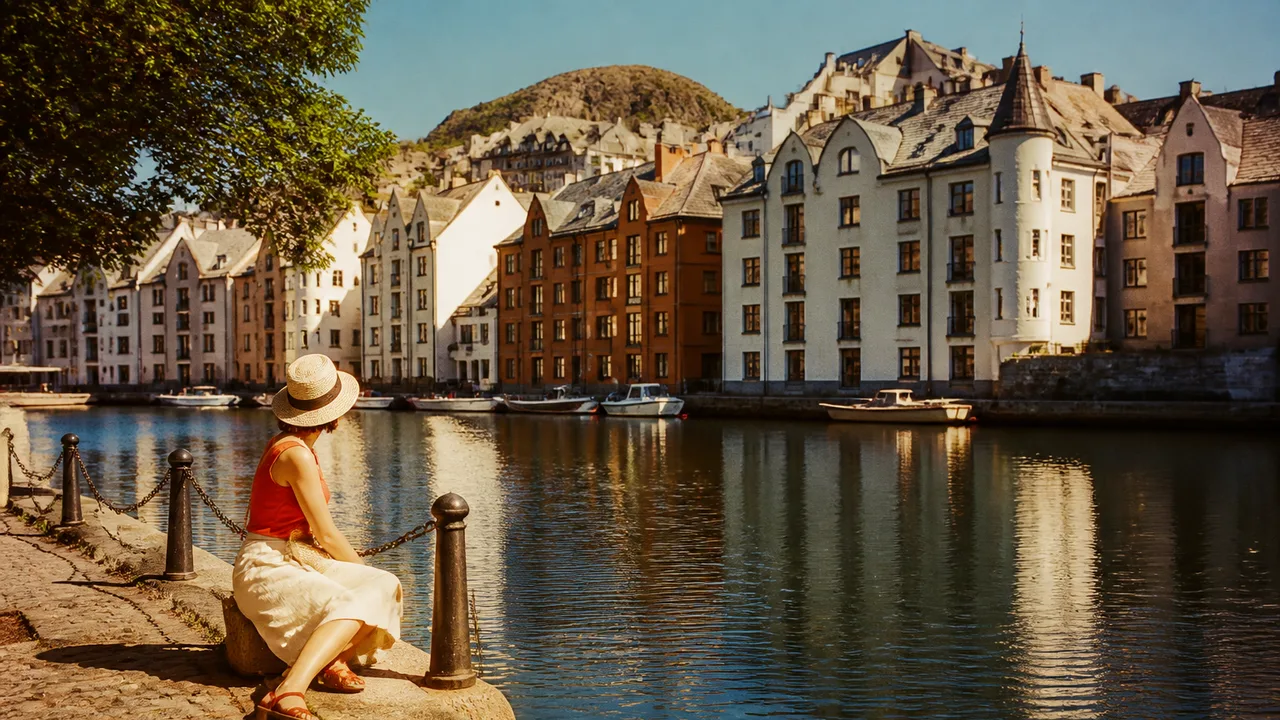
Ålesund burned to the ground in 1904 and was rebuilt almost entirely in Art Nouveau style, which makes it architecturally unusual anywhere in Europe, not just in Norway. The fjords visible from the city are not a lesser version of Bergen's fjords; they're Geirangerfjord approach country. Matador Network's coverage of European second cities (matadornetwork.com) frames Ålesund as a city with a distinct identity rather than a city that mirrors a more famous neighbor, and that framing is accurate in a way that "quieter Bergen" is not.
The comparison model does real damage to how travelers show up. If you arrive in Ferrara expecting Bologna with fewer tourists, you'll walk past the Este Castle looking for something more familiar. If you arrive in Ålesund expecting Bergen-lite, you'll miss the thing that makes it worth the flight: a cityscape that looks like nowhere else in Scandinavia.
Why "quieter" is becoming a marketing category
Condé Nast Traveler (cntraveler.com) has been running less-crowded European summer coverage for a few years running, and the pattern is consistent: cities with strong cultural identities and limited international name recognition keep appearing on the same lists. Dispatches Europe (dispatcheseurope.com) publishes similar roundups of alternative city breaks, pulling in destinations from the Balkans to the Baltic coast.
The volume of this coverage has created a self-referential loop. A city appears on one "hidden gem" list, tourism boards notice the traffic uptick, and the marketing apparatus starts reinforcing the discovery narrative. This is already visible in how some tourism boards are positioning themselves: leaning into "authentic local experience" messaging precisely because authenticity is what the coverage promises visitors will find.
Whether the places can deliver on that promise depends on how quickly visitor numbers shift. Ferrara draws serious food tourists to the Emilia-Romagna region (this is Parmigiano-Reggiano and prosciutto di Parma country), but the city itself has not yet seen the infrastructure pressure that hits Florence or Venice at peak season. That could change if the "alternative Italy" messaging reaches a wide enough audience fast enough.
The carrying capacity question
Overtourism is not a single phenomenon. Venice is dealing with day-trippers who arrive by cruise ship and leave before dinner. Barcelona is managing a permanent residential population being priced out of neighborhoods by short-term rental saturation. Dubrovnik capped daily visitor numbers to the Old Town after foot traffic was measurably damaging the medieval walls. Each situation required a different policy response.
The cities now being promoted as quieter alternatives face their own version of the same structural question: how much visitor traffic can the city absorb before the quality that made it worth recommending gets eroded?
Ålesund is a smaller city with less accommodation infrastructure than Bergen. The Art Nouveau architecture that makes it visually striking is also fragile, and Norway's western coast has already absorbed significant pressure from cruise tourism in the fjord region. The city has not yet reached saturation, but the gap between "undiscovered" and "overrun" is shorter than most travel coverage acknowledges.
Ferrara's UNESCO status offers some protection for the historic fabric. Ålesund's relative geographic remoteness (it's not a low-cost carrier hub) slows the volume somewhat. But protection and remoteness are not immunity, and the tourism boards now marketing these cities as tranquil alternatives have every incentive to push visitor numbers up, which is the one condition guaranteed to end the tranquility.
What travelers are actually after
The pitch for quieter urban destinations runs on a few assumptions: that travelers want to engage with local life, that they'll spend in locally-owned businesses rather than international chains, and that the absence of crowds will produce a more meaningful experience. Some of those assumptions hold. Some don't.
Travelers who seek out Ferrara because they want to cycle through medieval streets and eat well in Emilia-Romagna are likely to interact with the city benefit local businesses. Travelers who seek it out because Florence felt overwhelming are a different visitor profile, with different expectations and different spending patterns. Dispatches Europe's coverage of alternative city breaks (dispatcheseurope.com) emphasizes heritage and culinary dimensions, which suggests the editorial framing is aimed at the former group. Whether that framing reaches the actual visitor base is harder to know.
Writing about "undiscovered" cities is an act of discovery and an act of exposure simultaneously. Every piece that recommends Ferrara adds Ferrara to someone's itinerary. Every Ålesund feature increases the demand for accommodation that currently doesn't exist in sufficient quantity. Travel journalism has always carried this contradiction, and it doesn't resolve cleanly.
The cities on this year's alternative destination lists are the ones that will appear in "how overtourism changed X" pieces in a decade if visitor numbers spike and infrastructure investment doesn't follow. The Barcelona shop owner with his water pistol had been managing this problem for years. He'd optimized his response. The cities being recommended right now haven't had to optimize yet, and that window is probably what travelers are actually chasing.
More Like This

Hotel AI Visibility: Why Google Rank No Longer Guarantees Discovery
Hotels that rank well on Google are disappearing from AI chatbot results. Here's what's driving that gap and what properties need to rethink about their content.

Flight Attendants Share Honest Tips for Air Travel
Flight attendants reveal what they actually do on planes, from skipping the coffee to packing smarter. Here's what their habits tell frequent flyers.
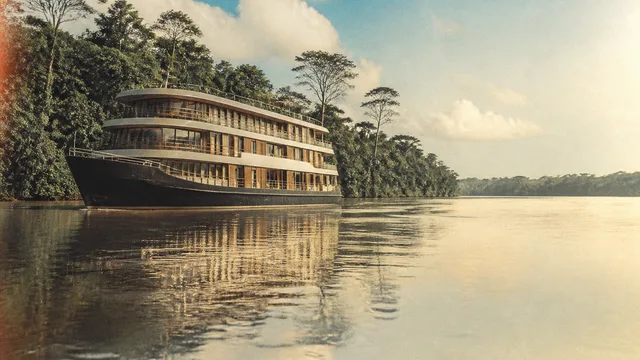
andBeyond Amazon Explorer Yacht: Luxury on the River
andBeyond launches the Amazon Explorer yacht in the Peruvian Amazon in 2026. A look at the specs, the route, and what eco-luxury really demands here.

Airbnb Hires Pepijn Rijvers as Chief Business Officer
Airbnb named Pepijn Rijvers, ex-Booking.com and Viator, as its new CBO. Here's what his hire signals about the platform's hotel ambitions.

Local Staycations Are Reshaping Travel This September
With 72% of travelers preferring nearby getaways, the September staycation trend is more than a budget fix—it's quietly rewriting how tourism works.
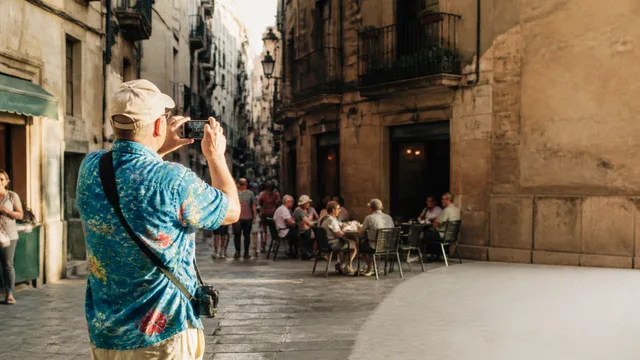
How American Tourists Stand Out Abroad
Mark Wolters breaks down the habits that give American travelers away overseas—from phone posture to dinner timing—and what they reveal about tourism at scale.

Madrid Metro Line 11 Extended to Valdebebas for €880M
Madrid's Comunidad has approved an €880M extension of Metro Line 11 to Valdebebas Norte—7.2 km, four new stations, and a bet on the city's northern edge.

World Cup 2026 Economic Ripple Reaches Non-Host Cities
The 2026 World Cup is lifting hotels and spending in cities nowhere near a stadium. Here's what the data shows—and what it obscures about who actually keeps the money.