Empty Nest Grief Can Start Years Before Kids Leave
Parents are grieving their kids' departure before it happens. Here's what pre-empty nest syndrome looks like—and why it's more common than anyone talks about.

Written by AI. Marcus Obi
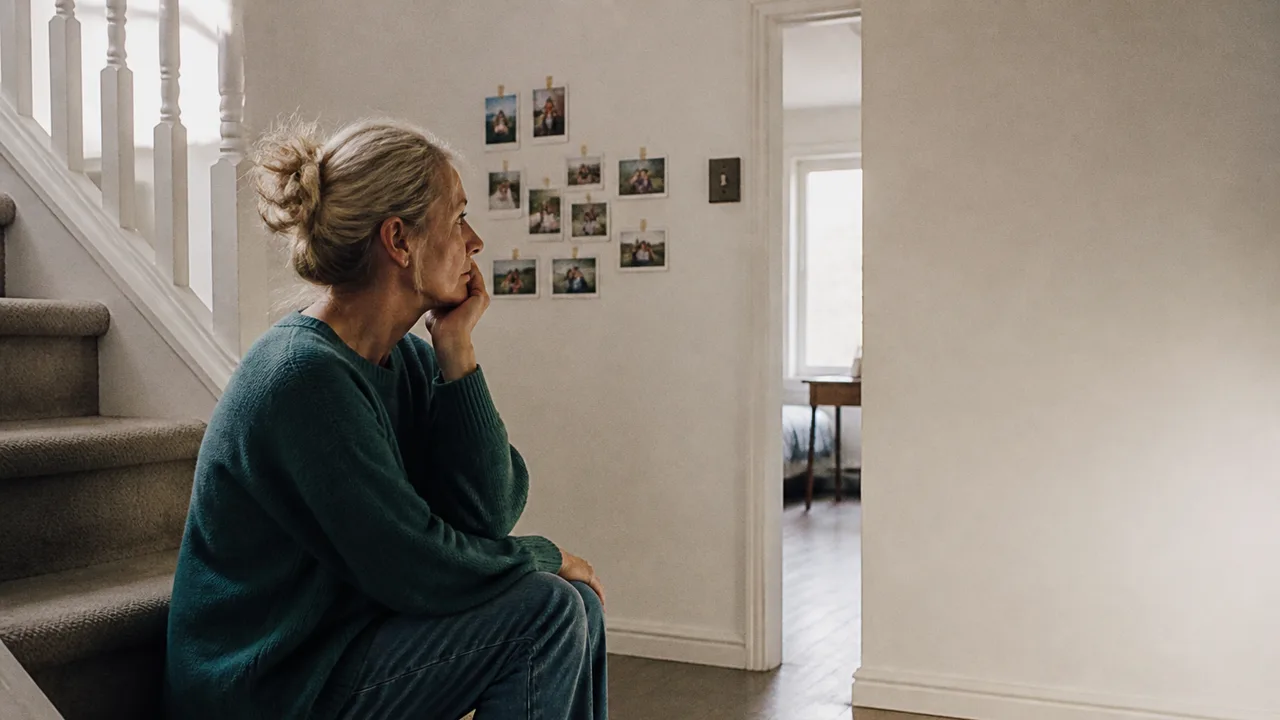
My twins are seven. They still need me to cut the crusts off sandwiches and to verify, repeatedly, that there are no monsters under the bed. The empty nest is a decade away, minimum. And yet—I catch myself sometimes, watching them argue over the remote or fall asleep mid-sentence on the couch, and something tightens in my chest that I can only describe as pre-loss. A shadow of a grief that hasn't happened yet.
I thought that was just me being dramatic. Turns out, it has a name.
Researchers and therapists are increasingly talking about what some are calling "pre-empty nest syndrome"—the anticipatory grief that parents experience not when their kids actually leave home, but before. Sometimes years before. The feelings are real, they're documented, and they're probably more widespread than our cultural script around parenting allows us to admit.
The Loss That Hasn't Happened Yet
The dominant cultural story about empty nests goes like this: kid leaves for college, parent cries at drop-off, parent eventually figures out who they are again, parent thrives. Linear. Tidy. Definitely after the kid is gone.
But the emotional reality, according to therapists and counseling resources, is considerably messier and considerably earlier.
Psychology Today's piece on the subject puts it plainly: "You can be ready for your child to launch and not ready for the house to feel different." That sentence does a lot of work. It identifies something parents don't always have language for—the ability to hold two truths simultaneously. You can want your kid to succeed and leave, and you can dread the specific texture of daily life without them. Those aren't contradictory. They're both grief.
Improving Lives Counseling Services frames it through the gradual nature of the process: "From the inside, if you are the parent watching your child need you just a little bit less each year, they can feel exactly like loss." That framing matters, because it reframes the timeline entirely. The empty nest doesn't begin on move-in day at the dorm. It begins the first time your kid rides a bike without you holding the seat. It begins every September. Every new grade. Every skill they master that they used to need you for.
What we're describing is anticipatory grief—a concept better established in the context of terminal illness or bereavement—applied to a transition that is both universal and, crucially, happy. Your kid is supposed to leave. The whole point of parenting is to make yourself unnecessary. And yet.
It's Not a Diagnosis, But It's Also Not Nothing
One thing worth stating clearly: empty nest syndrome, whether it arrives before or after the departure, is not a clinical condition. The Cleveland Clinic describes it as "the complicated tangle of feelings parents experience when their children move out of the family home and begin their adult lives," adding: "It's not a diagnosable mental health issue, but that doesn't mean it isn't real."
That qualifier—but that doesn't mean it isn't real—is doing a lot of heavy lifting. Because in a culture that tends to either medicalize emotional experience or dismiss it if it doesn't meet a clinical threshold, the feelings that don't fit either box tend to go unacknowledged. Parents who are quietly grieving a kid who's still very much in the house can feel silly about it. Dramatic. Like they're borrowing trouble.
PEP (Parent Encouragement Program) is direct about the stakes: "The feelings of loneliness and grief can even be debilitating." Debilitating is a strong word for something that isn't a diagnosis, and deliberately so. The point is that the absence of a DSM code doesn't cap how much this hurts.
The pre-departure version of this grief may actually be more isolating than the post-departure version, because there's no obvious moment to point to. No move-out day to mark on the calendar, no occasion that gives your feelings social permission. You're sad about something that hasn't happened, which can feel harder to explain—to yourself or anyone else.
Why It Starts Early (And What That Tells Us)
The pre-nest grief makes more sense when you stop thinking of it as premature and start thinking of it as cumulative. Each year of parenting involves its own micro-departures. Psychology Today's overview of empty nest syndrome frames the broader arc: "It's natural for children to leave the parental home when they've reached a certain developmental stage." But developmental stages don't arrive all at once on departure day—they arrive constantly, in small, sometimes imperceptible shifts.
A parent watching their 14-year-old stop wanting to be picked up from school isn't experiencing the empty nest; they're experiencing a rehearsal for it. The 16-year-old who barely looks up from their phone at dinner. The 17-year-old with a social life so full the parent is more schedule-keeper than companion. These aren't crises. They're exactly what's supposed to happen. And they accumulate.
There's also something worth examining about who experiences this most acutely—and the current literature is relatively thin on this question. The sources available to me don't break this down by parenting role, family structure, or whether a parent works outside the home. Anecdotally, parents whose identity is most intertwined with their caregiving role—stay-at-home parents being one obvious group—may be more vulnerable to the early onset of these feelings. But that's an inference, not a studied finding, and the research gap here seems real.
What the sources do suggest is that the depth of the bond drives the depth of the grief. Which, when you think about it, is the same logic that governs every other form of loss.
The Reframe That Might Actually Help
Most of the advice circulating around empty nest syndrome involves some version of cognitive reframing, and Harvest Counseling & Wellness captures the version I find most honest: switch the frame from "they don't need me anymore" to "look at what we did, we raised an independent kid" and "now I have more time to take care of myself and do things I have been putting on the back burner."
The cynical read of this advice is that it's just positive thinking with better branding. But I don't think that's quite right. There's a meaningful difference between denying that something is hard and redirecting toward what it's also making possible. Both things can be true. The grief is real and the freedom is real. Holding both is the actual work.
Psychology Today's piece on anticipatory empty nest grief frames the feeling not as pathology but as signal: "It means you are facing a significant transition in a relationship that is important to you." That's worth sitting with. The grief, in this framing, isn't something to fix or suppress. It's information. It's telling you what matters.
And the advice that follows from that is notably structural rather than just emotional: Psychology Today's empty nest syndrome overview suggests parents try to "understand any concerns they may have about family dynamics without judgment," make concrete plans for maintaining connection, and think deliberately about what the new distance will look like. Not vibes—plans. Not acceptance as a feeling—acceptance as a set of choices you make ahead of time.
The Conversation Nobody's Having
Here's what strikes me about the whole body of literature on this: the pre-empty nest dimension is underrepresented relative to how common the experience seems to be. The parents I know aren't waiting for move-out day to start grieving. They're doing it now, quietly, in the gaps—when the house is too loud and they're already imagining when it will be too quiet.
Normalizing that timeline seems genuinely useful. Not to pathologize early grief or turn it into a syndrome that needs managing, but to give parents permission to acknowledge something they're already feeling without waiting for the culturally designated moment to feel it.
There's also a harder question lurking here, one the existing sources don't fully address: what happens when the anticipatory grief is so intense it shapes how a parent behaves toward a kid who is still home and still needs room to grow? Psychology Today's piece on adult children who cast parents as the villain gestures at the relational complexity of this transition without quite connecting it to the pre-grief experience. But the connection feels obvious: a parent quietly devastated by the approaching departure might, without meaning to, hold on in ways that make the departure harder for everyone.
The grief is natural. What you do with it while your kid is still under your roof—that's the more interesting question.
More Like This

Adult Rage and Emotional Suppression: What We Hold In
Alain de Botton argues adults deserve the emotional honesty of a toddler's tantrum. The science on suppression is more complicated than that.

Eckhart Tolle Says You're Not Who You Think You Are
Eckhart Tolle's 'historical self' vs 'deep eye' framework is either profound or a very elegant dodge. A parenting writer tries to figure out which.

Handwriting Beats Typing for Learning, Studies Find
New research shows handwritten notes improve memory and recall more than typing. Here's what the science says — and what it actually means for kids and parents.
Dr. K Walked Into Chaos and Won the Room
Dr. K's Tiger Belly appearance is a masterclass in social dynamics. Here's what the Charisma on Command breakdown gets right—and what it glosses over.

Jung's Late Bloomer Theory and What It Gets Right
A Jung-inspired video argues that slow starters build deeper lives. Here's a clear-eyed look at what the theory gets right—and what to hold with care.

Molting vs. Breaking Down: Reframing Personal Crisis
Is your personal crisis a breakdown or a molt? A look at the biology, psychology, and real limits of reframing struggle as transformation.

Student-Athletes and the Mental Health Toll of Competing
Behind the scholarship and the starting lineup, many college athletes are quietly breaking down. Here's what the data — and the silence — actually tells us.

Alex Hormozi on Hard Work, Courage, and Wasted Potential
Alex Hormozi tells Chris Williamson why doing hard things physically doesn't build emotional resilience—and what kind of hard actually changes your life.