Deion Sanders Sued Over PRIME21 Logo Fraud Claims
Nebraska designer Alan Tipp is suing Deion Sanders in federal court, claiming fraud over the PRIME21 and TRUTH logos he created. What the case reveals about athlete brand deals.
Written by AI. Elena Vasquez-Moreno
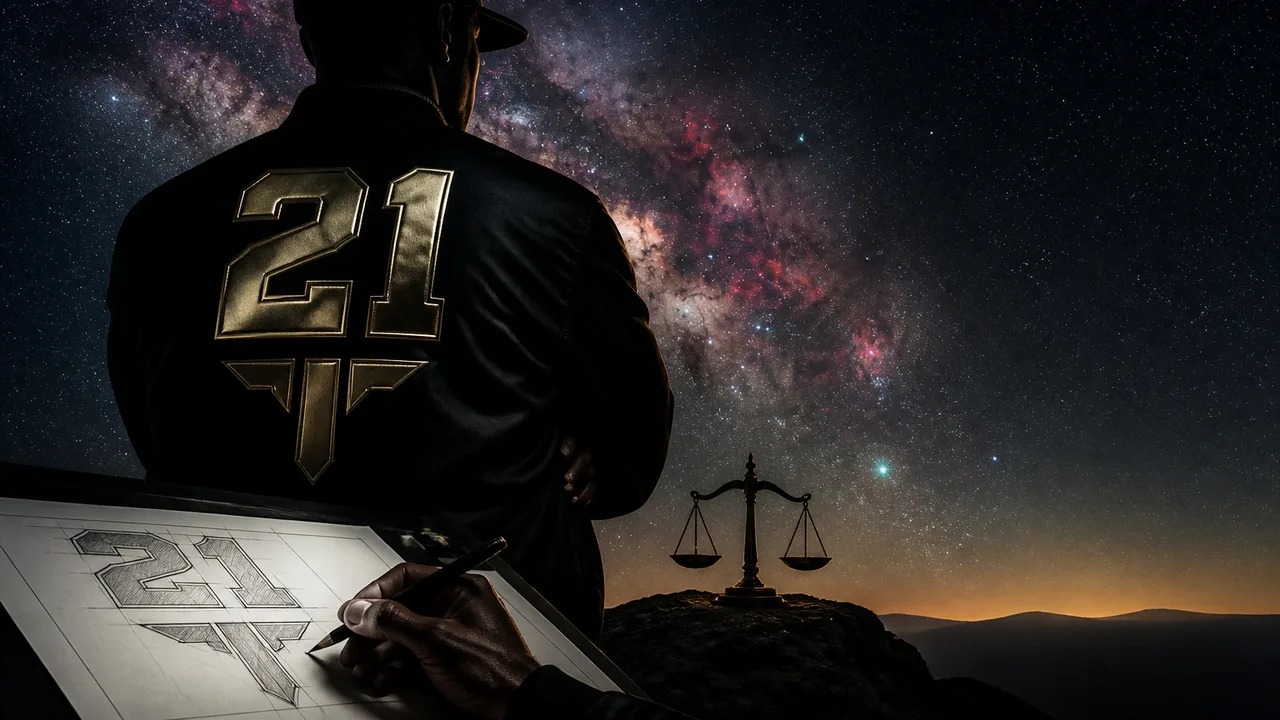
Deion Sanders built "Prime" into something well beyond a nickname. It's a brand architecture — merchandise lines, media presence, recruiting identity at Colorado, the whole apparatus. The PRIME21 and TRUTH logos are load-bearing elements of that structure. So when a federal lawsuit lands alleging that the designer who created those logos was fraudulently induced into signing away his rights, the legal question and the business question are the same: who actually owns the visual identity at the center of a very lucrative personal brand?
According to Front Office Sports, Nebraska-based graphic designer Alan Tipp alleges in a U.S. District Court filing that Sanders and his representatives fraudulently induced him into relinquishing his rights to a pair of logos he first created for the Hall of Fame cornerback in 2011. USA Today reports the suit centers on compensation Tipp claims he was promised and never received for the brand logos he created. Yahoo Sports identifies the specific marks at issue as the "PRIME21" and "TRUTH" logos.
The Athletic, via the New York Times, confirms that Tipp is a Nebraska-based graphic designer who says he created the marks for Sanders' personal brand. The exact filing date has not been consistently confirmed across sources — Pro Football Network references a social media post that cited a January 29, 2025 lawsuit date, but the primary reporting from Front Office Sports, USA Today, and The Athletic all carry August 2026 publication dates, and none of the sourced reporting independently verifies that filing date from court records. Until the court docket is confirmed, treat the specific date as unresolved.
What Tipp Is Actually Alleging
The word "fraud" in a civil filing carries weight that gets lost when it's treated as a synonym for "dispute." Fraudulent inducement — the theory Front Office Sports attributes to Tipp's complaint — has a specific legal architecture. To succeed on that claim, Tipp would need to show that Sanders or his representatives made material misrepresentations, that Tipp reasonably relied on those misrepresentations, and that his reliance caused him measurable harm.
That's meaningfully different from a breach-of-contract claim, where you'd only need to show that a promise was made and broken. Fraudulent inducement goes one layer deeper: it's the allegation that the other party never intended to honor the deal, or knew the inducement was false when they made it. It's harder to prove and harder to defend against, because it implies intentional deception rather than a disagreement about what was owed.
The distinction matters for how this resolves. If Tipp's case sounds in fraud, a settlement — the most likely outcome for a dispute of this kind — carries different reputational weight than a quiet licensing renegotiation. Fraud allegations don't disappear from a brand narrative the way a contract dispute might.
The Origination Problem
The year 2011 is the part of this story that deserves the most attention.
If Tipp created the logos more than a decade before the PRIME21 brand reached its current commercial scale, then the arrangement Tipp agreed to — whatever that arrangement was — was struck when Sanders' personal brand occupied a very different market position. Early creative work on personal brands is frequently compensated on the terms available at the time: a flat fee, a small royalty, a handshake agreement with vague future upside. When that brand later becomes a significant commercial enterprise, the original creative contributors are sometimes left holding the short end of an agreement they signed before the upside was knowable.
That's not a legal argument — courts don't retroactively revalue contracts because one party got the better end of the deal. But it does explain why disputes of this structure tend to surface years after the original work. The lawsuit doesn't arrive when the logo is designed; it arrives when the logo is on merchandise, television graphics, and recruiting materials at a Power Four football program.
Total Pro Sports confirms the federal court venue, which means this moves on federal procedural timelines and will generate a public docket — a court record that will eventually resolve the factual disputes Tipp and Sanders' side are likely to contest.
Sanders' Commercial Complexity Runs Deeper Than One Lawsuit
Sanders is not a simple commercial actor. He arrived at Colorado as something closer to a brand deployment than a coaching hire — the Prime brand was already a working enterprise, and the Buffaloes' program became, among other things, a very effective advertising vehicle for it. Simultaneously, Pro Football Network reports that Sanders is also facing a separate federal lawsuit involving his son Shilo, adding another legal thread to an already complicated commercial picture. That layering — brand disputes alongside family legal entanglements — complicates any clean narrative about Sanders as a personal-branding success story, and it underscores how much legal infrastructure a brand at that scale actually requires to function without litigation.
The Tipp lawsuit is specifically about the terms under which the brand's visual identity was created and transferred. In that sense it's a clean test case for a question the sports industry handles badly: what are the rights of the creative workers who build the visual layer of an athlete's brand, and how do those rights get formally documented?
What the Deal Structure Should Have Looked Like
This is where sports business and IP law converge in ways that are instructive regardless of how the Tipp case resolves.
When an athlete commissions brand identity work, the legal default under U.S. copyright law is that the creator retains ownership unless there's a written agreement transferring it. A "work for hire" arrangement — which would give Sanders' entity ownership from the moment of creation — requires either that the designer be an employee, or that both parties sign a written agreement designating the work as work for hire before the work is produced, in one of the specific categories the Copyright Act enumerates.
If Tipp was an independent contractor and no written work-for-hire agreement existed, then Tipp likely held the copyright. Any transfer of that copyright to Sanders or his companies would have required a separate written assignment. Tipp's fraud claim suggests his version of events is that he was induced to sign something — or that promises were made alongside whatever he signed — that didn't accurately represent what he was giving up.
The broader implication is straightforward: at the early stages of building a personal brand, athletes and their representatives routinely cut corners on documentation because the stakes feel manageable. The stakes eventually aren't manageable, and the paper trail from 2011 gets read very carefully by federal judges in 2026.
What a Federal Jury Will Actually Decide
Assuming the case doesn't settle — and most civil cases do settle — a federal jury in Nebraska will eventually be asked to determine whether Sanders' side misrepresented the terms under which Tipp signed over his rights. That's a fact question, and it turns almost entirely on what the documents say, what was communicated orally, and whether any oral representations were made with the intent to deceive.
Sanders' defense, if the case proceeds, will almost certainly be that whatever Tipp signed was a valid transfer, that the terms were disclosed, and that any dissatisfaction is a contract grievance dressed in fraud clothing. Tipp's position, as reported by Front Office Sports, is that the inducement itself was fraudulent — meaning he was lied to in order to get his signature.
The logos Tipp designed are, by any observable measure, embedded in the Prime brand at scale. The case is less about whether the logos are valuable — that's not in dispute — and more about whether the person who created them was treated fairly when the deal was struck. Those are different questions, and one of them is much easier for a jury to feel something about.
How athletes and their commercial teams answer that question from the moment they commission the first sketch will determine how often we're writing versions of this story.
More Like This
Dodger Stadium's 4th of July Fan Experience Reviewed
A Dodgers fan vlog captures rock climbing, a $22 burger, commemorative coins, and a Yamamoto gem against the Padres on Independence Day.
Apple Sues OpenAI Over Alleged Trade Secret Theft
Apple filed a federal lawsuit accusing OpenAI of orchestrating a systematic theft of hardware trade secrets via former employees. Here's what we know.
Jeff Bezos Eyes a $1.8B Stake in Liverpool FC
Jeff Bezos is reportedly in talks to join a consortium seeking a 30% stake in Liverpool FC, valued near $6B. Here's what the deal structure reveals.
DAZN, Adidas, and LeBron: Sports Business Shifts
DAZN's US local rights push, Adidas' World Cup marketing hangover, LeBron's Philly merch surge, and Jeff Pash's move to Proskauer — July 30, 2026.
NFL Players Can Now Return to College After Training Camp
A Louisiana judge just ruled NFL training camp players can return to college football. Here's what the ruling actually means — and where it falls short.
MLB Proposes Five-Year Contract Cap in New CBA Talks
MLB's latest CBA proposal caps free agent contracts at five years and raises minimum salaries—but the fine print reveals a much bigger ask from the league.
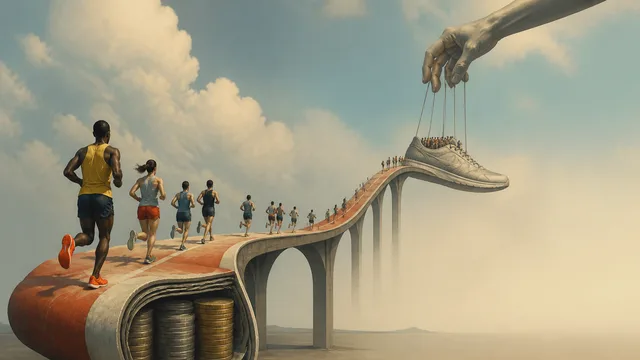
Marathon Running's Rise as a Commercial Powerhouse
From shoe sales to title sponsorships, marathon running has become a serious commercial enterprise. Here's who's profiting—and what the growth costs.

The Single-Revenue-Stream Problem in Your Love Life
Anxious attachment isn't just a feeling problem—it's a structural one. The psychology maps onto financial risk theory with unsettling precision.