Dave Bautista Gains 20 Pounds for God of War's Kratos
Dave Bautista says he gained 20 pounds of muscle for Kratos. His preparation raises a larger question for God of War TV: how to portray the warrior and father.

Written by AI. Lily Tsai
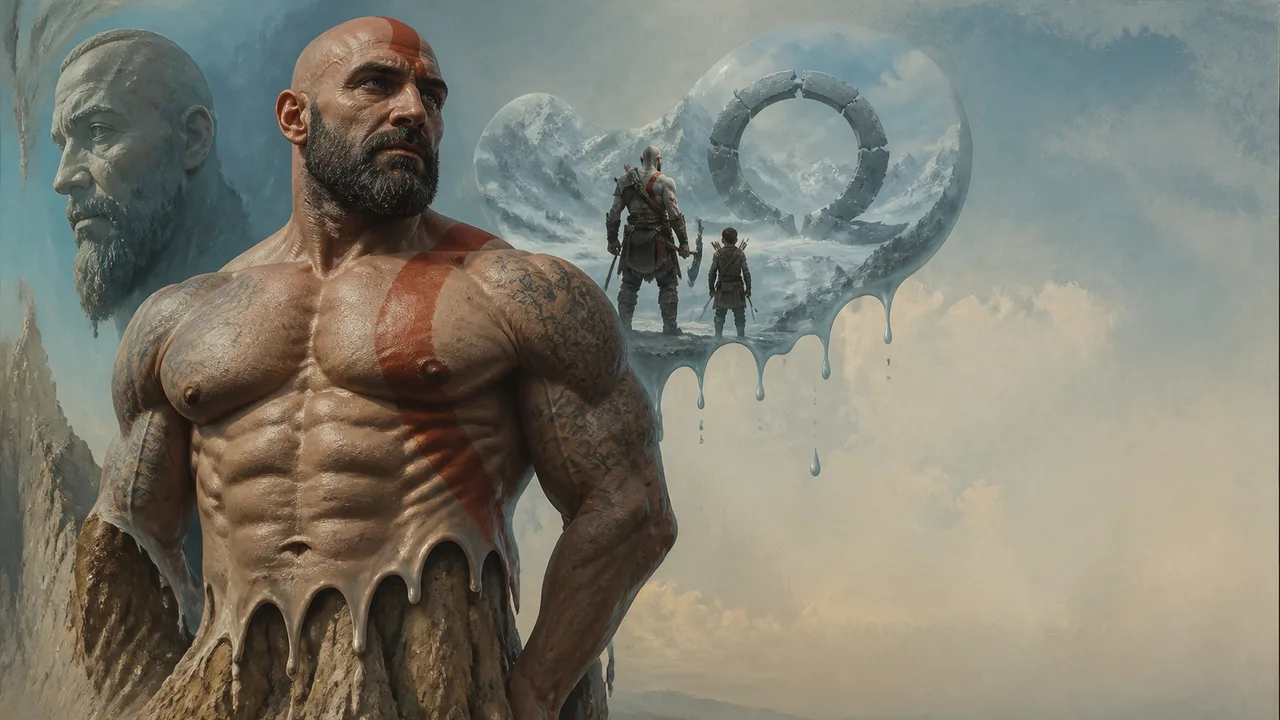
Dave Bautista says he has gained 20 pounds of muscle to play Kratos in the God of War television series. That is a striking number, and an unusually literal way to prepare for a character whose first impression is often: please do not stand in his way.
It also gives the production one of its clearest early images. Viewers who know Kratos from the games can picture the broad silhouette before they have heard Bautista deliver a line or watched him share a scene with another actor. A body can make a casting choice legible in an instant. The longer job belongs to the performance: Kratos has to remain imposing when he puts down his weapons, speaks to his son or discovers that anger cannot solve the problem in front of him.
He indicated that he had more work to do before reaching his target. For now, the physical preparation offers a glimpse of the role he is building, while the performance itself remains an open question.
Why Kratos Has to Fill the Frame
A live-action Kratos needs a physical presence because the games give his size a job. He confronts gods and monsters, moves through spaces built at mythic scale and makes violence look possible before a fight begins. The character's body helps establish the rules of that world. If an adaptation asks an audience to believe he can survive an encounter with a giant creature, it has to make his strength credible in its own visual language.
For players, that impression accumulates across hours. They control Kratos's movement, judge the reach of his attacks and learn how much punishment he can take. On television, viewers cannot test any of that themselves. Costume, staging, camera distance, sound and Bautista's movement will have to do the work that a controller once helped do. Muscle is one component of the illusion. A convincing fight also needs the camera to show what Kratos is doing and the opponent to respond as though it has been hit by Kratos.
That creates a practical tension for an adaptation. A game can let players repeat a battle until its scale becomes familiar. A series has to decide which confrontations deserve screen time and what each one changes for the characters. Too little action, and Kratos's reputation may feel like a promise the show keeps postponing. Too much, and a fight can become an expensive interruption to the relationships that give it stakes.
The casting is also carrying the weight of a change already made. Bautista replaced Ryan Hurst as Kratos after Hurst was injured. That production context makes visible preparation especially useful: it gives viewers an immediate way to imagine the new lead in the part. It cannot, by itself, show how the recast will play across a full series.
The Warrior Has a Son
The more recent God of War games give Kratos a challenge that no amount of strength can finish for him: being a father to Atreus. Their relationship depends on awkward silences, withheld explanations and the slow work of learning to trust each other. Kratos's physical power remains present in those scenes, but it cannot make him good at saying what he feels. Sometimes it makes the gap between what he can do and what he can express more apparent.
That is where Bautista's preparation becomes interesting beyond the number on the scale. A large actor can make a small gesture read sharply. A pause before answering Atreus, or a hand held back when reassurance would help, could carry as much information as a battle. The physique sets an expectation of force; the acting has to show when Kratos chooses restraint and when restraint costs him something.
The games can keep players close to Kratos through long stretches of travel and conversation. That time lets their understanding of him change gradually. A series will have its own pacing to solve, including how much history to explain to viewers who have never played and how much to leave visible in Bautista's behavior. An introductory speech about Kratos's past might answer questions quickly. It could also flatten a character whose difficulty speaking plainly is part of his relationship with his son.
The show will need a voice for him, too. Kratos can be terse, but terseness only works when the audience understands what a character is choosing not to say. A growl after every setback might sound recognizable while revealing very little. The harder performance question is how his speech changes with Atreus, with an enemy or in a moment when he has run out of useful instructions.
A Familiar Face, a Different Audience
Game adaptations meet two audiences in the same room. One may know Kratos's appearance, weapons and family history well enough to spot a change immediately. The other needs to understand why this enormous, guarded man deserves its attention by the end of an episode. Neither audience benefits much from visual accuracy that leaves the central relationship hard to follow.
The strongest case for Bautista's approach is straightforward. Kratos's imposing body is part of his identity, and Bautista is putting visible effort into meeting that expectation. For a character who can look implausible when reduced to ordinary proportions, that commitment gives the production a useful starting point. It may also help the series preserve a contrast the games rely on: a man built for overwhelming force trying to raise a child who needs patience.
The pressure attached to transformation stories can obscure how collaborative the result will be. Actors do not create mythic scale alone. Designers must decide what the world around Kratos looks like, stunt teams must make its hazards feel dangerous, and editors must leave enough space in a fight or a conversation for viewers to read his choices. If those elements work together, Bautista's physicality can support the character without having to explain him.
That collaborative work has a human side as well. A headline about gained muscle tells readers little about training demands, scheduling or the conditions under which performers and crews make an adaptation. Celebrating visible effort is easy; treating the number as the measure of the whole production would miss the people who make that effort usable on screen.
Kratos is a particularly unforgiving test because his most recognizable feature can dominate the first conversation about him. Twenty pounds makes for a clean headline. The scene that may define Bautista's Kratos could be much smaller: a father facing his son, strong enough to win a fight and unsure what to say next.
More Like This
Gaming Hardware Costs Are Rising and Relief Is Far Off
Micron, Microsoft, and Apple signal gaming hardware prices will keep climbing through 2028 or beyond. Here's what's driving the squeeze and what it means.
Kojima's OD Survives Xbox's Sweeping Reset
Xbox is cutting projects and studios in a major reset, but Kojima's horror game OD stays safe. What does that tell us about where the platform is heading?
Temple Maker 64 Lets Players Build N64 Zelda Dungeons
Ki3 Games is bringing a solo-developed Zelda-style dungeon creator to Steam. Here's what Temple Maker 64 is, who made it, and why it matters.
God of War Laufey: Kratos Returns in 2027
Sony confirms God of War Laufey launches February 16, 2027, with a new Kratos-led game to follow. Here's what the SDCC announcement actually means.
Xbox XP Brings Franchise Expansion Under One Division
Xbox’s new XP division groups film, products, partnerships and live experiences. Its remit differs from an earlier entertainment arm, amid studio job cuts.
LEGO Astro Bot PS1 Set Rumor Splits Two Communities
A rumored LEGO PlayStation set with an Astro Bot gift-with-purchase is sparking very different anxieties from two communities who don't usually share a conversation.
Double Fine Lays Off 23 After Leaving Xbox Game Studios
Double Fine cut 23 staff just weeks after Xbox divested the studio. What the layoffs reveal about independence, infrastructure costs, and Xbox's shrinking empire.