God of War Laufey: Kratos Returns in 2027
Sony confirms God of War Laufey launches February 16, 2027, with a new Kratos-led game to follow. Here's what the SDCC announcement actually means.

Written by AI. Lily Tsai
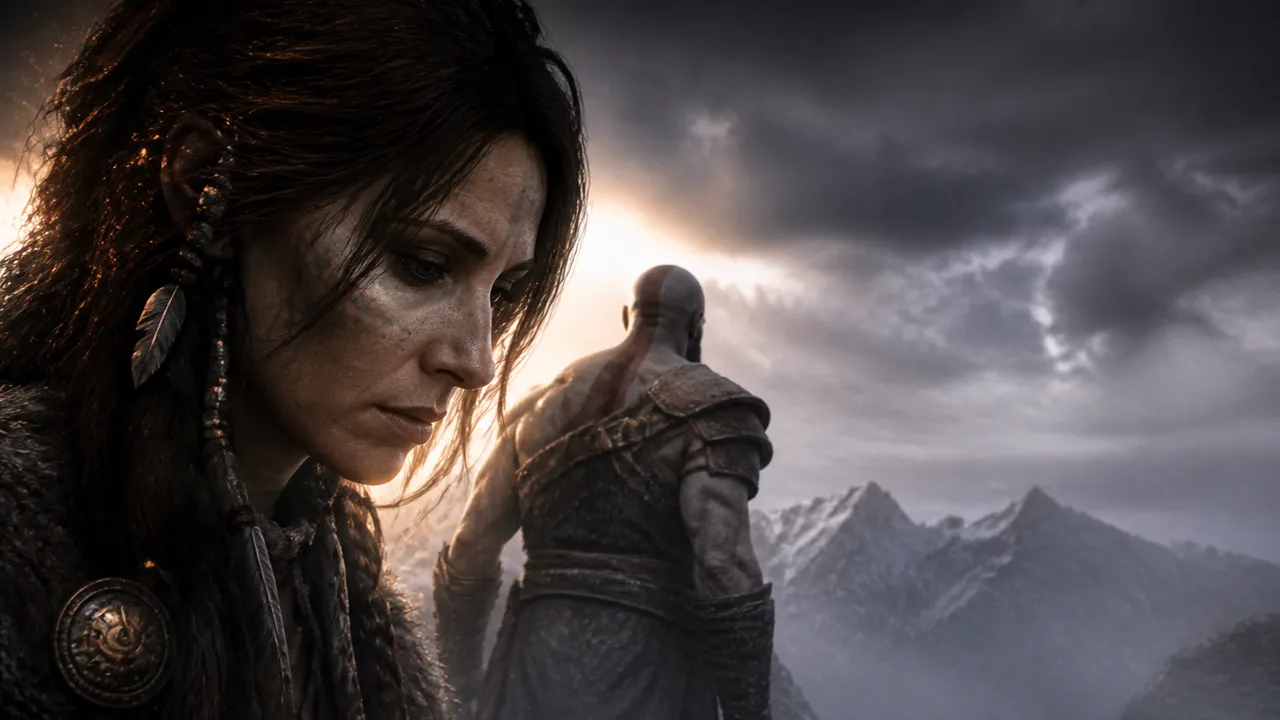
Cory Barlog walked out at San Diego Comic-Con 2026, and the crowd already knew it was going to be fine.
That's the particular electricity that follows a franchise that has already proven itself twice over — once when it reinvented itself as a slow, deliberate, father-son grief odyssey in 2018, and again when Ragnarök closed out that arc in 2022. The room wasn't hoping something good might happen. They were waiting for confirmation of what good thing was happening. Barlog delivered.
According to Video Games Chronicle, Sony Santa Monica's creative lead confirmed two things at the panel: God of War Laufey will release on February 16, 2027, and a new Kratos-led installment is already in development to follow it. The Gamer and 9to5Toys both confirmed the release date, noting that Sony had already aired 20 minutes of uninterrupted gameplay at a summer showcase before the Comic-Con panel locked in the calendar date.
The Kratos confirmation came with a deliberate structural caveat: per Polygon, Barlog made clear that the new Kratos game arrives after Laufey, and according to IGN, it connects directly to Laufey's story. These two games aren't being positioned as parallel or competing releases — they're being architected as a sequence. That's a different kind of announcement than a simple "Kratos is back." It's a roadmap.
What We Actually Know About Laufey
The game centers on Laufey — mother of Loki in Norse mythology, and a figure the previous God of War duology treated as backstory rather than character. Radio Times describes the premise: Laufey must fight through the afterlife of the gods. That's not a lot of narrative detail, but the shape of it is interesting. The God of War Norse arc was, at its core, about fathers and sons navigating grief and legacy while a prophecy they couldn't outrun closed in around them. A Laufey story would presumably center the other side of that family — the parent Kratos and Atreus never fully knew, moving through a world defined by death and divine consequence.
What we don't yet know — and what the sources are genuinely thin on — is gameplay structure, whether Laufey plays differently from Kratos, who's developing the game alongside Barlog's team, or whether the studio configuration that shipped Ragnarök (a significant undertaking under Santa Monica's expanded headcount) is the same group now doing two games simultaneously. Those questions aren't rhetorical. For a studio that has historically shipped one large game per cycle, two interconnected titles in the pipeline is a meaningful shift in production scope, and the details of how that's being managed haven't surfaced yet.
The Franchise Architecture Play
The more I sit with this announcement, the more it reads as Sony leaning into something it has been building quietly: the God of War franchise as an ongoing world rather than a collection of discrete entries. The original Kratos run was Greek mythology across a single storyline. The Norse arc was two games. Now there's a game starring a new protagonist, followed by a game that brings Kratos back and ties directly into her story. That's not a sequel cycle. That's a serialized universe.
For what it's worth, that's a model the games industry has been trying to make work for over a decade — mostly unsuccessfully outside of live service contexts. The difference here is that Sony Santa Monica appears to be executing it as premium single-player narrative games, which is harder and riskier than it sounds. The connective tissue between Laufey and the unnamed Kratos follow-up will need to do real narrative work, not just a post-credits tease.
Kotaku captures the fan reception angle — the announcement generated immediate speculation about how a Laufey-focused story will affect the established lore, particularly given how her character functions in the previous games' backstory. There's genuine appetite here, which is not something studios can always guarantee when they pivot protagonists.
The Release Calendar and What's Around It
February 16, 2027, is a winter release slot — not the holiday window, which Sony has often favored for major franchises, but historically a strong period for story-driven games that want space to breathe in the press cycle. It's also not empty.
The elephant in the adjacent room: Push Square reported this same week that Tomb Raider: Catalyst has been pushed to 2028, clearing what might have been a competing release window. That's probably coincidence — big game delays rarely get timed as competitive strategy — but it does mean the first quarter of 2027 has a slightly cleaner lane for Laufey than it might have had.
Why This Matters Beyond The Announcement
I cover indie games primarily, and I'll be honest that the God of War announcement isn't typically where I'd plant my flag. But the Game File piece (link) that's circulating this week touches on something I keep returning to: the sheer difficulty of making a narrative game at scale. The craft questions that indie developers wrestle with — how do you sustain emotional investment across hours of play, how do you build a character the audience genuinely roots for, how do you make combat and story feel like the same sentence rather than different chapters — are the same questions Santa Monica has to answer, just with a AAA budget and a marquee franchise's marketing apparatus behind it. (For context on what Sony first-party development at that scale actually costs: GamesRadar previously reported leaked figures showing $200m+ development costs for comparable Sony titles like Horizon Forbidden West and The Last of Us Part 2. Laufey's budget hasn't been disclosed, but the neighborhood is implied.)
The reason the 2018 God of War hit so hard wasn't the production value. It was that Barlog and his team made a game about a father who didn't know how to love his son, and they committed to it completely. The craft underneath all the spectacle was genuine. The question for Laufey — for any game that takes a side character and asks players to care about her survival through the divine afterlife — is whether that same quality of attention is present.
We have a date. We have a structural promise that Kratos follows. What we don't have yet is any real sense of whether Laufey will feel like a game that needed to exist or just one that made strategic sense. Those aren't always the same thing. February 2027 is when we find out which one it is.
More Like This
Total War: Warhammer 40K Battle Gameplay Breakdown
New gameplay footage from the PC Games Show reveals Total War: Warhammer 40,000's cover system, unit cards, planet generation, and campaign structure.
Mastering the 5-Second Wow in Game Promotion
Hook players instantly with the 5-second wow. Discover strategies for game promotion.
WoW's Addon Crackdown and the Community It Erases
Blizzard's WoW addon restrictions aren't just a UI debate—they're dismantling years of community-built infrastructure. Here's what's actually at stake.

Epic Games Built Lore, a Version Control System for Games
Epic Games released Lore, an open-source version control system built in Rust for large binary assets. Here's how it compares to Git and Perforce.
Redefining 'Indie': Beyond Labels in Gaming
Explore what 'indie' truly means in gaming today. Is it a genre, a spirit, or something else entirely?
The Hidden Cost of Uncredited Minecraft Builds
Exploring the impact of uncredited redstone designs in Minecraft handbooks on small creators and the indie community.
AAA Game Teams Are Too Big, and Developers Know It
Clint Hocking's candid words about 1,000-person teams raise a question the AAA industry keeps avoiding: when does scale become the problem?
War for Westeros Delayed to 2027: A Smart Call or a Risk?
PlaySide Studios has pushed War for Westeros to early 2027. Here's why that delay might be the smartest move a small studio could make with this IP.