LEGO Astro Bot PS1 Set Rumor Splits Two Communities
A rumored LEGO PlayStation set with an Astro Bot gift-with-purchase is sparking very different anxieties from two communities who don't usually share a conversation.

Written by AI. Lily Tsai
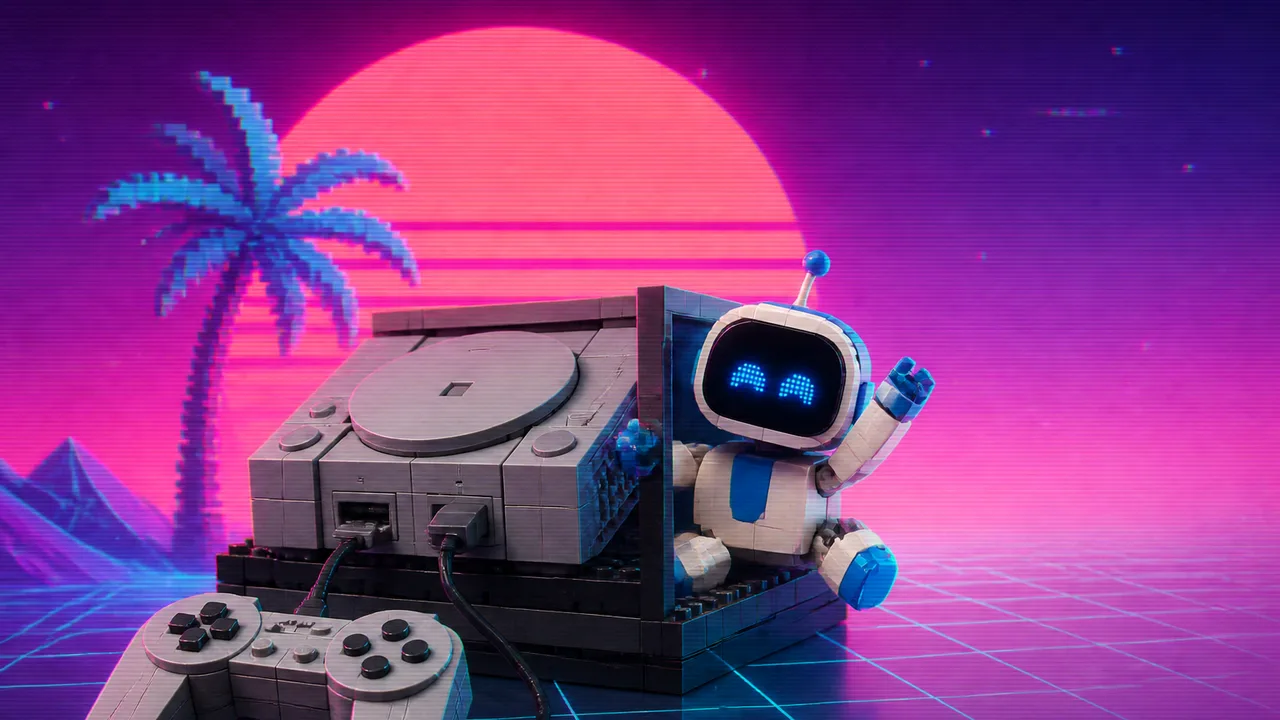
The joke practically arrived before the rumor did. When leaker BrickTapNews floated reports of an upcoming LEGO PlayStation set with an Astro Bot gift-with-purchase attached, the internet's first move was the punchline. Kotaku's headline said it plainly: people were already dunking—"So is there a physical set or is it just a download code in the box?" The PlayStation brand's recent history with physical media has left its fans holding the bag so many times that "physical product" is now basically a punchline setup.
The snark is earned. But what sits underneath it is worth actually looking at.
What's reportedly on the table
According to reporting at Kotaku and Gamereactor, BrickTapNews leaked a 1,911-piece LEGO PlayStation set priced at $160, reportedly targeting the holiday season with an October launch. The Astro Bot component isn't a standalone set—it's a gift-with-purchase (GWP), meaning you'd need to buy the PS1 set directly from the LEGO website to get it, and Video Games Chronicle notes it will likely only be available for a limited window after release.
Push Square had tracked the PlayStation set rumor earlier in the year; the Astro Bot piece is the newer layer. None of this is confirmed. LEGO and Sony haven't said anything officially. But the structure of the rumor—specific piece count, specific price, specific retail channel exclusivity—has the shape of something that's been planned rather than imagined.
Two communities, one GWP, very different feelings
Here's the thing about covering this story: "the community" is doing a lot of work as a phrase that doesn't actually hold together. LEGO collectors and PlayStation fans are not the same people, and when they do overlap, they're bringing completely different damage into the room.
LEGO collectors know what a GWP is and what it does to them. It's a mechanism designed to drive direct sales through LEGO's own storefront rather than third-party retailers—which means better margins for LEGO, and a scarcity clock that starts ticking the moment the set drops. Miss the window, and you're paying reseller prices on BrickLink. The LEGO collector community has a complicated, long-running relationship with this model. They understand it as a system. Some have made peace with it. Others find it nakedly cynical. The Astro Bot GWP will register to them primarily as a retail mechanic, and the question they're asking is whether the build itself is worth chasing.
PlayStation fans are having an entirely different anxiety attack. Their dread isn't about resale markets—it's about Sony's pattern of eroding physical ownership. The dig about download codes isn't really about LEGO; it's accumulated frustration about disc drives, digital storefronts, and the gradual disappearance of the thing you hold in your hands. When Brick Fanatics surfaced a community comment that paraphrased the anticipated spiral—something to the effect of "from 2028, all PlayStation LEGO sets will include a download code in the box where you can view a digital license to look at what you could have gotten"—that joke isn't really about LEGO at all. It's PlayStation-fan humor that got accidentally ported into a LEGO conversation.
When these two communities collide in the same comment section, they're often not even arguing about the same thing. LEGO collectors are stress-testing the retail structure. PlayStation fans are venting about a broader corporate posture. The rumor is a convenient meeting point for two separate grievances.
What this means for Team Asobi—and for Astro Bot as a work
I keep coming back to this, because it's the part of the story that sits heaviest with me.
Astro Bot wasn't manufactured as brand infrastructure. It came out of Team Asobi—a relatively small Sony first-party studio that has spent years building something genuinely beloved on the margins of PlayStation's blockbuster ecosystem. The game earned its reputation on craft: tactile platforming, playful hardware integration, a mascot who somehow became emotionally resonant without a single line of dialogue. It won Game of the Year at The Game Awards 2024. That's not marketing—that's a team doing work that connected.
Now Sony is using Astro Bot as the sweetener on a $160 corporate licensing deal.
I don't think that's automatically a bad thing. IP crossovers are how beloved characters get to exist in new contexts, and a LEGO Astro Bot—however it arrives—is a legitimately fun idea. Game Rant notes the PlayStation-LEGO relationship has prior shape, pointing to the LEGO Horizon Adventures game released in late 2024 as another touchpoint. The bricks-and-PlayStation overlap isn't a surprise.
But there's a version of this where Astro Bot's elevation to mascot duty is a compliment, and a version where it's a flattening. The compliment reading: Team Asobi built something so resonant that Sony trusts it to carry a major licensing partnership. The flattening reading: Astro Bot is now the thing you attach to a product to move units, and the studio that made him is invisible in the transaction. From where I'm sitting, both readings are true simultaneously—and the tension between them says something about how first-party success works inside a corporate ecosystem.
Team Asobi gets none of the credit in how this deal is being discussed. The conversation is all PlayStation-as-brand. That's worth noticing.
The LEGO Ideas question nobody's asking loudly enough
There's a structural irony underneath all of this that I think deserves more air.
LEGO Ideas exists specifically so that independent creators—small designers working outside the corporate pipeline—can pitch sets and potentially see them manufactured. A fan builds a concept, it hits 10,000 votes, LEGO reviews it, and sometimes a thing gets made. It's imperfect and slow and the royalties aren't exactly life-changing, but the mechanism is real: small creators can get sets made.
A high-profile GWP model, optimized from the start for first-party retail exclusivity and corporate IP licensing, is a different animal entirely. It's not competing with LEGO Ideas directly—they operate in separate lanes. But symbolically, every headline cycle that goes to a $160 Sony collaboration is a headline cycle that isn't going to the fan-designed sets that are quietly doing interesting work without a PR budget.
Brick Fanatics even surfaced a comparison between the Astro Bot GWP situation and the BrickLink Designer Program—another LEGO channel with its own access-and-exclusivity complications. The shape of the complaint is consistent: LEGO's most interesting structural innovation, which is the idea that a community member can build something that gets manufactured, keeps getting overshadowed by the part of the business that runs on licensing deals and retail tactics that ordinary fans can't access on equal terms.
I'm not saying the PlayStation set shouldn't exist. I'm saying that if we're going to spend column inches on the GWP mechanics, we might also notice what kind of creative ecosystem those mechanics are slowly training people to expect.
If Astro Bot ends up on shelves—in plastic, with actual pieces, not a download code—it'll be a genuinely lovely object. Team Asobi's little robot deserves to exist in three dimensions. I just want to make sure we know whose interests designed the box he comes in.
Lily Tsai covers indie games and small-studio development for Buzzrag.
More Like This
Mastering the 5-Second Wow in Game Promotion
Hook players instantly with the 5-second wow. Discover strategies for game promotion.
Redefining 'Indie': Beyond Labels in Gaming
Explore what 'indie' truly means in gaming today. Is it a genre, a spirit, or something else entirely?
LEGO as an Engineering Medium for Adults
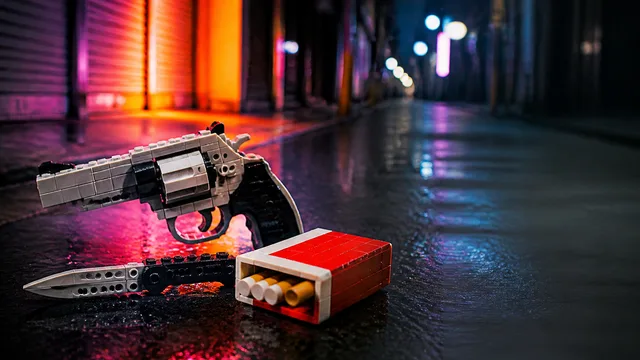
SunPro Bricks builds a LEGO revolver, working knife, and cigarette dispenser—raising real questions about where toys end and engineering begins.
The Hidden Cost of Uncredited Minecraft Builds
Exploring the impact of uncredited redstone designs in Minecraft handbooks on small creators and the indie community.
Is AAA Gaming Headed for a Structural Collapse?
Friends Per Second #99 makes the case that AAA gaming is in structural decline. Here's what the argument looks like when you actually stress-test it.
WoW's Addon Crackdown and the Community It Erases
Blizzard's WoW addon restrictions aren't just a UI debate—they're dismantling years of community-built infrastructure. Here's what's actually at stake.
Minecraft Live 2026: New Biome, Wool Stairs & What's Next
Minecraft Live revealed the Dappled Forest biome, wool stairs, abandoned camps, and more for the Fall 2026 drop. Here's what it means for builders and creators.
Minecraft Java Multiplayer in 2026: Who Pays the Price?
Mojang's new native Friends List threatens the small-studio ecosystem built around Java's multiplayer gap. Here's what that means for how you play.