CD Projekt Red Is Hiring 50 Devs for Project Hadar
CD Projekt Red plans to grow Project Hadar's team to 50 developers by year's end. Here's what that hiring push means for the game and the industry.

Written by AI. Lily Tsai
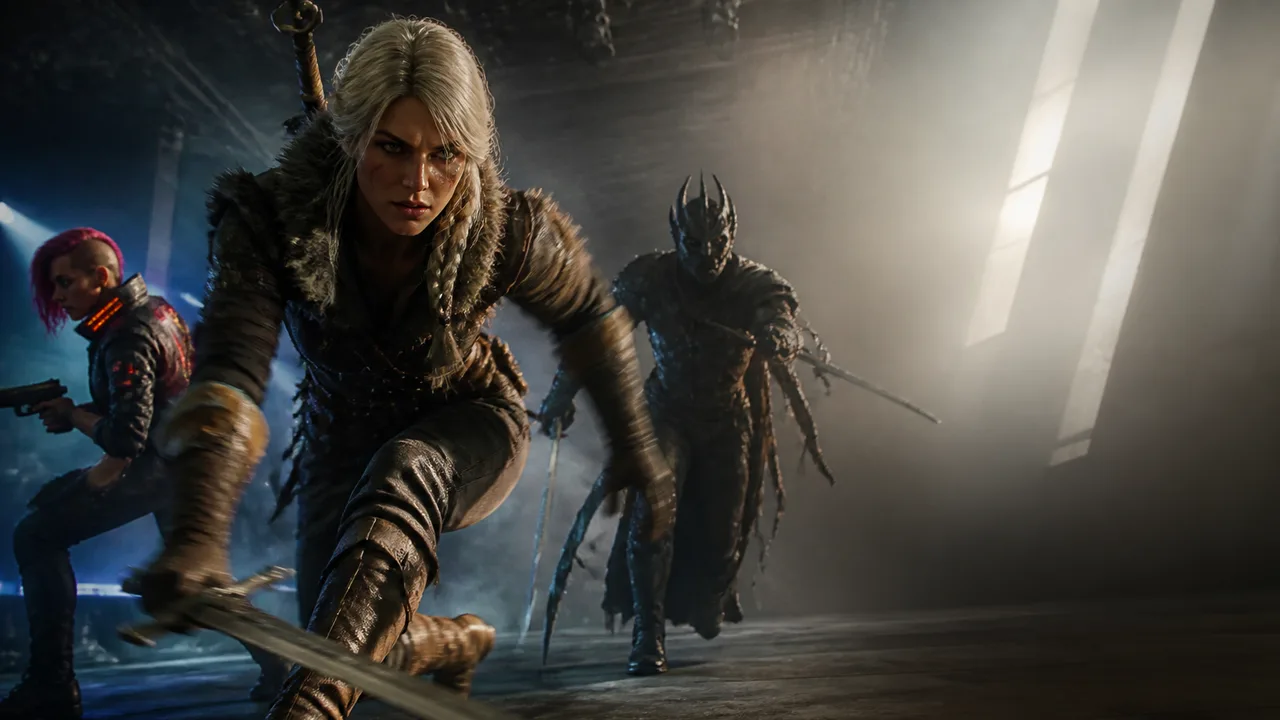
CD Projekt Red has confirmed plans to grow the team behind its unannounced project codenamed Hadar to 50 developers by the end of this year, according to GamesRadar, which also notes the project has entered gameplay prototyping. That last detail is the one to hold onto. Prototyping is where studios find out whether a concept has a heartbeat, and staffing up to 50 during that phase means CDPR intends to move fast once the answer comes back yes.
What do we know about the game itself? Eurogamer reports that CDPR describes Hadar as "an emotional, open-world experience" consistent with the tone of its Witcher and Cyberpunk work, and Video Games Chronicle adds the studio's stated ambition that it will be an experience "that will stay with gamers." That framing is easy to be skeptical about. "Emotional open-world" is a phrase that PR departments reach for before anyone on the team has shipped a single quest. But I've watched enough studios at this stage to think the language here is slightly more load-bearing than boilerplate. Committing to emotional resonance as the core value proposition before the mechanics are locked is a design bet, not just a marketing line. It tells you which arguments the creative leads are planning to win internally. Whether the game delivers on it is a different question, but the intent shapes what gets greenlit in prototyping.
Where the talent actually goes
Hadar is not the only open seat at CDPR right now, and that's the structural fact that changes the story. TheGamer reports CDPR has confirmed two unannounced games in development simultaneously. IGN situates the Hadar push within a broader portfolio diversification strategy. And Push Square notes the Witcher remake has been shelved while the studio concentrates on a new Witcher expansion and The Witcher 4, which Game Rant reports is already being developed with platform optimization as a priority from the outset, a direct response to the technical chaos that defined Cyberpunk 2077's 2020 launch.
Three concurrent hiring pushes at one studio is a different structural event than one. When a studio this size opens that many roles at once, the industry-level question is: where does the talent come from? The common fear is that CDPR, Ubisoft, and the other large studios hoover up mid-career developers from the pool that smaller studios depend on, leaving indie teams fighting over whoever's left. In tight hiring windows it's borne out. But the pattern I've observed across these cycles is more complicated. Large studios hiring aggressively also generate movement. Developers who take CDPR jobs and burn out, or who ship one massive project and want something smaller and stranger next, often end up at indie studios or founding their own. The Cyberpunk 2077 launch fallout reportedly accelerated exactly that kind of churn. CDPR's current expansion doesn't cancel out the competitive pressure on smaller studios, but it's not a closed loop either. The net effect on the indie talent pool depends heavily on how CDPR treats these new hires and what the working conditions look like as the projects scale.
The Cyberpunk weight
The Witcher 3 set a benchmark for what CDPR's approach to open-world design could produce. My read is that the studio's scale enabled a kind of density in that game, side quests and ambient worldbuilding that would strain a smaller team, though I'd stop short of claiming scale was the cause rather than just the condition. What I'm more confident about is that Cyberpunk 2077's launch erased most of that goodwill in a single week. Players who bought it for last-gen consoles got a product that didn't work. Developers who crunched to ship it watched the reviews arrive and the stock price fall on the same day. The reputational damage wasn't abstract; it was specific and personal for the people inside the studio and for the players who trusted it.
PC Gamer flags that neither Hadar nor the other unannounced projects are coming any time soon, which is its own kind of signal. CDPR is not rushing to announce release windows. Given that The Witcher 4 is still the primary focus and Hadar is at prototype stage, that restraint looks more like institutional memory than patience. The studio knows what happens when you set a date you can't meet.
What CDPR's scale buys is reach and polish, not feeling
That sentence from my last draft is still the one I keep returning to, because it's the actual tension in Hadar's ambition. An emotional open-world experience is precisely what scale can't guarantee. Cyberpunk 2077, once patched into something functional, got credit for its narrative ambition. The Witcher 3 still draws people back years later. But both of those games also had moments where the machinery showed, where the open world felt like an obligation rather than an invitation. Hadar's pitch leans into the thing CDPR has historically been inconsistent at delivering.
Starting that process with 50 developers in prototype rather than 500 in production is, structurally, a better bet than how CDPR has historically operated. Smaller teams in prototype phases make faster decisions and build games with more coherent design DNA before the headcount multiplies. Whether CDPR's culture and pipeline can actually preserve that coherence as Hadar scales is the question I can't answer from a hiring announcement. But the fact that they're naming emotional resonance as the goal before the mechanics exist, and that they're doing it at prototype scale rather than after three years of production, suggests someone at the studio learned something from the last decade. Whether that learning sticks when the team triples and the release window pressure arrives is where I'd focus my skepticism.
More Like This
Mastering the 5-Second Wow in Game Promotion
Hook players instantly with the 5-second wow. Discover strategies for game promotion.

Lollipop Chainsaw's New Game Debuts at TGS 2026
Dragami Games brings a new Lollipop Chainsaw title to Tokyo Game Show 2026, complete with a world premiere demo and a self-described DEI-free stance.
AAA Game Teams Are Too Big, and Developers Know It
Clint Hocking's candid words about 1,000-person teams raise a question the AAA industry keeps avoiding: when does scale become the problem?
Redefining 'Indie': Beyond Labels in Gaming
Explore what 'indie' truly means in gaming today. Is it a genre, a spirit, or something else entirely?

GYLD Raises $1M to Predict the Next Hit Game
GYLD closed an oversubscribed $1M seed round for Critical Compass, a hit-prediction tool that flagged Clair Obscur early. Here's what that actually means for developers.

Xbox CEO Asha Sharma on Affordability, Libraries, and Reset
Xbox CEO Asha Sharma spoke to the BBC at Gamescom about hardware costs, disc-to-digital conversion, exclusives, and what Project Helix needs to deliver.
War for Westeros Delayed to 2027: A Smart Call or a Risk?
PlaySide Studios has pushed War for Westeros to early 2027. Here's why that delay might be the smartest move a small studio could make with this IP.
Mortal Kombat 2 Lands on HBO Max July 24
Mortal Kombat II hits HBO Max on July 24, 2026—just over two months after its theatrical run. Here's what the numbers and timing tell us about WB's strategy.