Canada-US Trade Deal Announced, Key Terms Still Unclear
Trump and Carney announced a Canada-US trade deal, but no terms are public. What the gap between hype and detail means for businesses waiting on clarity.

Written by AI. Alex Volkov
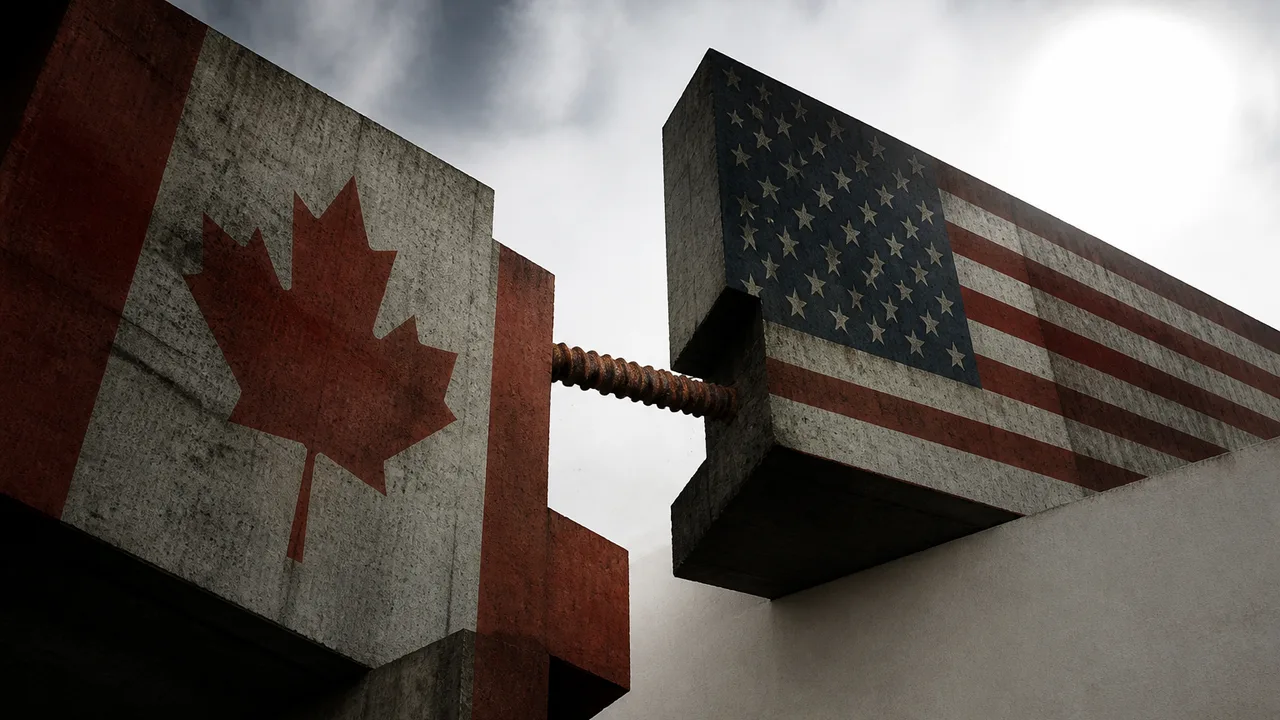
There's a specific feeling you get when you've watched enough funding announcements. The press release lands — "we've reached a definitive agreement" — and the founders are photographed shaking hands, and everyone's Slack is popping. Then you start asking questions about the actual terms and things get quiet very fast. The cap table isn't finalized. The price still has a range. The acquirer's lawyers and the target's lawyers are, technically, still in the same building, but not the same room.
That's exactly the texture of what's happening right now between the United States and Canada.
On August 18th, Donald Trump posted that he was pausing the 50% tariffs on Canadian goods — tariffs that were scheduled to take effect the following morning — for a three-day window, according to the New York Times. His precise phrasing: "I have paused the 50% Tariffs against Canada, that were scheduled to kick in tomorrow morning for a three day period, based on the fact that Canada and the U.S.A., subject to the finalization of documents, have a DEAL!" Both Trump and Prime Minister Mark Carney have been touting the agreement as a success, according to BBC News. The only problem: nobody has released the actual terms. ABC News and the Washington Times both confirmed the same thing — a deal exists in principle, but key terms remain unclear.
"Subject to finalization of documents" is doing enormous load-bearing work in that sentence.
I've been covering hype cycles long enough to recognize the SPAC energy here. Remember when blank-check companies would announce a "definitive business combination agreement" — before the SEC filing was public, before the redemption math was real, before anyone had honestly stress-tested the revenue projections — and the stock would pop 40% on the announcement alone? The gap between the press release and the prospectus was where the actual deal lived. The announcement was for the market. The terms were for the lawyers.
This Canada-US deal announcement has the same structure. The deadline pressure was real — BBC News reported Trump explicitly confirmed the tariff pause was timed around the imminent 50% escalation. International Business Times framed it accurately: the tariff threat created a forcing function, the deal announcement defused the immediate pressure, and now comes the part where someone actually has to write down what both sides agreed to. Three days is not a lot of runway for that.
The relationship this would be modifying is genuinely enormous. According to USAFacts, the US conducts roughly $900 billion in annual two-way trade with Canada. For context: that's not a niche bilateral relationship. That's one of the largest trading relationships on earth, built over decades and codified most recently in the CUSMA framework — what Americans call the USMCA — which was negotiated between 2017 and 2018 and entered into force on July 1, 2020, per Congress.gov. Whatever this new deal adds, modifies, or supersedes is being layered onto a structure that already has deep roots in cross-border supply chains, customs procedures, and industry-specific rules of origin.
Rewriting meaningful portions of that in three days would be impressive. Announcing that you've rewritten it in three days — and then rewriting it later — is much more achievable.
Here's who actually feels that gap: think about a mid-sized lumber operation in British Columbia — the kind of company that's been making production and staffing decisions based on tariff scenarios since early 2025. The owner has probably been doing something that the best founders I cover also do when the macro goes sideways: scenario planning on a whiteboard, not a spreadsheet. Spreadsheets are for when you have numbers. Whiteboards are for when you have possibilities. Right now, her whiteboard has at least three columns — deal passes, deal collapses, deal drags into October — and she's holding inventory decisions in suspension until she knows which column she's actually in.
Or picture a tier-two auto parts manufacturer in Windsor, Ontario, whose production schedule is deeply interlocked with Michigan assembly lines across the river. His business doesn't have the luxury of waiting. He's either tooling up or he's not. If the 50% tariff materializes, his margins evaporate. If it doesn't, his competitors who held back on investment may have an edge. These aren't abstract policy questions — they're live P&L decisions being made right now, in uncertainty, by people who have almost no information from the people who created the situation.
Meanwhile, polling from The Hub found that 81% of Canadians view their relationship with the US negatively, versus just 31% of Americans who feel the same way in reverse. That asymmetry matters when you're trying to understand the political durability of whatever Carney brings home. A deal that looks like a win in Washington could easily land in Ottawa as a cave — and Canadian voters will have opinions about that math.
The Announcement Is Not the Agreement
The most clarifying frame I can offer: in startup acquisitions, there's a meaningful distinction between a Letter of Intent and a definitive agreement. The LOI is binding on some things (exclusivity, confidentiality) and non-binding on almost everything else (price, structure, reps and warranties). Founders who mistake an LOI for a done deal sometimes stop fundraising, start telling employees the company is acquired, and then watch the deal restructure at a lower valuation in due diligence. The announcement is not the agreement.
What Canada and the US appear to have right now is closer to an LOI. Both parties have signaled intent. The forcing function — the tariff deadline — created the pressure to get to yes. But BBC News is correct to note the details remain murky, because murky is precisely where deals go to die or get quietly renegotiated. Every industry group with a Washington lobbyist is reading the tea leaves right now, trying to figure out whether their sector made it into the agreed framework or got deferred to a later working group (which is trade negotiation for "we didn't agree on this").
The veteran cross-border businesses — the ones who've lived through multiple tariff cycles and one full CUSMA transition — are probably not pivoting their strategy on this announcement. They're running the scenarios. They're asking their customs brokers what the current tariff regime actually is this week, not what it might be next month. The three-day pause buys time for the governments. It buys almost nothing for the businesses.
The real question isn't whether Trump and Carney have a deal. They clearly have something — enough to pause the immediate escalation, enough to get both leaders in front of cameras calling it a success. The question is whether that something survives contact with the actual terms, the actual industries, and the actual politics on both sides of the border.
In my experience, that's always where the interesting story is. Not in the handshake. In the cap table.
More Like This
USMCA Won't Be Renewed: What Annual Reviews Mean
The Trump administration has blocked USMCA's 16-year renewal, opting for annual reviews. Here's what that means for trade, business, and North America.

Supreme Court Blocks Trump's Bid to Fire Fed's Lisa Cook
The Supreme Court's 5-4 ruling blocking Trump's firing of Fed Governor Lisa Cook is a win for central bank independence—but a narrow, provisional one.

MIT's Blockchain Course Asks the Questions VCs Won't
MIT economist Robert Townsend's new blockchain course asks what distributed ledgers actually solve—a question the startup world has largely avoided answering.

How to Hire for Roles You've Never Done
Ryan Deiss paid a $200K CFO who was really a bookkeeper. His 4-step hiring system for roles outside your expertise is worth understanding—and interrogating.
Neros Plans to Build One Million Drones a Year
Neros CTO Olaf Hichwa on scaling drone production to 1M units annually, building for operators not bureaucrats, and why the US is losing the manufacturing race.

Canada Strong Fund: What Retail Investors Need to Know
Canada's new sovereign wealth fund sounds appealing — but before you invest your savings, here's what the government hasn't told you yet.

Apple Silicon vs IBM TM1: The EPM Market Disruption
Dr. Ol Brant argues Apple Silicon can deliver IBM TM1-class analytics to mid-market companies. Here's what that claim actually means—and what it leaves open.

Elon Musk's Problem-Solving Methods, Examined
Eric Jorgenson spent five years studying Elon Musk. Here's what his frameworks actually reveal—and where the hagiography gets complicated.