Brewers' World Series Run Tests Baseball's Market Logic
Milwaukee swept the Dodgers to reach its first World Series since 1982. Its 103-win season puts small-market baseball economics and postseason upside in focus.

Written by AI. Elena Vasquez-Moreno
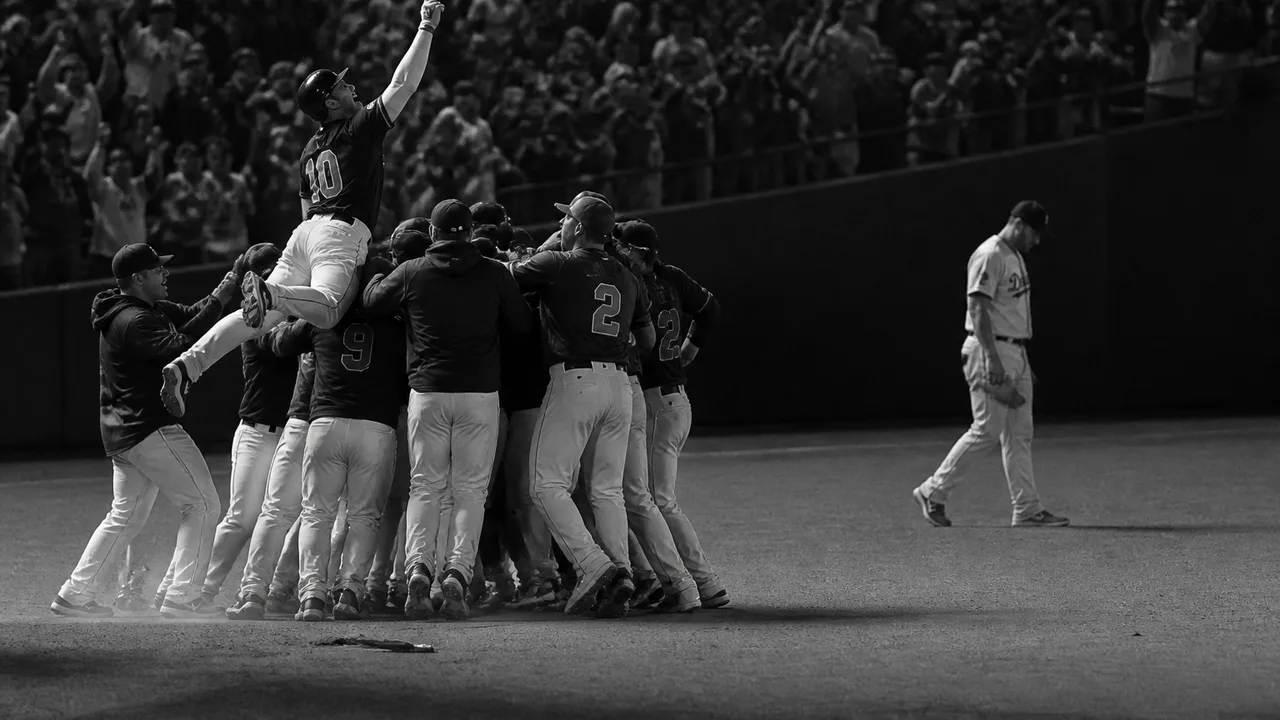
Milwaukee finished its sweep of the Los Angeles Dodgers with a 6–4 win Thursday night. The Dodgers arrived as two-time defending World Series champions. The Brewers left with their first National League pennant and a trip to the World Series for the first time since 1982.
The last detail requires a little baseball bookkeeping: Milwaukee's previous World Series appearance came before the franchise won an NL pennant. This is its first. The sweep sends the Brewers to the Fall Classic with a national audience, more games to sell and a commercial opportunity that a smaller-market club rarely gets to schedule in advance.
Baseball's economic argument often gets compressed into a payroll comparison. The Dodgers can draw on a larger market; Milwaukee must make different bets about where to spend and how long it can keep a winning roster together. Four October games have supplied a decisive result on the field. They have not settled the question of how easily either club can build the next contender.
A Sweep Built on 162 Games
The Brewers' pennant followed a franchise-record 103-win regular season. It also reversed the result of last year's postseason meeting, when the Dodgers swept Milwaukee in the same round. That sequence gives the series more substance than the usual account of an underdog catching fire at the right time. Milwaukee won enough over six months to enter October as a formidable team, then beat the defending champion four straight times.
A 103-win season says a club assembled a roster capable of winning consistently. A playoff sweep says it converted that strength in a short series, where a well-timed hit or a difficult pitching decision can change the result. Both achievements belong on the ledger. So does the risk of treating one October as a permanent verdict on how teams should spend.
For a smaller-market organization, roster construction has several routes: develop players who outperform their early-career costs, find useful production in trades and free agency, and decide when to commit scarce payroll room to an established player. Each route carries risk. Prospects fail; a successful trade can create a new hole; an expensive contract can limit choices in later seasons. Milwaukee's record and pennant show the payoff when enough decisions work together, although the series result alone cannot assign credit to individual transactions.
The sweep also changes what the Brewers have to plan for right now. A club preparing for a World Series faces immediate ticket demand, sponsor conversations and a much larger national spotlight. Its baseball staff, meanwhile, still has to win games against another pennant winner. Commercial opportunity and competitive pressure arrive in the same envelope.
What the Small-Market Label Explains
Market size shapes a team's revenue ceiling, particularly its ability to monetize local attention across a long season. A club with a larger base of potential customers and business partners has more ways to support a high payroll and more room to absorb an expensive mistake. The label does not determine standings, and the Brewers have just made the most persuasive case against using it as a prediction.
The strongest small-market argument is about repeatability. A big-revenue club can keep bidding when a roster need appears, retain more expensive players and withstand a bad contract while pursuing the next solution. A smaller-market club can make the right decisions and still face harder choices after its players become more valuable. Milwaukee has demonstrated how high its ceiling can be in 2026. The next several seasons will say more about how often it can reach that ceiling.
League structures complicate any simple comparison. Revenue sharing and baseball's competitive balance tax affect incentives, while player contracts, development systems and postseason qualification leave room for clubs to take different approaches. None of those mechanisms promises equal financial resources or equal results. Nor does a Dodgers loss prove that access to greater revenue has stopped being useful. A team can enjoy an advantage across many seasons and still lose a seven-game series, particularly when its opponent won 103 games.
That leaves an appealing tension for fans of the sport. Baseball benefits when a club outside its largest markets can win a pennant; the possibility helps keep more cities invested in the season. Owners also benefit from rules and revenue arrangements that support that broad appeal. The Brewers' success gives both sides of that business equation something to point to: proof of a route to the top, and reason to ask how demanding that route remains.
The Audience Goes Beyond Milwaukee
The postseason offers a test of a common assumption in sports television: that the biggest markets are necessary for the biggest audiences. The Dodgers-Brewers NLCS opened with a milestone Game 1 audience, and Sportico's World Series ratings outlook suggests Fox need not fear a matchup featuring Milwaukee.
The commercial logic is broader than the population within driving distance of the ballpark. A national telecast sells a championship contest, star performances and the possibility of a defining moment. Fans whose teams are already home can still watch. So can viewers drawn by a 103-win club trying to finish a season it has spent months building. Milwaukee's local market matters greatly to its year-round business; a World Series broadcast has a different customer base.
Audience size and club revenue also travel through different channels. Television exposure can make a sponsor more interested in a future agreement without automatically raising the value of a deal already signed. A sold-out October game can produce ticket and concession activity without guaranteeing higher attendance next April. The practical question for Milwaukee is how much of this month's attention follows the club into its ordinary schedule, when every game no longer carries a pennant's stakes.
Who Keeps the October Upside?
A World Series appearance can create demand for tickets, merchandise and hospitality. It can also bring visitors into Milwaukee restaurants and hotels. Those gains do not all accrue to the same people. The franchise, its players and staff, nearby businesses, and the organizations that hold commercial rights each participate through different arrangements. A fan's purchase of a playoff ticket and that same fan's restaurant bill take different routes through the local economy.
Citywide economic claims require particular care. Some postseason spending comes from visitors who otherwise would have spent their money elsewhere. Some comes from residents who might instead have spent it at another Milwaukee business. Gross sales around a ballpark therefore cannot serve as a clean measure of new economic activity. A rigorous claim would identify who paid for the analysis, count visitors separately from local customers and explain what spending would have happened without the games.
The other tempting shortcut is to convert a pennant into an argument for public spending on a ballpark. Stadium financing has its own arithmetic: the type and term of any bonds, the taxes or other revenue pledged to repay them, and the division of operating and capital costs. Thursday's score supplies none of those figures. A World Series run can make a franchise more valuable to its city as a civic attraction and to its owners as a business; any proposal to put public money behind that value needs its own numbers.
Milwaukee now has a rare chance to turn a historic season into longer-lasting demand. The Brewers earned the chance with 103 regular-season wins and four more against Los Angeles. What they sell next, and what fans keep buying after October, will show how far a pennant can carry a smaller-market club after celebrations end.
More Like This
Stephen A. Smith Tests Sports Media's Political Reach
Stephen A. Smith's 2028 speculation shows how sports media can convert recurring attention into political capital, while creating new risks for ESPN and its audience.

Rays Stadium, US Open Records and Prediction Markets
The Rays finally got their votes. The US Open set a prize record. And prediction markets got a legal gut-punch. Here's what it all means financially.
How an MLB Lockout Could Expand the Bananas' Market
A possible MLB lockout could give the Savannah Bananas more attention, venue leverage and ticket demand, while testing whether fans stay after MLB returns.
Dodger Stadium's 4th of July Fan Experience Reviewed
A Dodgers fan vlog captures rock climbing, a $22 burger, commemorative coins, and a Yamamoto gem against the Padres on Independence Day.

MLB at Midseason: Attendance, ABS Data, and Fanatics Fest
MLB's All-Star break numbers show attendance gains, ABS data reveals umpire accuracy, and Fanatics Fest eyes profitability in year three at the Javits Center.
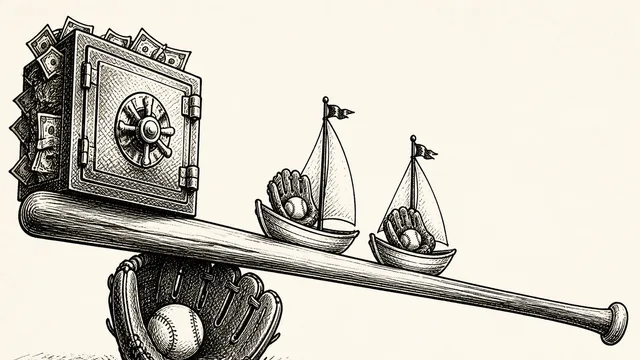
Brewers and Rays Playoff Runs Muddy MLB's Payroll Fight
Milwaukee and Tampa Bay reached the playoffs on below-average payrolls, and their success is now ammunition in the labor fight over spending floors.

MLS Bets on a Post-World Cup Surge
MLS commissioner Don Garber says the World Cup was always the plan. Now comes the harder part: turning a soccer moment into a soccer market.

France's World Cup Exit Handed Sportsbooks a Windfall
France's 2026 World Cup elimination relieved sportsbooks of their biggest liability. Here's how public betting patterns turned one team's loss into the industry's gain.