Bluesky Explores Payments, Commerce and Fundraising
Bluesky is exploring payments, sales and fundraising. Its open-network design raises questions about fraud, user control and keeping shopping out of the social feed.

Written by AI. Mike Sullivan
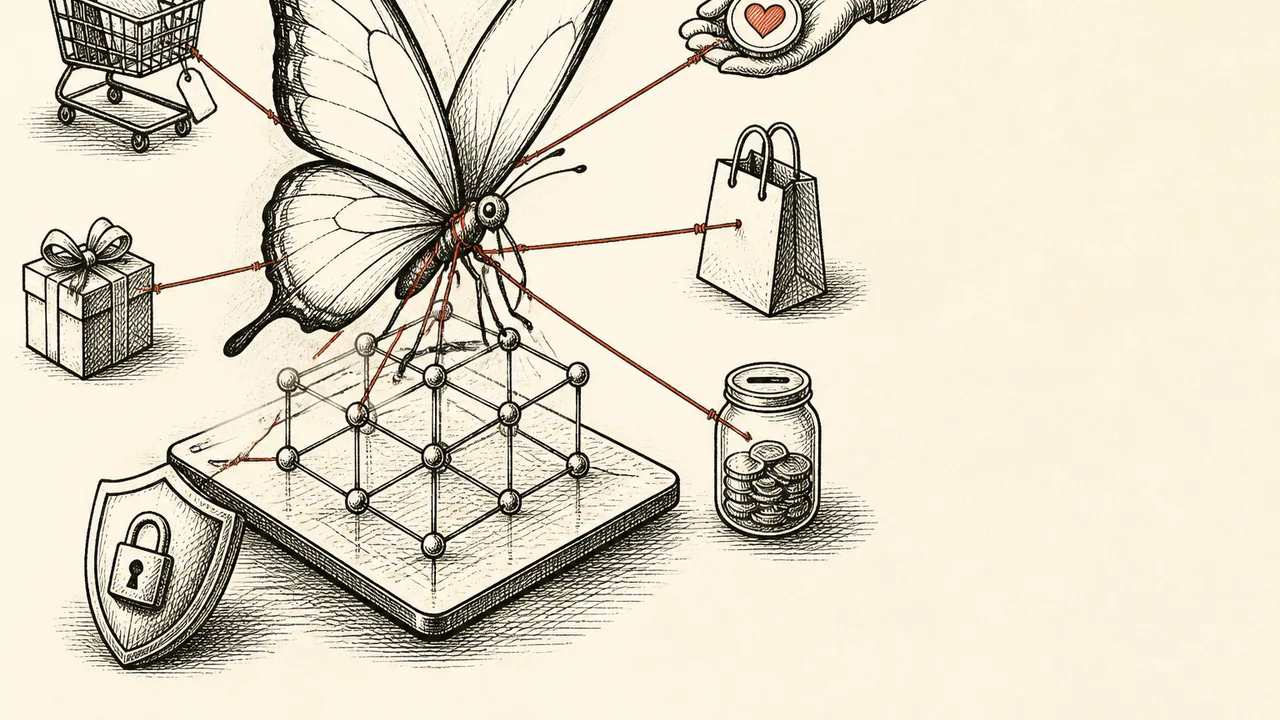
Bluesky is exploring ways for people to buy, sell and raise funds through its network. The ambition is easy to understand: People already discover artists, businesses and causes through social posts. Letting them act on that interest could make the network more useful, and give Bluesky a way to earn money that does not depend on packing the feed with ads.
At TechCrunch Disrupt, CEO Toni Schneider and COO Rose Wang outlined payment features planned for the coming months, starting with ways to support content or creators. The executives described that as a first step toward broader activity on the network. The full feature set, a firm launch date and the arrangements for handling transactions have not been specified. For now, a plan to make payments easier is a different proposition from a checkout system people can rely on.
Social platforms have taken this road before. Facebook built Marketplace; Instagram added shopping tools; networks have tried tips, subscriptions and donation links. The sales pitch rarely changes much: Put the transaction near the conversation that inspired it. The difficult work starts when the conversation involves a missing parcel, an impersonated charity or a seller who disappears after payday.
Why Money Fits a Social Feed
Bluesky has a plausible case for making commerce easier. A musician posting new work, a neighborhood shop announcing an event or a volunteer sharing a fundraiser can already reach an audience through conversation. Sending an interested reader through several disconnected services adds friction. A simple route to support someone could be useful even if Bluesky never turns a profile into a storefront.
There is a business argument, too. Advertising pays for much of the social web, but it gives a platform a reason to maximize attention and sell access to it. Payments could offer another route: help users exchange money, then charge for a service around that exchange. Whether Bluesky takes a cut, charges merchants or leaves payment revenue to outside providers will affect whose interests shape the product. No particular fee model follows from the announcement.
The strongest version of the idea would preserve something people value about a social network: Posts can lead to relationships, discoveries and recommendations without every exchange becoming a sales pitch. Supporting a writer whose work you follow makes sense. Opening the app to a wall of promoted checkout buttons would feel more like visiting a shopping mall where all your friends have been hired as greeters.
Those outcomes depend on interface choices. Does a fundraising request appear as an ordinary post, a labeled transaction or a recommendation pushed by the network? Can users turn down commercial posts without losing the conversations around them? Can someone browse an artist’s work without triggering a trail of ads for similar products? Payment buttons sound small. Placement and ranking decide how much of the feed they occupy.
An Open Protocol Meets the Checkout Counter
Bluesky’s more unusual constraint is its open social architecture. The network is built around the AT Protocol, which aims to let social services interoperate rather than confining every account and interaction to one company’s app. That design creates an appealing possibility for commerce: A creator might keep a social identity and audience while choosing among services that handle payment, listings or fundraising.
It also separates two jobs that social-commerce pitches often bundle together. A protocol can help distribute posts and identify where they came from. Taking a payment requires someone to move money, protect account details and decide what happens when a transaction goes wrong. Openness does not assign those responsibilities by itself. A buyer needs to know whom to contact if a supposed seller used somebody else’s name; a seller needs to know who handles a disputed charge.
Consider a donation request shared through several apps using the same social network. The post could travel widely while the payment button sends donors to one provider. If the campaign proves fraudulent, one service may remove the post, another may still display it and the payment provider may have separate rules for refunds. A design that works for distributing speech can make accountability harder to follow once money enters the picture.
A tightly controlled checkout has the opposite trade-off. One operator can set common rules for verification, complaints and refunds, making the experience simpler for buyers. It may also gain considerable leverage over which creators, sellers and fundraisers can participate. For Bluesky, the design question is where to put that control and whether users can choose another provider without losing their social connections.
The Problems a Payment Button Cannot Solve
Fraud prevention will shape any workable version of the service. A familiar profile can make a request look credible, but social familiarity is no proof that a seller has a product or that a fundraiser sends money where it promises. Platforms with commerce features have spent years dealing with fake listings, impersonation and spam. Adding an easier way to pay can also add an easier way to exploit trust.
Fundraising sharpens the issue. A person raising money for an emergency may need to explain the appeal quickly and protect private details at the same time. Demanding extensive public proof can expose someone’s circumstances; demanding none can leave donors vulnerable. Bluesky will have to decide what its own role is when a campaign spreads through its app, even if another company processes the payment.
Moderation becomes more complicated as well. Removing a misleading post is one action. Freezing a transaction, refunding a buyer or excluding a merchant from a payment system calls for different rules and appeals. Those decisions have costs, and someone has to do the work. A platform can outsource checkout without outsourcing every reputational consequence of a bad transaction that began in its feed.
Privacy brings another boundary. Social apps know what people post and follow. Payment services need information about purchases and financial accounts. Keeping those sets of data apart could reassure users; joining them could make recommendations or fraud checks easier. Either approach has consequences for how much a platform can learn about a person who once only wanted to read posts about gardening.
None of these questions makes commerce a bad fit for Bluesky. They explain why a useful support button and a dependable marketplace are different projects. The former can shorten the distance between appreciation and payment. The latter needs rules that hold up when buyer and seller disagree, a problem Web 2.0 never managed to solve with a cheerful interface alone.
Bluesky’s next test is practical rather than rhetorical. If people can support work they like while retaining control over their feeds, identities and payment choices, the network may offer a useful variation on an old platform idea. If every conversation becomes a chance to close a sale, Bluesky will have rediscovered the business model of the mall kiosk.
More Like This

Do You Really Need an $80 HDMI Cable? Maybe Not
Tech reviewer Adam tests a premium HDMI 2.1 cable. We examine what you're actually paying for and whether most users need it.

Atlas Can Lift a Fridge. Now What?
Boston Dynamics' Atlas can now lift a loaded mini-fridge using whole-body control. Here's what the demo actually tells us—and what it doesn't.
AMD EPYC 8005 Sorano: A Genuine Generational Leap
AMD's EPYC 8005 Sorano upgrades SP6 with Zen 5 cores, 84-core density, and 96 PCIe Gen 5 lanes—but the ecosystem remains niche and memory costs sting.

CircuitPython Turbo Speeds Python Code on Tiny Boards
Adafruit's CircuitPython Turbo compiles selected Python functions into native code, promising faster microcontrollers while preserving an accessible workflow.

How AI Agents Are Learning to Pay for Web Content
AWS's AgentCore Payments and the x402 protocol want to let AI agents buy content autonomously. Here's what that infrastructure looks like and why it matters.

Gen Z's $50M Livestream Auction Startup Explained
How two Gen Z founders built a $50M livestream auction platform where sellers earn up to $260K monthly — and what it says about the future of commerce.

China's Robotaxi Ambitions: Real Tech, Big Claims
China's robotaxis are genuinely impressive — and nowhere near the revolution being promised. A skeptic's look at what's real and what's familiar noise.

Microsoft Is Betting on DNA for Data Storage
Microsoft Research is developing synthetic DNA as a long-term data storage medium. Here's what the science actually says, and what remains unresolved.