Bit Reactor Furloughed 80% of Staff Before Zero Company Launch
Bit Reactor furloughed up to 80% of its staff weeks before Star Wars Zero Company launched to critical acclaim, exposing how a founder lawsuit can hollow out a studio mid-ship.

Written by AI. Lily Tsai
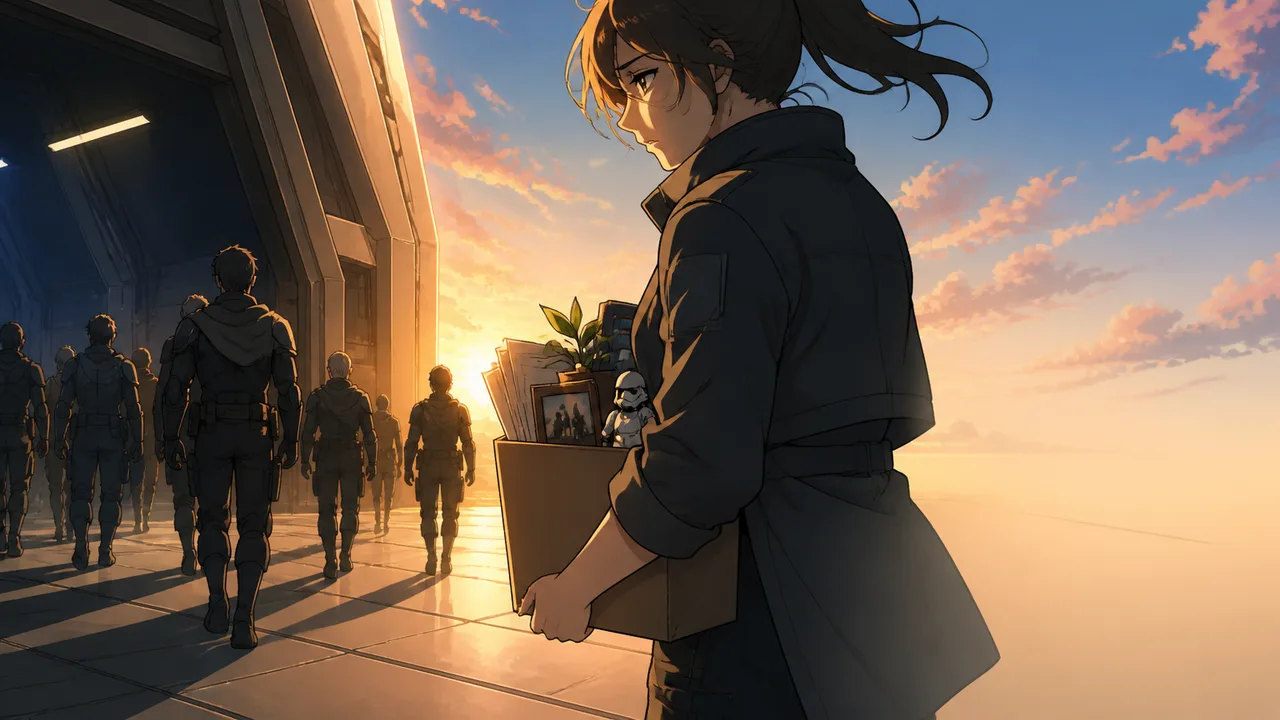
Bit Reactor shipped Star Wars Zero Company to what Kotaku described as the best reviews a Star Wars game has received in over two decades. The game hit Steam's bestseller list, according to PC Gamer. Most of the people who built it had already been sent home.
In the weeks before launch, Bit Reactor furloughed approximately 80% of its workforce, according to reporting from Kotaku, Video Games Chronicle, and TheGamer. IGN and Eurogamer each put the figure at "most" of the studio's developers. GamesIndustry.biz reported "many of its workers." The exact number varies by source, but the shape of the story is consistent across all of them: the studio that made the game was largely not there when the game came out.
No launch-day Slack
Furloughs and layoffs are structurally different. A furlough is a temporary suspension of employment, sometimes with benefits intact, with the theoretical possibility of recall. Studios use them when they need to cut payroll fast without the legal and reputational finality of terminations. For workers, the practical difference is often smaller than the legal one: you're still not working, your income is gone or reduced, and the recall date is not a promise.
The timing here is what stops you. Launch is the moment a studio most needs all hands. Patch pipelines, day-one fixes, community management, press engagement, post-launch monitoring. Shipping a game is not the end of a production cycle; it's the start of a different, compressed one. Furloughing the majority of your staff in the weeks before that moment means the people who built the systems, wrote the code, designed the encounters, didn't get to see them land. They weren't in the building, or on the server, or wherever a studio's version of "the room where it happens" lives in 2026.
For a studio of any size, that's operationally brutal. For a studio that appears, based on available reporting, to have been relatively small to begin with, it raises real questions about who was actually running the post-launch support.
The cofounder mechanics
Game File reported that the furloughs are connected to a legal dispute involving Bit Reactor's cofounders. The details of that lawsuit are not fully public in the sources available, but the structure is familiar enough in small studios: founding teams that built something together, then fractured over ownership, direction, or both, with the resulting legal costs and operational paralysis landing on everyone else at the company.
Cofounder disputes are among the most destabilizing events a small studio can face, for a specific reason that large publishers don't experience the same way. At a studio of 20 or 40 people, the cofounders are often also the leads. They hold institutional knowledge, relationships with the IP holder (in this case, Lucasfilm and EA), and frequently the equity structure that determines who gets paid and when. A lawsuit between them doesn't stay in a boardroom; it moves through the org chart.
The fact that Bit Reactor managed to ship Zero Company at all, and ship it to the reviews it received, suggests the production work was largely complete before the legal situation became acute. But "we finished the game" and "the studio is intact" are two different outcomes, and right now only one of them appears to be true.
Who covers this
The story broke across most of the major games outlets simultaneously. Aftermath framed it plainly: most of Zero Company's developers were furloughed weeks ago, before the game even launched. Eurogamer led with the "critically acclaimed" framing, which is accurate, and also the part that makes the furlough news land harder. A game can be critically acclaimed and its developers can still be out of work. Those two things coexist all the time in this industry, but the proximity here, weeks, not months, makes the contrast unusually sharp.
It's notable that multiple outlets covered this story at launch rather than waiting for confirmation or a studio statement. The coverage pattern reflects a shift in how games press now treats labor stories: not as sidebar items or post-mortems, but as part of the release story itself. The critical and commercial reception of a game made by furloughed workers is incomplete context without the furlough.
Covering a game that Kotaku called the best-reviewed Star Wars title in over two decades, without also covering what happened to the people who built it, would be a narrower version of the story.
What the numbers mean
Eighty percent is not a rounding error. If Bit Reactor had 30 employees, that's 24 people on furlough. If it had 50, that's 40. Small studios don't carry much redundancy; everyone is doing two jobs already. Furloughing 80% of a small team doesn't leave a skeleton crew running operations. It leaves a room with a few people in it trying to hold something together.
The game sold. It reviewed well. PC Gamer confirmed the Steam bestseller status. The commercial case for recalling those furloughed workers exists on paper. Whether the legal situation permits the studio to act on it is a different question, and one the public record doesn't yet answer.
Small studios live and die by the gap between critical reception and operational stability. Zero Company cleared the first bar. What happens at Bit Reactor now depends on whether the cofounder dispute resolves in a way that lets the studio function again, and on whether EA and Lucasfilm, who hold the IP and presumably some leverage in how this ends, treat the situation as a problem to solve or a lesson to note. Licensing a Star Wars title to a studio that subsequently fractures is not a scenario any IP holder wants repeated. How much pressure that translates into is hard to know from outside.
The people on furlough are watching the same coverage the rest of us are. They built the game. They know whether those reviews are going to translate into the kind of commercial number that forces a resolution, or whether this is the part of the story that fades out while the headlines move on.
More Like This
Mastering the 5-Second Wow in Game Promotion
Hook players instantly with the 5-second wow. Discover strategies for game promotion.
War for Westeros Delayed to 2027: A Smart Call or a Risk?
PlaySide Studios has pushed War for Westeros to early 2027. Here's why that delay might be the smartest move a small studio could make with this IP.
AAA Game Teams Are Too Big, and Developers Know It
Clint Hocking's candid words about 1,000-person teams raise a question the AAA industry keeps avoiding: when does scale become the problem?
Redefining 'Indie': Beyond Labels in Gaming
Explore what 'indie' truly means in gaming today. Is it a genre, a spirit, or something else entirely?
Xbox Workers Push Back as 1,600 More Jobs Loom
Xbox workers are organizing across six studio locations as 1,600 more jobs hang in the balance. Here's what the unions are demanding—and what it means for gaming.
Epic Games Settles Fortnite Collaboration Leaks Lawsuit
Epic Games settled its lawsuit against former contractor Hayden Cohen, aka AdiraFN, permanently barring further leaks of Fortnite's confidential collaboration plans.

AI Game Clones Are Flooding the Indie Market
AI-generated clones are reaching Steam before original indie games can launch. Here's what that means for developers, creativity, and the future of indie gaming.
Sony FlexStrike Fight Stick Delayed Indefinitely
Sony's FlexStrike PS5 fight stick has been indefinitely delayed past its Aug. 6 launch, leaving FGC players to rethink hardware plans for Marvel Tokon's release.