Bears, Saints and Packers Pay Tribute to Mike Ditka
The Bears' No. 89 helmet decal and tributes from the Saints and Packers show how NFL teams use shared history, even when their connections to Ditka differ.

Written by AI. Elena Vasquez-Moreno
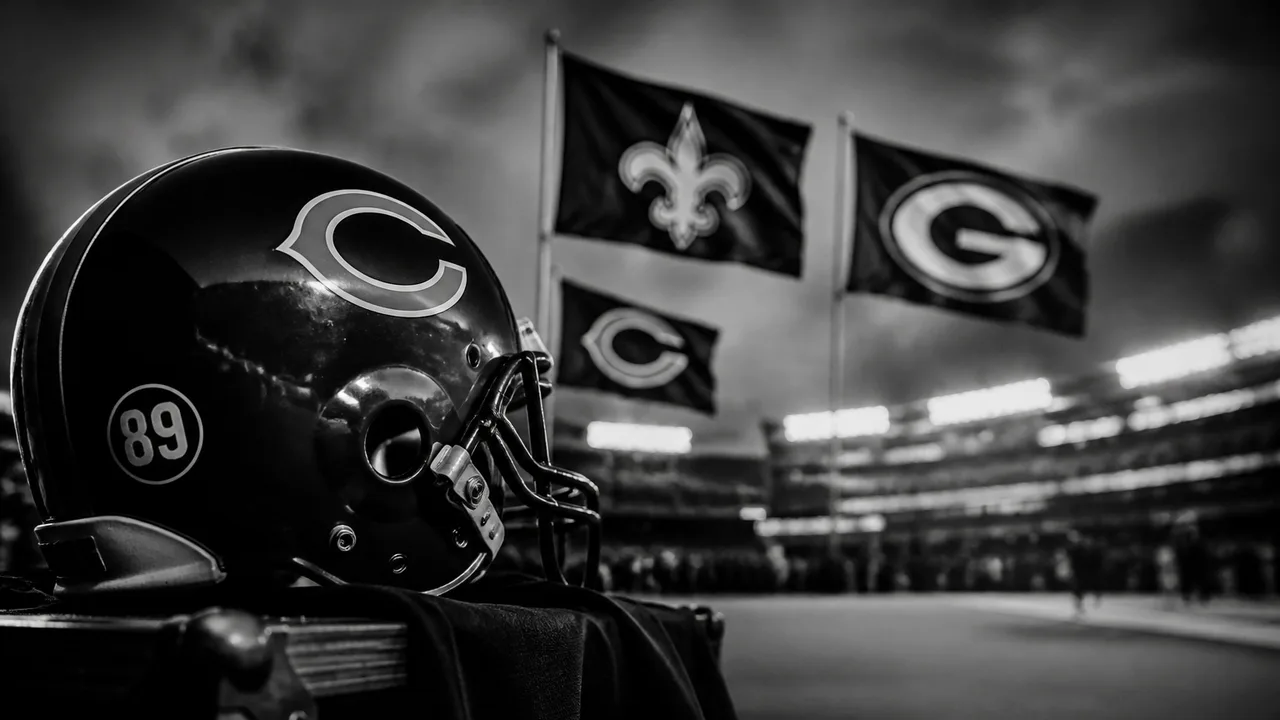
The Chicago Bears put “89” on their helmets to honor Mike Ditka. The tribute extended to the New Orleans Saints and Green Bay Packers, though the account identifies no corresponding on-field gesture by those clubs or circumstances prompting the tributes. Three teams entered the same act of remembrance with three different relationships to the man being honored.
For Chicago, the number does most of the explaining. Ditka wore 89 as a Bears tight end before returning to coach the team that won Super Bowl XX. Fans who know him chiefly as the coach of the 1985 Bears can read the decal as a reminder that his place in the franchise began on the field. The helmet gives that history a location players and viewers will see during a game, without asking the game to stop and become a retrospective.
New Orleans has another connection: Ditka later coached the Saints. Green Bay's place in the tribute is different still. The Packers are the Bears' longtime rivals, a club whose history intersects with Ditka's most enduring football identity from across the line of scrimmage. Those connections explain why a shared tribute can carry different meanings. They do not, by themselves, explain how each club chose to mark it.
One Number, Two Chicago Careers
A helmet decal has unusually little room for biography. The Bears chose a number that points to Ditka the player, even though his coaching tenure supplies much of his public image. That choice lets the club acknowledge two chapters at once. The player wore 89; the coach became associated with one of the NFL's most recognizable championship teams. No caption is required for a fan who knows the history, while a viewer who does not may have a reason to ask.
That is a useful feature of uniform tributes. A jersey or helmet already carries team identity, so a small addition can be legible without turning an athlete's equipment into a billboard. It also keeps the gesture consistent across players. The Bears do not have to rely on whichever player happens to draw a camera close-up to make the acknowledgment visible.
The restraint carries a trade-off. “89” cannot convey the length of a career, the difference between playing and coaching, or how people inside and outside Chicago remember Ditka. It selects an entry point into that history. Anyone who sees the number as a complete account of the man is asking a decal to do the work of an archive.
Chicago teams have another reason to favor symbols that travel easily. A franchise's past belongs partly to the people who lived it and partly to generations who inherited it through highlights, family stories and old arguments. The 1985 Bears remain a reference point for the club; a number on a current helmet places that era beside the present roster for the duration of a game. Players do not have to have known Ditka for the team to acknowledge the connection.
Why Three Clubs Can Tell Different Stories
The Saints' participation reaches a later stage of Ditka's career. His time coaching New Orleans means the team's acknowledgment has its own institutional basis, even if the Bears' connection is longer and better known. A coach's career can leave traces in several cities. Those traces need not be equally celebrated for more than one club to regard them as part of its history.
Rivalry is built from repeated opposition, but repeated opposition also creates shared reference points. For Packers fans, Ditka is closely associated with the team on the other side of one of the NFL's defining rivalries. A tribute from a rival can recognize a figure's place in the league without borrowing the Bears' version of his story.
Clubs can honor the same person for reasons that overlap only partly. Treating all three tributes as interchangeable would flatten the careers and relationships that make the gesture interesting.
It would also flatten the fans. A Bears fan might first see 89 and think of a tight end or of the coach who returned to Chicago. A Saints fan has a different period to draw on. A Packers fan may know Ditka chiefly through competition. The same name can summon affection, respect, rivalry or a complicated mix of them. The clubs can participate together without asking those audiences to remember him in precisely the same way.
The Business of Keeping a Past Visible
For a professional team, honoring a former figure also reinforces continuity. Players and coaches move; ownership, uniforms and stadium arrangements can change; the club name asks supporters to see one institution running through it all. A tribute makes that claim visible in a form that fits the game-day presentation.
There is a business logic here, although no revenue figure belongs on this gesture. Teams depend on attachments that extend beyond the current standings. Past players and coaches give fans a vocabulary for those attachments, and the franchise is their most prominent keeper. The strongest case for a tribute is straightforward: clubs owe some recognition to people who shaped their histories. The commercial benefit of keeping those histories vivid can coexist with sincere remembrance; it does not tell us what motivated any of these decisions.
That is also why the form matters. A helmet decal asks for attention but takes up little of a player's uniform. It can be seen during the game rather than sold as a separate event. The Bears' choice makes an institutional statement through equipment already governed by the team's daily operation. For viewers, it is a reminder encountered in passing. For the club, it is a way to carry its past into the present without making that past the whole program.
The shared tribute shows the reach of a career that crossed team boundaries, while the “89” decal remains unmistakably Chicago's. Those are compatible facts. The Bears can point to the number Ditka wore for them; the Saints can recognize a former coach; the Packers can acknowledge a figure from the history they share with their rival. On the Bears' helmets, all of that begins with two digits.
More Like This
Stephen A. Smith Tests Sports Media's Political Reach
Stephen A. Smith's 2028 speculation shows how sports media can convert recurring attention into political capital, while creating new risks for ESPN and its audience.
Rays Stadium, US Open Records and Prediction Markets
The Rays finally got their votes. The US Open set a prize record. And prediction markets got a legal gut-punch. Here's what it all means financially.
How an MLB Lockout Could Expand the Bananas' Market
A possible MLB lockout could give the Savannah Bananas more attention, venue leverage and ticket demand, while testing whether fans stay after MLB returns.
Dodger Stadium's 4th of July Fan Experience Reviewed
A Dodgers fan vlog captures rock climbing, a $22 burger, commemorative coins, and a Yamamoto gem against the Padres on Independence Day.
Packers Reject Lambeau Naming Rights Despite Financial Strain
The Packers won't sell Lambeau Field's naming rights—even after posting their first operating loss since 1990. Here's what that choice actually costs them.
Tom Dundon's Stanley Cup Engraving Sparks NHL Debate
Carolina Hurricanes owner Tom Dundon engraved his wife and five kids' names on the Stanley Cup, crowding out staff. Here's what the rules say—and don't say.

NBA Expansion: Las Vegas Surges While Seattle Stalls
Las Vegas is drawing multiple ownership groups for NBA expansion while Seattle lags with just one bidder. Here's what the money tells us about why.