AHA Says 5 Cups of Coffee a Day Is Safe for Your Heart
The American Heart Association says up to 5 cups of coffee daily is safe and may lower heart disease risk. Here's what that actually means—and what it doesn't.

Written by AI. Priya Sharma
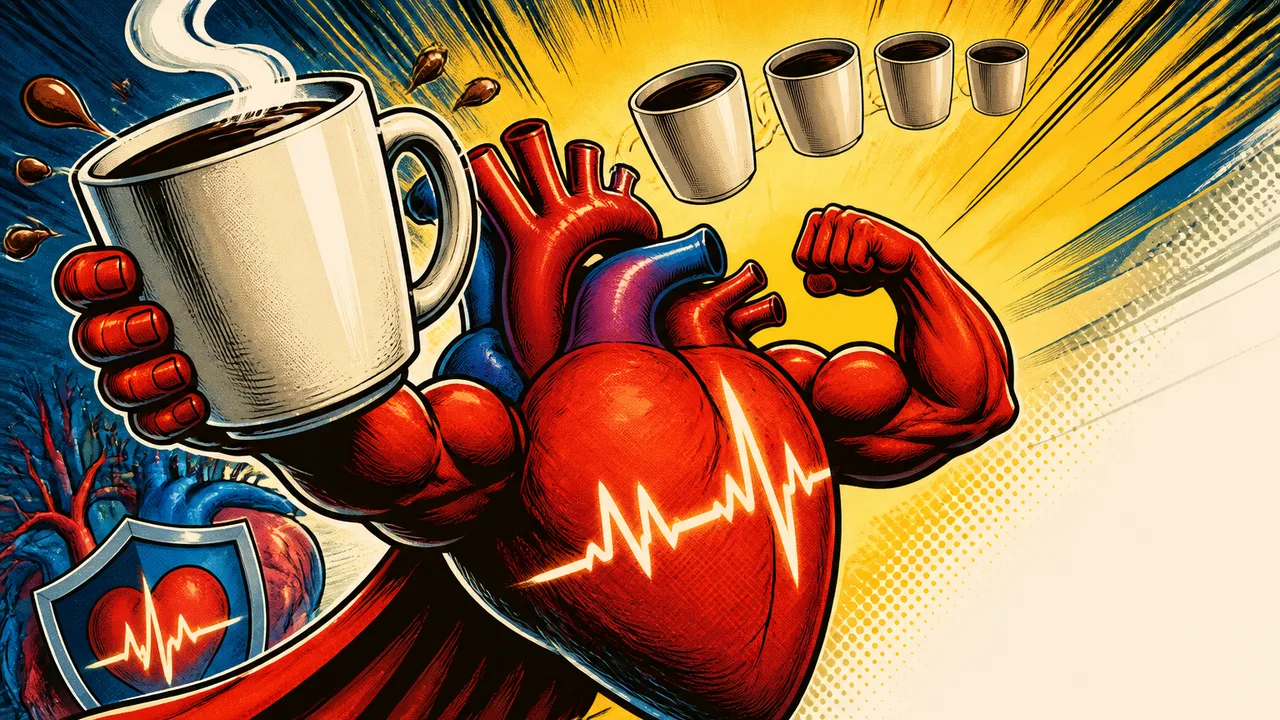
The coffee story follows a familiar arc. First came the wave of alarm — caffeine raises your heart rate, it must be killing you. Then the backlash wave — actually, coffee drinkers live longer. Then, usually quietly, the settled position: it's complicated, context matters, keep drinking your coffee. I cover tech for a living, and that three-act structure should sound familiar to anyone who lived through the early smartphone health panic, the social media mental health debate, or any AI cycle you care to name. Enthusiasm, concern, pragmatism. The difference is that with coffee, we seem to be arriving at pragmatism faster.
The American Heart Association published a scientific statement this week that lands squarely in act three. According to the AHA's own newsroom, the latest research supports that up to 400 milligrams of caffeine daily — roughly five cups of regular black coffee — is safe and appears to be linked to a lower risk of cardiovascular disease for some individuals. The Hill reports the statement was published Monday and marks the AHA's clearest synthesis of the existing research to date.
That's not a small thing. The AHA doesn't do press releases for fun. A formal scientific statement is a considered document, not a tweet. When they say "safe for most adults," they mean they've reviewed enough accumulated evidence to stake institutional credibility on it.
What the AHA Is Actually Claiming
The conditions linked to reduced risk in the AHA's statement are worth naming precisely, because they tell you something about how the researchers are thinking about coffee's mechanism. ABC News reports the benefits are associated with lower risk of stroke, Type 2 diabetes, and heart failure. Fox News adds heart disease to that cluster.
That combination — stroke, heart failure, Type 2 diabetes, heart disease — is not random. These are conditions that share upstream causes: chronic inflammation, insulin resistance, endothelial dysfunction. If coffee is genuinely protective across all four, the interesting scientific question isn't "does coffee help?" but "what is coffee doing metabolically that touches all of these?" The AHA statement points toward antioxidants and anti-inflammatory compounds in coffee as candidates, according to Newsweek's coverage. That's a more coherent story than "coffee is magic" — it has a plausible mechanism.
The Economic Times notes the statement specifically frames the 400mg threshold as not increasing cardiovascular risk for most adults — careful language that sets a floor before suggesting a potential ceiling. The AHA is not saying coffee is medicine. They're saying the baseline fear was wrong, and there's observational evidence the picture is actually better than neutral.
The Part Where I Have to Be Honest About Observational Research
Here's where I feel like the coverage — across outlets — has quietly glossed over something important. The studies underlying the AHA statement are overwhelmingly observational. People who drink coffee regularly are observed to have lower rates of these conditions. That is genuinely useful information. It is not the same as randomized controlled trial evidence that coffee causes those reductions.
Observational nutrition research has a structural problem that has produced some spectacular failures: the healthy user bias. People who drink moderate amounts of coffee in a stable daily routine tend, on average, to have other characteristics correlated with better health outcomes — more stable schedules, less financial stress, better access to healthcare, less heavy drinking. You are not just measuring coffee; you are measuring the life that coffee tends to come with.
This is not a reason to dismiss the findings. It's a reason to hold them correctly. The AHA statement doesn't claim causation, and to their credit, their own coverage uses appropriately hedged language: "appears to be linked," "for some individuals." The problem is that once a finding travels from a scientific statement through a news cycle, "appears to be linked for some individuals" has a tendency to arrive in a Facebook share as "coffee prevents heart attacks." That transformation is not the AHA's fault. It is a known property of how health news moves.
Who This Doesn't Apply To
The "most adults" qualifier in every piece of coverage is doing real work and deserves more space than it gets. Slashdot's coverage flags that the statement distinguishes between populations, and that's worth sitting with. Pregnant women face different recommendations. People with certain arrhythmias, anxiety disorders, or sensitivity to caffeine are in a different category than the median coffee drinker. "Safe for most adults" is a population-level statement that tells you nothing about any specific individual.
The majority of American adults already drink coffee regularly, which means for most readers, this statement is permission to continue an existing habit without guilt — not a prescription to add cups you don't currently drink. Those are genuinely different things, even if both get filed under "good news about coffee."
Why This Story Gets Covered the Way It Gets Covered
I cover technology, not cardiology. But the information dynamics here are identical to what I watch in tech. A scientific finding lands. It contains careful language and appropriate hedges. It moves through the media ecosystem, and with each step, the hedges get lighter and the claim gets punchier. "Appears linked to lower risk for some individuals" becomes "coffee is good for your heart," which becomes "drink more coffee." The finding hasn't changed. The communication of it has.
That's not cynicism. The AHA's scientific statement is a real document with real institutional weight behind it. The finding — that moderate to relatively high coffee consumption does not increase cardiovascular risk and may actually be associated with reduced risk — is genuinely better news than what cardiologists were telling patients twenty years ago. That's worth reporting clearly.
The risk is that "coffee is fine, maybe good" gets optimized in the retelling until it reads like a stock press release from the National Coffee Association. A statement about risk profiles and observational associations in population-level data is not the same as your doctor telling you that five cups a day is your personal prescription for cardiovascular health.
The AHA knows that. Most of the reporters covering this know that. The question is whether the reader who encounters the headline on a Tuesday morning, before their second cup, knows that — or whether they're just glad to have permission.
Given that the evidence is genuinely encouraging, and the caveats are genuinely real, the most accurate thing I can say is: drink coffee if you like it, don't drink it if you don't, and treat any headline that tells you a specific food is definitively protective against a specific disease with the same skepticism you'd apply to a startup promising it has disrupted an entire industry.
The pattern usually rhymes.
More Like This

Can Unreal Engine 5 Run on a $500 MacBook? Sort Of.
Testing Unreal Engine 5.7 on the MacBook Neo reveals what happens when professional software meets budget hardware—and why friction matters.

FFmpeg's Twitter Drama Was Actually Good for Open Source
The FFmpeg account's X drama raised donations and awareness for grassroots open source. But is performative conflict a sustainable outreach strategy?

Public Trust in Science Is Fragile and Complicated
Trust in science is eroding—but the data is more complicated than the panic suggests. Here's what's actually happening, and why it matters.

6 Sunscreen Myths That Could Cost You Your Skin
From DIY recipes to oxybenzone fears, sunscreen myths spread fast online. Here's what the science actually says—and what's genuinely worth questioning.
Sugar, Soda, and Mental Health: What the Research Shows
New research links high sugar intake—especially from soda—to depression and anxiety. Here's what the science actually says, and what it doesn't.

This Tool Treats Your Home Lab Like Infrastructure Code
RackPeek documents home labs as YAML code in Git. Brandon Lee shows how this infrastructure-as-code approach beats static diagrams and spreadsheets.

Primordial Black Holes as Dark Matter Candidates
After decades of failed WIMP searches, physicists are turning to primordial black holes as a serious dark matter candidate. Here's what the evidence actually shows.

Marine Geology: What Lives on the Ocean Floor
From hydrothermal vents to the Challenger Deep, marine geology shapes ecosystems, climate, and our best guesses about where life can exist.