Sugar, Soda, and Mental Health: What the Research Shows
New research links high sugar intake—especially from soda—to depression and anxiety. Here's what the science actually says, and what it doesn't.

Written by AI. Kira Yoshida
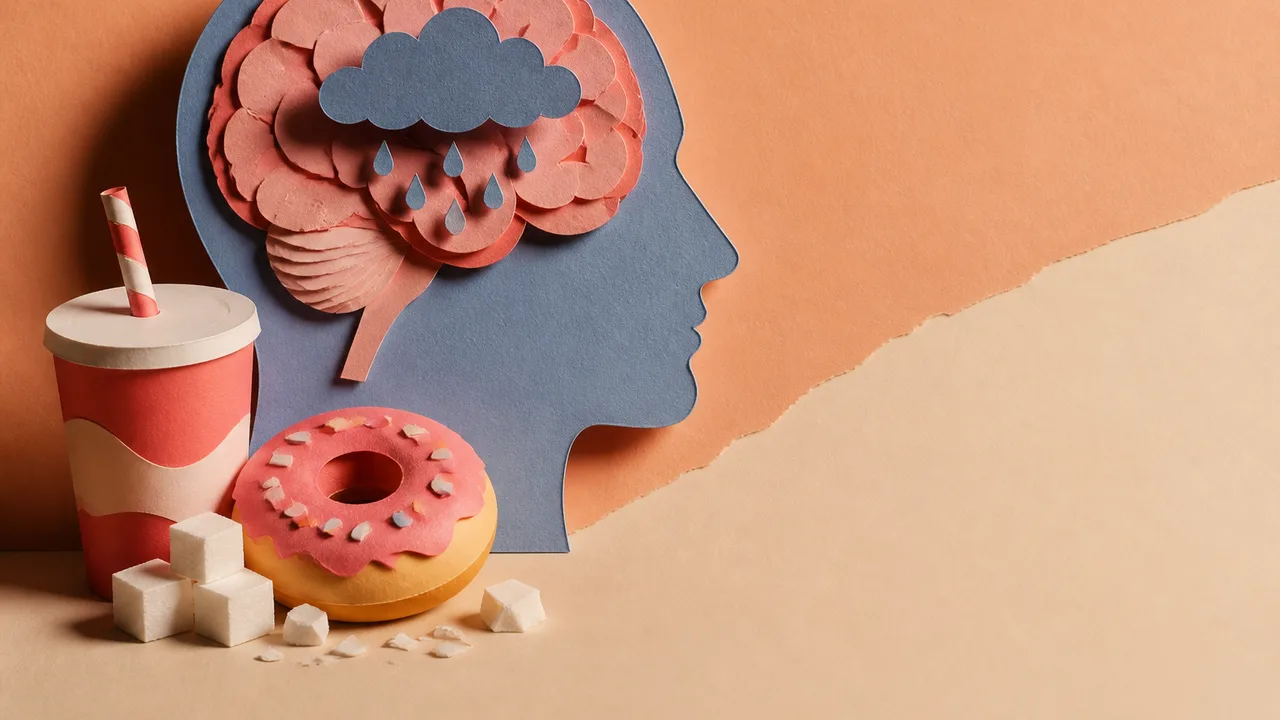
There's a particular kind of afternoon feeling—not quite sad, not quite anxious, just a low, restless hum that makes you want something cold and sweet. You know the Coke won't fix it. That's not really the point. The point is that it's there, and you're not, and for about forty-five seconds after the first sip, the gap between those two things narrows just enough. And then the can is empty, and the hum is back, and now there's a small additional weight of that didn't actually help sitting on top of everything else. If you've lived inside that loop, something researchers are starting to pay closer attention to might actually be worth your time.
The emerging science on sugar, soda, and mental health is genuinely interesting—and also genuinely messy. Not in a "the truth is somewhere in the middle" way. In a "causation is hard, the beverage industry is well-funded, and human bodies are complicated" way. Let me try to map it clearly.
What the research actually claims
The basic biological story goes like this: sodas deliver a rapid spike in blood sugar without any of the fiber or nutrients that slow absorption, according to Psych Central. That spike triggers an insulin response, blood sugar then crashes, and that crash can produce or amplify mood symptoms—irritability, fatigue, low-grade anxiety. Over time, chronic high sugar intake may affect neurotransmitter function, particularly serotonin, which is implicated in depression. WebMD notes that consuming too much added sugar may contribute to mood disorders, and that diets rich in whole foods—fruits, vegetables, fish—are associated with significantly reduced depression risk.
A published review in PMC/NCBI looked specifically at sugary beverages and brain health, examining mechanisms including inflammation, insulin resistance, and their downstream effects on cognitive function and mood regulation. The general finding: there are biologically plausible pathways through which heavy sugar consumption could affect brain health. That's different from proof, but it's not nothing.
Here's where it gets more textured. A longitudinal study of children and adolescents published in Social Science & Medicine via ScienceDirect looked at the relationship between soft drink consumption and mental health problems over time—and found something researchers call bidirectionality. Kids with mental health problems drank more soda. But drinking more soda also predicted worse mental health outcomes later. The researchers noted that sugar may have analgesic properties—numbing unpleasant feelings temporarily—which could explain why people in distress reach for it. The soda-and-mood relationship, in other words, doesn't run in one direction.
That observation connects movement science to this story in a way worth sitting with: exercise research has long grappled with the same bidirectionality problem—depressed people move less, and moving less worsens depression. Disentangling cause from effect when the variables feed each other is genuinely one of the harder methodological challenges in behavioral health research. The same body of tools researchers have developed to study exercise and mood—longitudinal designs, natural experiments, careful covariate control—is now being applied to diet. The pipeline from "biologically plausible" to "clinically established" runs through that kind of rigor, and the sugar-mental health literature is still building it.
The question nobody should skip
Psychology Today puts the research in a frame that deserves to be taken seriously: who funded the study, and what did they have to gain? This isn't a dismissal of the entire literature—as Europe Says summarizes, not every industry-funded study is worthless, and not every soda drinker is going to develop diabetes. But the history of industry-funded nutrition research is not a confidence-inspiring one. The tobacco playbook—fund studies that introduce doubt, emphasize uncertainty, shift focus to individual behavior—was adopted enthusiastically by the sugar industry, a fact that has been documented in peer-reviewed journals. When evaluating claims about sugar and health, funding source is a legitimate variable, not a conspiracy theory.
This matters especially now because the sugar-mental health connection is exactly the kind of finding that's vulnerable to capture from two directions: the beverage industry will fund research that complicates the picture, and the wellness industry will strip-mine the finding for supplement sales and detox protocols. Both distortions are already underway. The wellness industry has been selling "sugar detoxes" and "brain-gut optimization" for years, usually without the research to back the specific products. The fact that there's now a more legitimate scientific conversation about dietary impacts on mood will be used—is being used—to sell things. None of those things fit in a smoothie.
What's still genuinely uncertain
The research, at this stage, supports these statements: high sugar intake is associated with worse mental health outcomes in population-level studies. There are plausible biological mechanisms. The relationship appears to be bidirectional rather than linear. Whole-food diets are associated with better mood outcomes.
It does not yet support: specific thresholds for "safe" sugar consumption relative to mental health risk; clear clinical protocols for using dietary change as a primary mental health intervention; or the idea that reducing soda consumption will reliably treat depression or anxiety in any individual.
That gap—between "associated with" and "will treat"—is where a lot of wellness-industry grift lives. It's also where a lot of legitimate science in progress lives. The difference is whether the people making claims acknowledge the gap or paper over it.
What this looks like from the inside
Here's a concrete thing: the next time you read a story about nutrition and mental health—or a wellness brand's Instagram post about it—check whether they use the word "associated" or whether they've quietly upgraded it to "causes." Check whether they name a specific mechanism and then link it to a specific product. That translation, from plausible biology to purchasable solution, is almost always where the science stops and the sales pitch starts. Psychiatrists and registered dietitians working in integrative care are starting to take dietary factors seriously as one genuine input alongside medication and therapy—not instead of them, not as a moral judgment about eating habits, but as one more lever in a system that has many levers. That's a legitimately different conversation than "drink this tea for your serotonin." Noticing the difference is a form of literacy that serves you whether you're anxious, doing fine, or somewhere in the complicated middle.
The science is early. The interest is real. And the question of how much what you eat shapes how you feel—not as punishment, not as optimization, just as biology doing what biology does—deserves a clearer answer than we currently have.
More Like This

Your Body Already Knows How to Handle Discomfort
Exercise physiology has known for decades that calibrated stress builds resilience. So why does the wellness industry keep selling you comfort instead?
Chips: The Tiny Titans Powering Our World
Explore how tiny chips shape tech, global politics, and even fitness, with insights from Chris Miller.

How Sports Actually Bring People Together
Sports are celebrated as a universal unifier—but how does that actually work, and when does it fall short? We map the real science and the real limits.

Why Being Complicated Might Be the Point
Yahia Ghaleb's TEDx talk argues we should stop flattening ourselves into simple labels. Here's what the psychology actually says about living in the gray.

Social Media Linked to ADHD Symptoms in Teen Boys
A UCSF study tracking 11,000 kids finds addictive social media use predicts rising ADHD symptoms in boys—and the algorithm angle makes this hard to dismiss.

How to Survive a Sleepless Night, According to Science
When sleep isn't possible, science offers real strategies. Here's what sleep banking, caffeine naps, and thermal drops can actually do for you.

Unexplained Infertility and the Weight of Not Knowing
When all the tests come back normal but pregnancy doesn't happen, unexplained infertility creates a unique psychological burden—here's what the research shows.

Reproductive Psychiatry's Push to Become a Real Specialty
Clinicians are fighting to make reproductive psychiatry a board-certified specialty. Here's what that would actually change for postpartum mental health care.