A 1.27-Billion-Year-Old Mars Meteorite Changes Everything
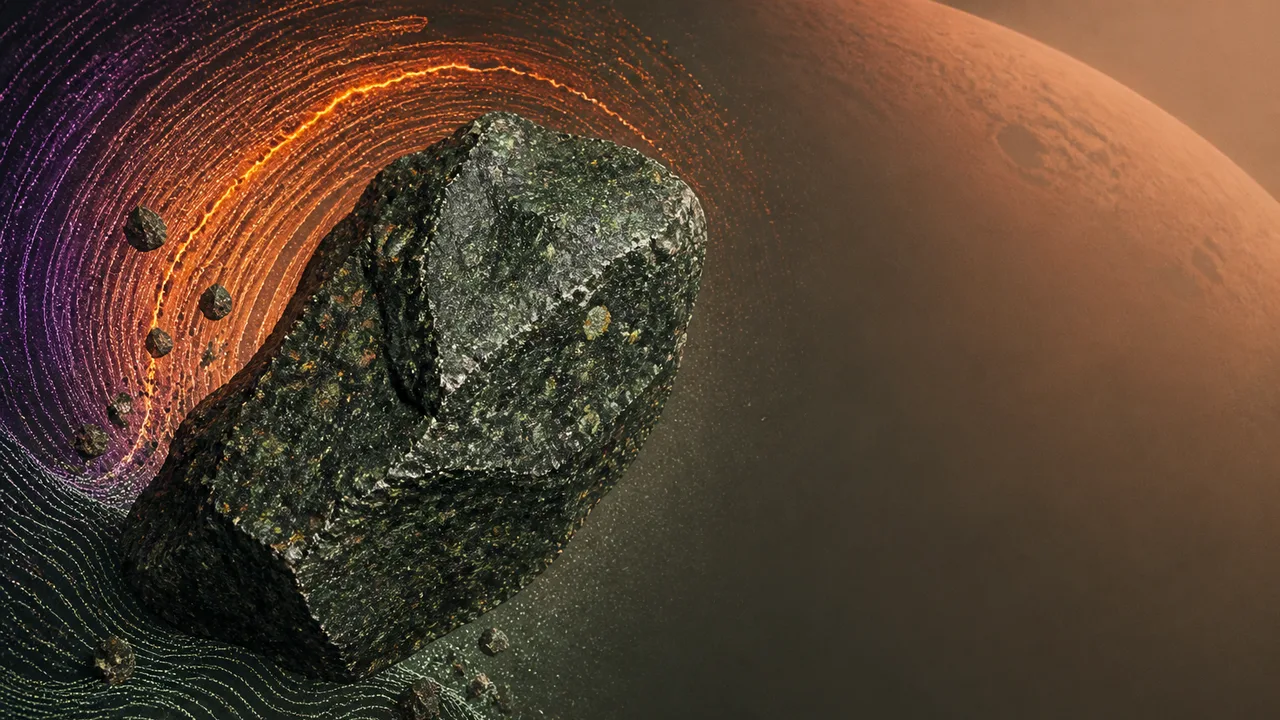
A dark green Martian rock found in Algeria in 2019 just filled a 1.8-billion-year blank in Mars's geological record — and it came from a region no one knew existed.

Written by AI. Mei Zhang
In genetics, we have a concept called a "genomic dark age" — a stretch of evolutionary time where the record goes silent, where whatever happened left no readable trace. Reconstructing what occurred in that gap is painstaking, probabilistic work. You're building a picture from fragments, and the gaps are sometimes as informative as the sequence itself.
That's the frame I couldn't shake when I read about the dark green Martian rock found near Rafsa, Algeria, in 2019.
According to spacedaily.com, of the roughly 400 Martian meteorites ever recovered on Earth, not one had been dated to the window between 600 million and 2.4 billion years ago. That's an 1.8-billion-year blank in the geological record of another planet — a gap so vast it makes the Earth's own famous "Great Unconformity" (a billion-year gap in the terrestrial fossil record, noted by Big Think) look like a footnote. Mars had one of its own, and until recently, we didn't even have a name for what we were missing.
The Algerian rock, now confirmed to be 1.273 billion years old, just landed squarely in the middle of it.
A Genomic Time Capsule, But Make It Planetary
Here's what immediately grabs me as someone who spends a lot of time thinking about preserved biological material: the reason ancient DNA from permafrost or amber is so valuable isn't just its age — it's the fact that it escaped the rewriting. Every generation of biological replication introduces copying errors, selections, deletions. What makes a preserved sample extraordinary is that it missed all that. It's a snapshot from before the noise accumulated.
This meteorite works the same way, conceptually. According to EurekAlert, the Boston College team that analyzed it — led by researcher Dylan Seal and colleagues, whose findings appear in the August 2026 issue of Geochimica et Cosmochimica Acta — determined the rock came from a previously unsampled reservoir on Mars lying between what geologists call "enriched and depleted shergottite sources," per Space.com. A region, in other words, that wasn't touched by the volcanic and thermal reworking that reshaped most of Mars's surface.
Universe Magazine describes it bluntly: this material suggests "a region deep inside Mars survived without being affected by later transformations." A pocket of the planet that sat there, essentially unchanged, for over a billion years — and then got blasted into space and eventually landed in the Algerian desert, where a human picked it up.
That's the genomic time capsule equivalent for planetary science. You don't get a window into unmodified Martian mantle often. You basically never get it from this specific time period. As Daily Galaxy notes, this is scientists' first shergottite — the most common class of Martian meteorite — from that entire missing interval. The first one. From a 1.8-billion-year stretch of time. 🧬
The parallel to ancient genomics isn't decorative, it's analytical: what we learn from things that didn't change tells us what everything else did change into, and why. This rock doesn't just fill the gap. It redefines the baseline.
Wait, Does This Mean Mars Had Life?
Okay, I have to address this because I know it's the first thing half of you want to ask.
Short answer: this rock doesn't confirm life. But here's the longer answer, which is more interesting.
What this meteorite does is help scientists understand what Mars looked like during one of the least-documented chapters of its history — and that period matters a lot for the habitability question. The 1.27-billion-year mark sits in a window when Mars was likely still volcanically active in some regions, still potentially had subsurface liquid water, and was undergoing the kind of geochemical activity that, on Earth, was keeping early microbial life well-fed.
We don't have direct evidence of life in this rock. But what a "previously unsampled mantle reservoir" means in practice is that scientists now have geochemical fingerprints from a part of Mars that was doing its own thing — potentially its own interesting thing — during a period that's been essentially invisible to us. If you're trying to reconstruct whether Mars ever had the right conditions for life, having a blank 1.8-billion-year window in your geological record is a serious problem. This rock starts to close that window.
Think of it like this: imagine trying to figure out whether someone's apartment had ever been clean, but you only had photos from before they moved in and after they moved out, with nothing from the years in between. The Algerian meteorite is the first photo from the middle of the lease.
Does it show a clean apartment? Not definitively. But it shows you what the apartment looked like when the lease was still active — and that changes everything about how you'd investigate the question.
The Rock Nobody Knew Was Missing
Shergottites — the class of Martian meteorites this rock belongs to — are the most common type we find, but "common" is relative. There are roughly 400 Martian meteorites in the entire human scientific record, per spacedaily.com. Mars is, on average, hundreds of millions of kilometers away — and even at closest approach, EarthSky notes it gets no closer than about 54.6 million kilometers from Earth. The meteorites that make the crossing do so because giant impacts on Mars's surface kick material into escape trajectories — it's violent, chaotic, and not exactly curated. The geological record we have of Mars is whatever happened to survive that chaos, travel across the inner solar system, survive atmospheric entry, land somewhere recoverable, and then get found.
The fact that nothing from a 1.8-billion-year window had made that journey — or at least nothing we'd recognized and dated — isn't necessarily evidence that nothing existed. It might reflect the randomness of which impacts send which material our way, and what survives long enough to be identified. The geological record is probabilistic, like all records.
Which is exactly why this rock matters so much: it proves that window is accessible. There's material from that era that can reach us. Now the question is what else might be sitting in a desert somewhere, unidentified.
Who Gets to Know This, and Who Decides What Comes Next?
Here's the question I keep turning over: the study is published. The data is in Geochimica et Cosmochimica Acta. But the physical rock — the actual material — is in someone's hands, with someone's institutional access, subject to someone's decisions about what experiments to run next.
That's always true of rare specimens, and I'm not accusing anyone of anything. But "previously unsampled mantle reservoir" is not a neutral finding when you layer it onto the current landscape of Mars exploration. Private companies are planning missions. National space agencies are competing for mission priority. And "here's a region of Mars that hasn't been geologically reworked and may preserve original material from the planet's formative era" sounds a lot like a description of a scientifically — and potentially resource-strategically — interesting target.
I'm not suggesting we should stop studying the rock. I'm saying the conversation about what this discovery means for what we do next shouldn't happen exclusively in the rooms that already have the most access to it. The question of which regions of Mars get prioritized for future missions, and why, shapes which countries and institutions shape that future. A meteorite found in Algeria analyzed by Boston College scientists is already a story about global distribution of scientific infrastructure. It should probably be a story about global inclusion in scientific decision-making too.
What the Desert Gave Back
The Algerian desert has now returned something to the scientific record that Mars ejected more than a billion years ago. That's the kind of sentence that stops me mid-coffee every time I think about it.
The rock is dark green. It's a shergottite. It's 1.273 billion years old. It came from somewhere on Mars that no meteorite has ever come from before. And the process of understanding what that place was — what it was doing while the rest of Mars was being reshaped around it — is just beginning.
The 1.8-billion-year gap in the Martian record isn't closed. One data point doesn't close a gap that large. But the gap has a foothold in it now, and that changes the shape of every question that follows.
More Like This

How Maxwell Unified Electricity and Magnetism
A compass needle twitched in 1820 and set off a chain of discoveries that now powers every wireless signal in your life. Here's the physics behind it.
Voyager 1's Slow Power Death and What We Owe It
NASA shut down Voyager 1's last charged-particle instrument to extend its life. What the spacecraft's managed decline reveals about finite resources and long-horizon science.
Mars, Enceladus, and the Search for Life
From Mars's vanishing water to Enceladus's hidden ocean, planetary science is reshaping our understanding of where life might exist.
Viking Landers and the Unsolved Mars Life Debate
Fifty years after Viking landed on Mars, one experiment's positive result remains unexplained. Here's what the science actually shows—and what we've learned since.

Black Hole Paradox: Are Reference Frames the Key?
Exploring how reference frames might resolve the black hole information paradox.
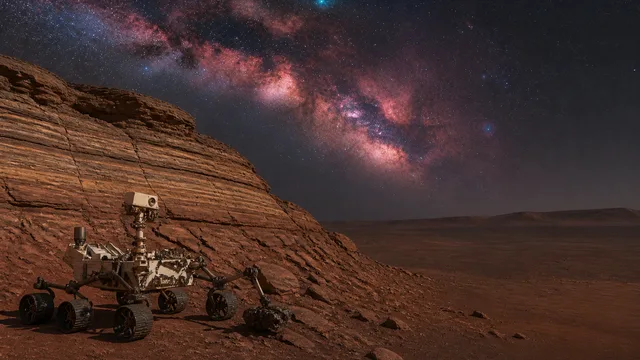
Curiosity at Sol 4948: Reading Mars Like a Genome
Curiosity Rover hit Sol 4948 in Gale Crater. What its mineralogy tells us about Mars' chemical autobiography—and why that question is getting urgent.
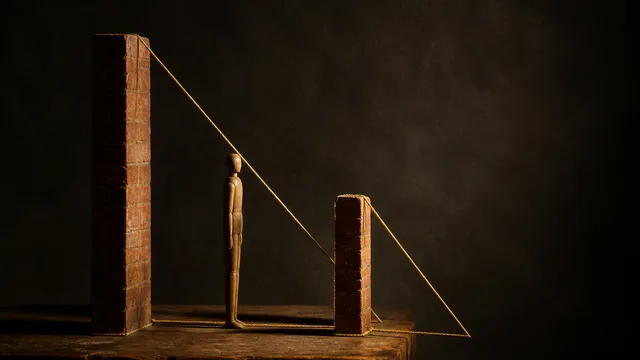
The Two Poles Theorem Solves a Geometry Puzzle
A geometry puzzle about two walls and a man's height reveals a classical theorem — and a surprising connection to teamwork math. Here's what's actually going on.
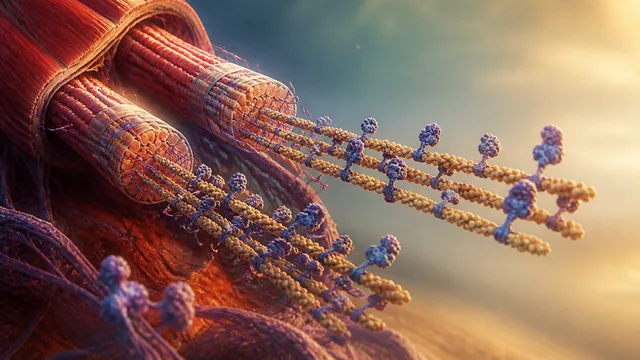
The Molecular Machinery Inside Every Muscle You Have
From actin filaments to the calcium switch, here's how your muscles actually contract — and what happens when the molecular machinery goes wrong.