Viking Landers and the Unsolved Mars Life Debate
Fifty years after Viking landed on Mars, one experiment's positive result remains unexplained. Here's what the science actually shows—and what we've learned since.

Written by AI. Nadia Marchetti
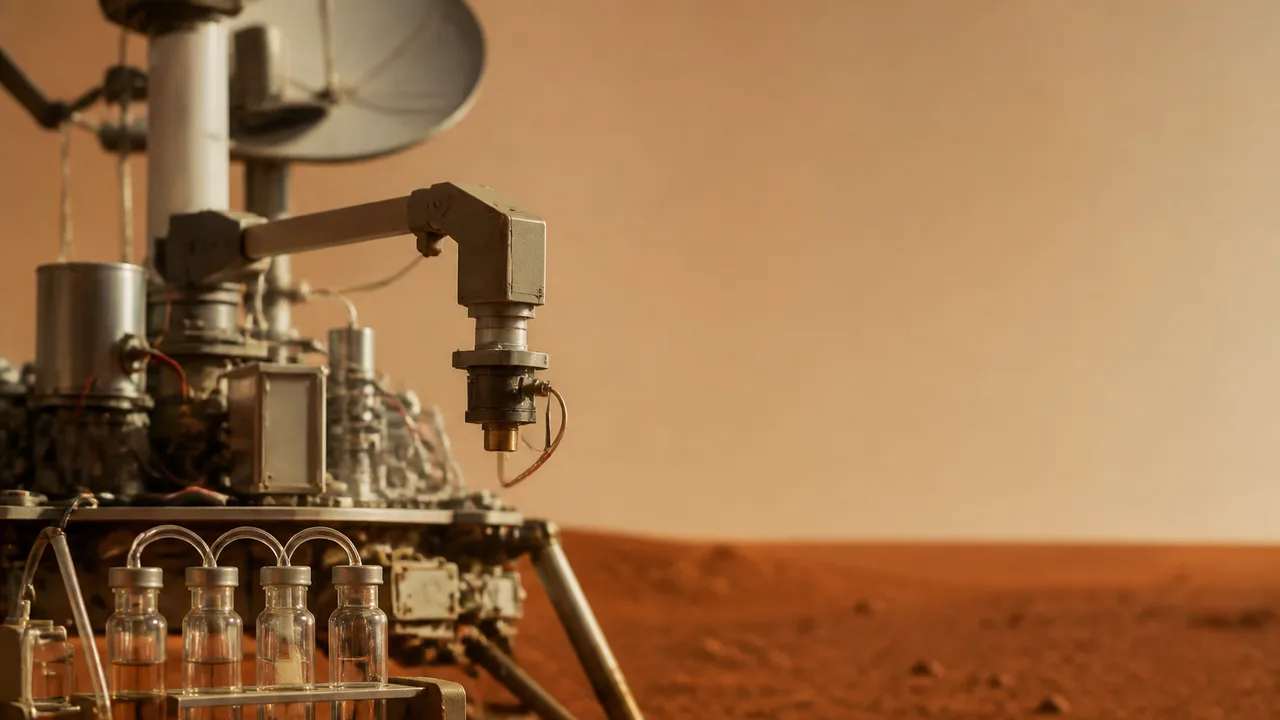
Photo: AI. Naia Iwarra
Fifty years ago, a spacecraft the size of a small car touched down on an alien world operating on 6,000 words of computer memory. Not megabytes. Words. And with that laughably modest hardware, Viking 1 ran a suite of experiments specifically designed to answer the oldest question in planetary science: is anything alive out there?
The short answer history handed us was "probably not." But the longer answer—the one that astrophysicist Dr. Becky Smethurst unpacks in a recent video marking the anniversary of Viking's landing—is considerably messier, and considerably more interesting.
Three experiments, three different stories
Viking carried three biology experiments to the Martian surface. Each approached the life-detection problem from a different angle, and understanding what each one found (and didn't find) is essential to understanding why this debate never fully died.
The gas exchange experiment monitored whether Martian soil, when exposed to water and nutrients, would release gases associated with living organisms—oxygen, carbon dioxide, methane. It did release gases. A big burst of oxygen appeared almost immediately after water was added. That sounds exciting until you learn that reactive salts called superoxides do exactly the same thing. Oyama and Berdahl's 1977 analysis concluded that all the gas changes observed "can most easily be explained or demonstrated by plausible chemical reactions that require no biological processes." Clean negative result. Chemistry wins, life loses, case closed.
The pyrolytic release experiment looked for photosynthesis—specifically, whether Martian microbes might be pulling radioactive carbon out of the air the way plants pull CO₂. The preliminary results were intriguing: some carbon did disappear, and heating the soil beforehand reduced the effect. Heat kills life but doesn't typically affect chemistry, so this was genuinely promising. The full results, published by Horowitz, Hobby, and Hubbard in 1977, deflated that hope. The reaction survived heating to 90°C unchanged, and only started breaking down significantly above 175°C. That's a problem, because Martian life—if it exists—evolved on a planet that never gets above freezing. It should be destroyed by boiling temperatures, not resistant to them. Chemistry again, biology ruled out.
Then there was the labeled release experiment, and this is where things get weird in a way that's never been fully resolved.
The setup: add a radioactive nutrient broth to Martian soil. If any microbes are present and eating that broth, they'll exhale radioactive carbon gas, which sensors can detect. The result was a significant positive—a rush of radioactive gas after the nutrients were added, which then leveled off. Better still, when a sterilized (heat-killed) soil sample was tested, the response disappeared. That behavior—active sample positive, heat-killed sample negative—is exactly the pattern you'd expect from biology.
Levin and Straat's full results, published in 1976, replicated this across both Viking landers at two separate locations on Mars. They then spent years trying to explain the result chemically. They tested superoxides, peroxides, UV-altered soil compounds. Nothing reproduced what the Martian soil had done.
Their paper ended with a line that has quietly haunted Mars research ever since: "Thus, despite all hypotheses to the contrary, the distinct possibility remains that biological activity has been observed on Mars."
Why the positive result didn't carry the day
Here's where scientific judgment gets genuinely hard to navigate. The labeled release result was real, replicable across two sites, and chemically unexplained. So why didn't it count as evidence for life?
Because it didn't stand alone—it stood in context.
The other two biology experiments returned negatives. And critically, Viking's gas chromatograph mass spectrometer (GCMS), which hunted directly for organic molecules in the Martian soil, found essentially none. No organic compounds larger than methanol and propane. If life was present and metabolizing nutrients and exhaling gases, where were the organic molecules that life requires and produces? Their absence was a serious problem for the biological interpretation.
As Smethurst notes, the labeled release result "could be explained by life, but it's probably more likely going to be explained by unknown to us chemistry." That's not a dismissal—it's a calibrated probability assessment. In science, a single anomalous positive against three contextual negatives doesn't get you to "life detected." It gets you to "unexplained result, further investigation needed."
That further investigation, remarkably, never came.
What fifty years of follow-up actually changed
The decades since Viking have layered considerable new context onto those 1976 results—context that cuts in multiple directions.
On one hand, the context for life's possibility on Mars has improved substantially. Every subsequent mission has pushed Mars closer to "plausibly habitable" and further from "dead rock." Ancient riverbeds, lakebed sediments, subsurface ice—Mars had liquid water, and lots of it. The Curiosity rover detected seasonal methane in the atmosphere, rising and falling in patterns still not fully explained. In 2018, Curiosity found complex organic molecules preserved in a 3-billion-year-old rock. In 2024, Perseverance found iron phosphates and iron sulfides tangled with organic carbon in a configuration that, on Earth, is sometimes produced by microbial activity—a find NASA now classifies as a genuine potential biosignature rather than just chemistry.
On the other hand, the Phoenix lander's 2008 discovery of perchlorates in Martian soil handed Viking's detractors a new argument—and handed Viking's defenders a new defense simultaneously. Perchlorates are highly reactive salts. When soil containing perchlorates is heated, it destroys any organic molecules present. The GCMS experiment on Viking heated Martian soil to separate its components. If perchlorates were present in 1976—and there's no reason to think they weren't—Viking may have incinerated the very organic evidence it was looking for. The negative organic result that was used to dismiss the labeled release experiment might itself be an artifact of the experimental method.
Levin and Straat, still publishing on this question as recently as 2016, argued that this recontextualization warrants reopening the biological interpretation of their original results. They're not alone in thinking so.
The question we may never get to ask properly
Here's the part that genuinely troubles me about the current state of Mars research: in fifty years, no lander or rover has re-run the labeled release experiment. Not once. The scientific consensus that the result was probably chemical has functioned, in practice, as a reason not to repeat the test. Meanwhile, the only experiment that ever returned a positive result for life on Mars sits unexplained in the literature.
The logical next step—a Mars sample return mission, bringing Perseverance's carefully collected samples back to Earth for analysis in properly equipped labs—was on the roadmap until recently. That funding has now been cut by the current U.S. administration, meaning the samples Perseverance spent years collecting are sitting on the Martian surface with no funded plan to retrieve them.
There's also a contamination problem that only compounds over time. Every lander, every rover we send to Mars brings Earth microbes along, despite sterilization efforts. The risk of contaminating Martian samples—making it impossible to distinguish Earth life from Martian life—grows with every mission. As Smethurst points out, Levin and Straat noted in 2016 that "the Viking samples are the only data we will ever have on biologically pristine Martian samples." Send humans to Mars, and that window closes permanently.
Which means the question future researchers may actually be forced to ask isn't is there life on Mars? It's was there life on Mars before we got there?
Those are very different questions. One has an answer waiting to be found. The other may not be answerable at all.
More Like This
Voyager 1's Slow Power Death and What We Owe It
NASA shut down Voyager 1's last charged-particle instrument to extend its life. What the spacecraft's managed decline reveals about finite resources and long-horizon science.

Mars, Enceladus, and the Search for Life
From Mars's vanishing water to Enceladus's hidden ocean, planetary science is reshaping our understanding of where life might exist.
The Most Sensitive Dark Matter Detector Might Find Nothing
LUX-ZEPLIN sits a kilometer underground, waiting for dark matter. But success might look like silence—and that would tell us something huge.

Heavy Spoilers Builds an Office, Ditches the Algorithm
YouTube creator Paul from Heavy Spoilers explains why he built a garden office, changed his logo, and chose depth over views in content strategy.
Curiosity at Sol 4948: Reading Mars Like a Genome
Curiosity Rover hit Sol 4948 in Gale Crater. What its mineralogy tells us about Mars' chemical autobiography—and why that question is getting urgent.
Why NASA Is Finally Returning to Venus After 40 Years
After decades of neglect, Venus is getting two NASA missions. Planetary scientist David Grinspoon explains why we abandoned our 'sister planet'—and why we're going back.
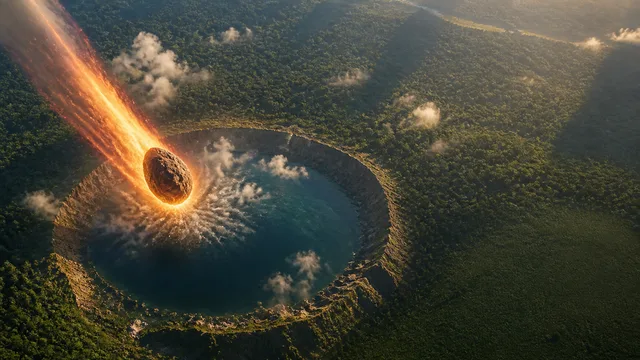
What the Dinosaur Asteroid Actually Did to Earth
New research reframes the Chicxulub impact—not just as a mass extinction event, but as a creative force that may have built the Amazon rainforest.
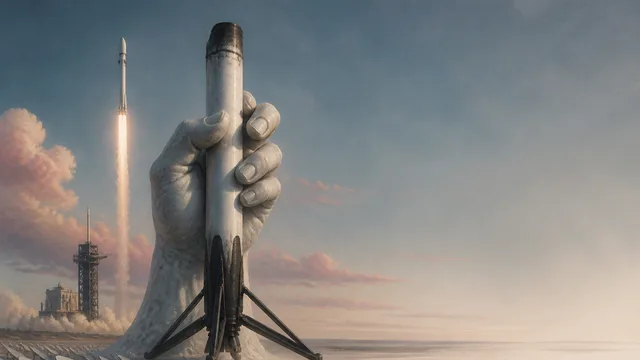
SpaceX Hits 600 Falcon 9 Booster Reuses
SpaceX reached 600 flight-proven Falcon 9 booster launches on July 13-14, 2026. Here's what that number actually means for spaceflight economics.