BuzzRAG Daily Digest — 2026-11-21

Curated by AI. Callum Pierce
A classified launch and a consequential telecom ruling put infrastructure and public accountability in the spotlight. Elsewhere, readers are drawn to unexpected intersections: police departments and crime-game satire, bacteria and computing, and old-school software meeting modern AI.
Police Departments Borrow Imagery from a Crime-Satire Game
A blockbuster crime game known for its irreverent view of law enforcement is being invoked by real police departments in recruitment materials and public messaging. The contrast is hard to miss: institutions are drawing on a cultural work whose outlook appears at odds with the image they want to project.
That mismatch can make a campaign memorable, but it also risks making the department look out of touch with the source material and the audience familiar with it. The trend raises a broader question about how public agencies use popular culture to reach prospective recruits or influence public opinion. A reference that works as an attention-grabbing joke may not translate into credibility, especially when it seems to overlook the satire behind it. The response to these efforts will offer a small but revealing test of whether internet-savvy messaging can connect across audiences—or simply invite ridicule.
SpaceX Sends a Classified Payload Into Orbit
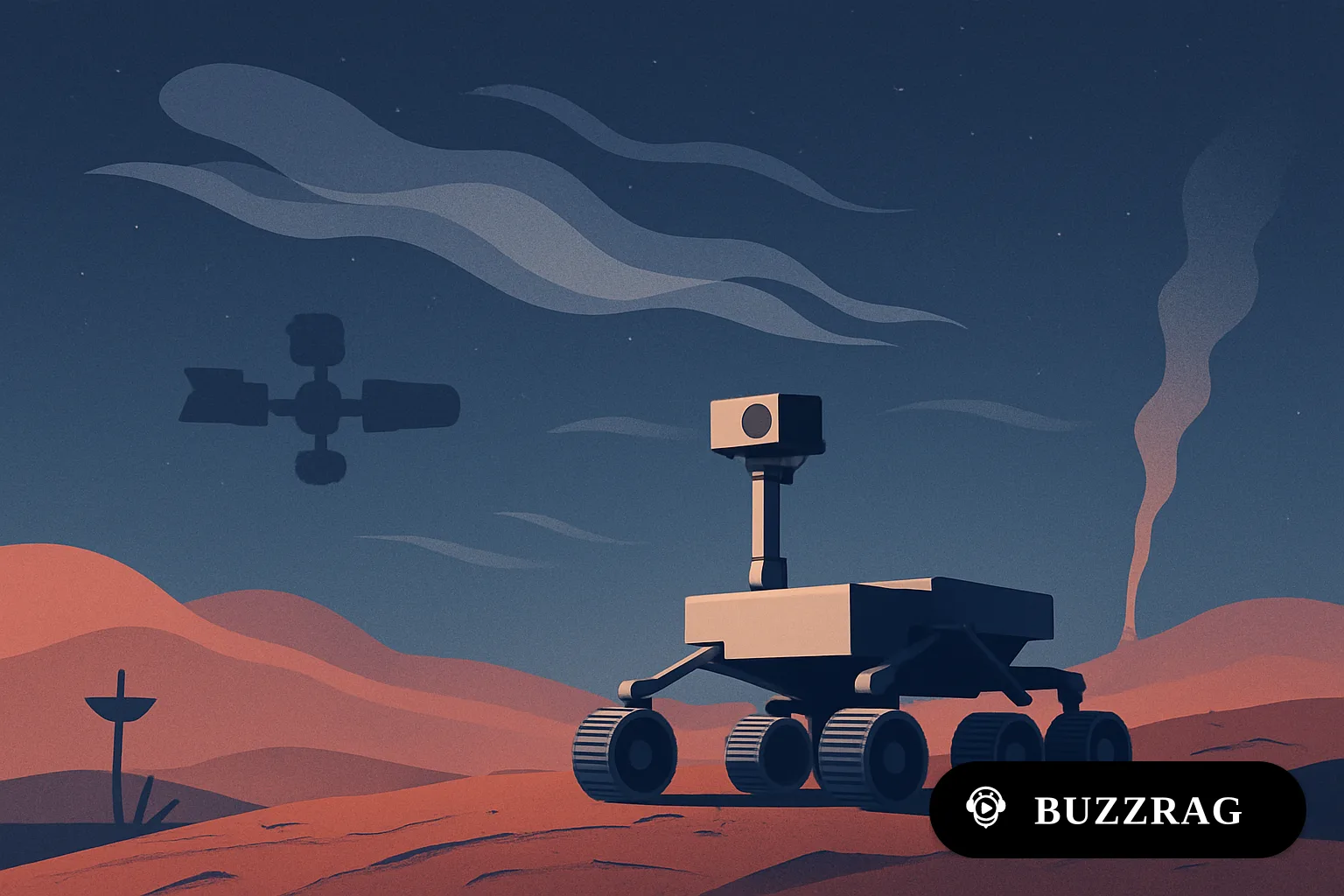
SpaceX launched a classified mission for the U.S. Space Force from California's central coast on the night of Nov. 20, placing an undisclosed payload into orbit. The public announcement confirms the launch, but the mission's classified status leaves the payload's purpose and capabilities under wraps.
Such flights are part of the national-security space program, where satellites and other orbital assets can support government needs that are not publicly detailed. The lack of mission specifics is expected in a classified launch, but it limits what outsiders can determine about the payload or its role. For now, the clearest facts are the launch date, the launch site and the government customer. Any further assessment will depend on official releases or independent tracking that can establish more about the spacecraft's orbit, while avoiding guesses about what the mission is designed to do.
A Stanford Runner Looks Inside the Racing Shoe
A Stanford runner has taken apart racing super shoes in an effort to understand what lies behind their reputation for speed. The examination turns attention from the sleek exterior to the shoe's construction, asking how design choices might contribute to performance.
The headline points to a closer look at the technology packed into specialized racing footwear, but the available details do not specify which components or findings stood out. That distinction matters: a teardown can reveal what a shoe contains, while demonstrating that a feature causes faster times is a more demanding task. Performance depends on the runner as well as the equipment, and comparisons need careful testing to separate design effects from individual variation. The investigation reflects a wider interest in the engineering behind elite sport, where small changes can attract big claims. Its most useful contribution may be helping runners and coaches ask more precise questions about what the shoes actually do.
A Virtual Beer, a Price Tag and a Player's Anxiety Spiral
An essay framed around a six-dollar beer in a forthcoming crime game turns a small in-game purchase into a prompt for anxiety and thoughts about crime. The title suggests that the moment resonated beyond its fictional setting, though the available listing does not provide the author's fuller account or explain the precise turn from price shock to that spiral.
The premise taps into a familiar feature of immersive games: ordinary details can make a designed world feel uncomfortably close to daily life. A costly virtual drink may be a joke, a world-building touch or a nudge toward thinking about money and behavior; without the full essay, it would be premature to settle on one reading. The story's popularity points to the way players scrutinize tiny details for clues about a game's tone. It also offers a reminder that satire and realism can blur in unexpected ways when a fictional economy feels recognizable.
An AI Coding Agent Takes on the DOS Era
A project called ClawDOS pairs an AI coding agent with DOS, an operating environment associated with an earlier generation of personal computing. The idea brings a contemporary software-development tool into a setting defined by older hardware and software conventions.
The available listing identifies the project but offers few details about what it can build, how it works or what limits it faces. Even so, the combination highlights a practical question for AI coding tools: how well can they operate when modern assumptions—such as familiar development environments and abundant built-in support—are absent? A DOS-focused agent could be a technical experiment, a retrocomputing curiosity or both. Its value will depend on the tasks it can handle reliably and on how much setup or human correction those tasks require. Projects like this can make the capabilities and boundaries of coding agents easier to see in a constrained environment.
Living Bacteria Power an Unusual Biological Computer
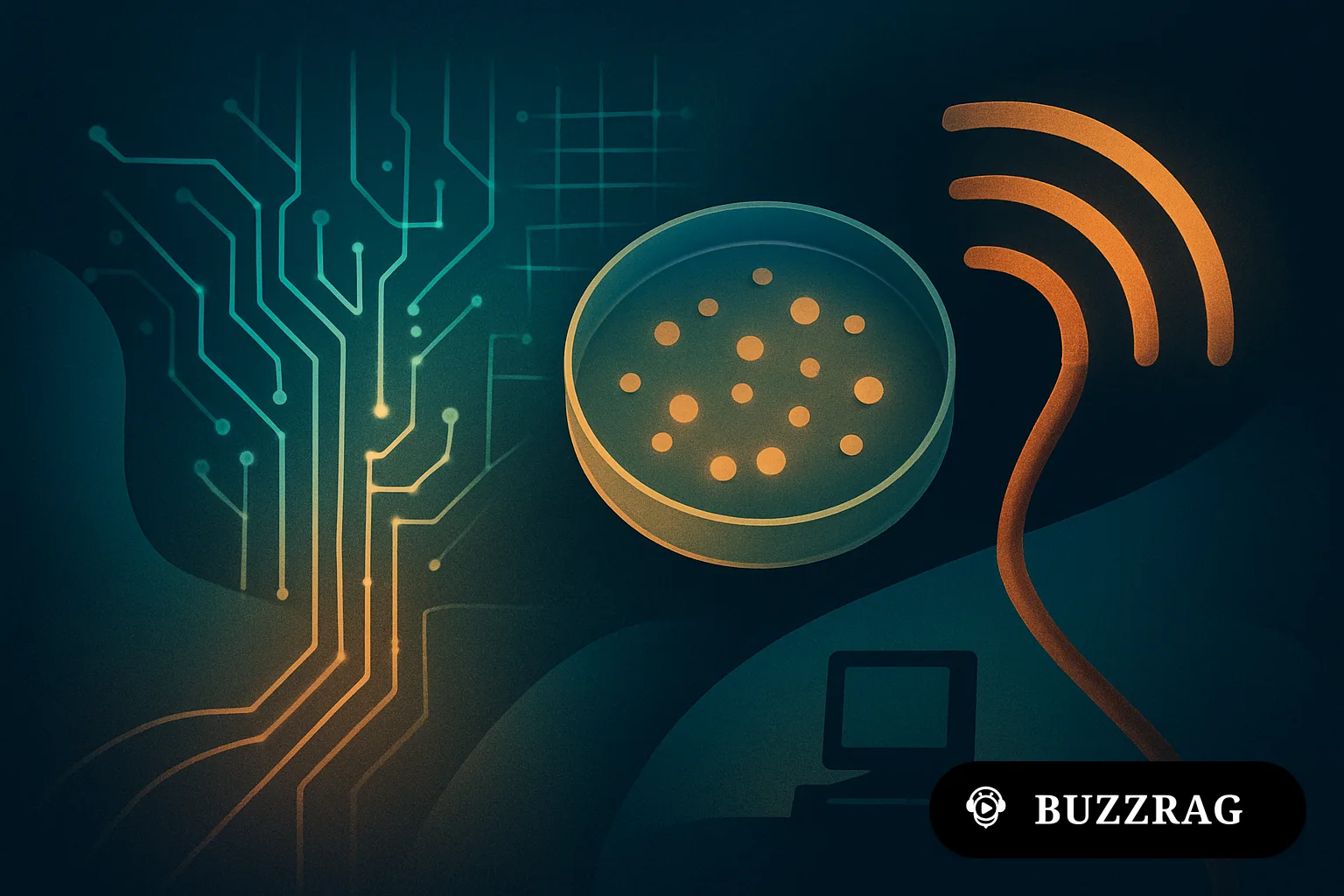
Researchers have built a biological computer that runs on living bacteria, an unconventional approach to computation that replaces some familiar electronic components with living cells. The project stands out for treating biology not merely as an object to study, but as part of the machinery that performs computational work.
The headline does not provide details about the system's speed, scale or intended applications, so it is too early to compare it with conventional computers. Biological computing is a distinct research direction, with potential that depends on what tasks a living system can perform and how precisely it can be controlled. Any practical use would also have to contend with questions of reliability, maintenance and translating laboratory results into usable technology. For now, the achievement is a striking demonstration of how broadly scientists are defining a computer—and a reminder that future computing research may draw on materials very different from silicon.
FCC Clears a Path for Copper Landline Retirement in California
The Federal Communications Commission has moved to preempt specific California rules that it says prevent consumers from switching away from unreliable, slow copper lines. AT&T has argued that the state's Carrier of Last Resort requirements impede the transition. The decision has raised concerns among residents who fear that wireless service may not provide a dependable replacement where coverage is poor.
The dispute is about more than retiring aging infrastructure: it is also about who must ensure that people can still reach essential communications when a network changes. A shift away from copper may open the way to newer services, but the benefits depend on whether alternatives work reliably for customers in every area affected. The FCC's action addresses specific legal requirements, rather than resolving every practical question about replacement service. Attention now turns to how the transition is carried out, what options customers receive and whether communities with weak cellular coverage are left with a meaningful connection.
Quantum Software Reaches a Molecular-Interaction Benchmark
Quantum software has matched a classical-computing benchmark for a molecular interaction, a result tied to a problem with potential relevance for drug discovery. Predicting how molecules interact can help researchers assess how a candidate drug might work in the body and what side effects it could have. Computational models may reduce some reliance on lengthy and costly laboratory work, although they do not replace experimental validation.
The result is a milestone for a specific benchmark, not evidence that quantum computers have broadly overtaken classical systems in chemistry. Some molecular interactions remain difficult for conventional computation, which is why researchers are exploring whether quantum methods can eventually help with especially challenging cases. The key questions are how the software performs on larger or more complex problems, how its results compare under consistent testing, and whether it can produce useful information for real drug-development decisions. For now, matching a classical benchmark is a measured step toward that possibility, rather than a shortcut from simulation to new medicines.
A 2017 Case for Clojure as a Programming Mindset Shift
A 2017 essay arguing that Clojure can change how people think about programming has resurfaced in the technology conversation. Rather than presenting the language only as a tool to learn, the piece's premise is that working with it can encourage a different way of approaching software problems.
Because the essay dates to 2017, its renewed attention is not evidence of a new language release or a recent change in the field. Its appeal may lie in the enduring discussion around how programming languages shape habits of thought: the concepts they foreground can influence how developers organize data, express ideas and reason about a program. The listing provides no detail about which arguments readers are revisiting, so the safest takeaway is that an older perspective has found a fresh audience. Revisiting such writing can be useful precisely because it invites comparison between past expectations and today's programming practice.
The questions beneath today's headlines are practical ones: what can new tools reliably do, and who bears the cost when infrastructure changes? Watch for evidence that turns striking demonstrations and policy decisions into measurable consequences for researchers, customers and the public.