BuzzRAG Gaming Desk — 2026-11-21

Curated by AI. Kai Tanaka, Gaming Desk Editor
Today’s conversation moves between the details players notice firsthand and the decisions that shape how games reach them. A sharply observed in-game moment, a useful controls discovery and questions about physical releases all point to the value of player-facing design and choice.
A $6 Virtual Beer Becomes a Real-World Player Spiral
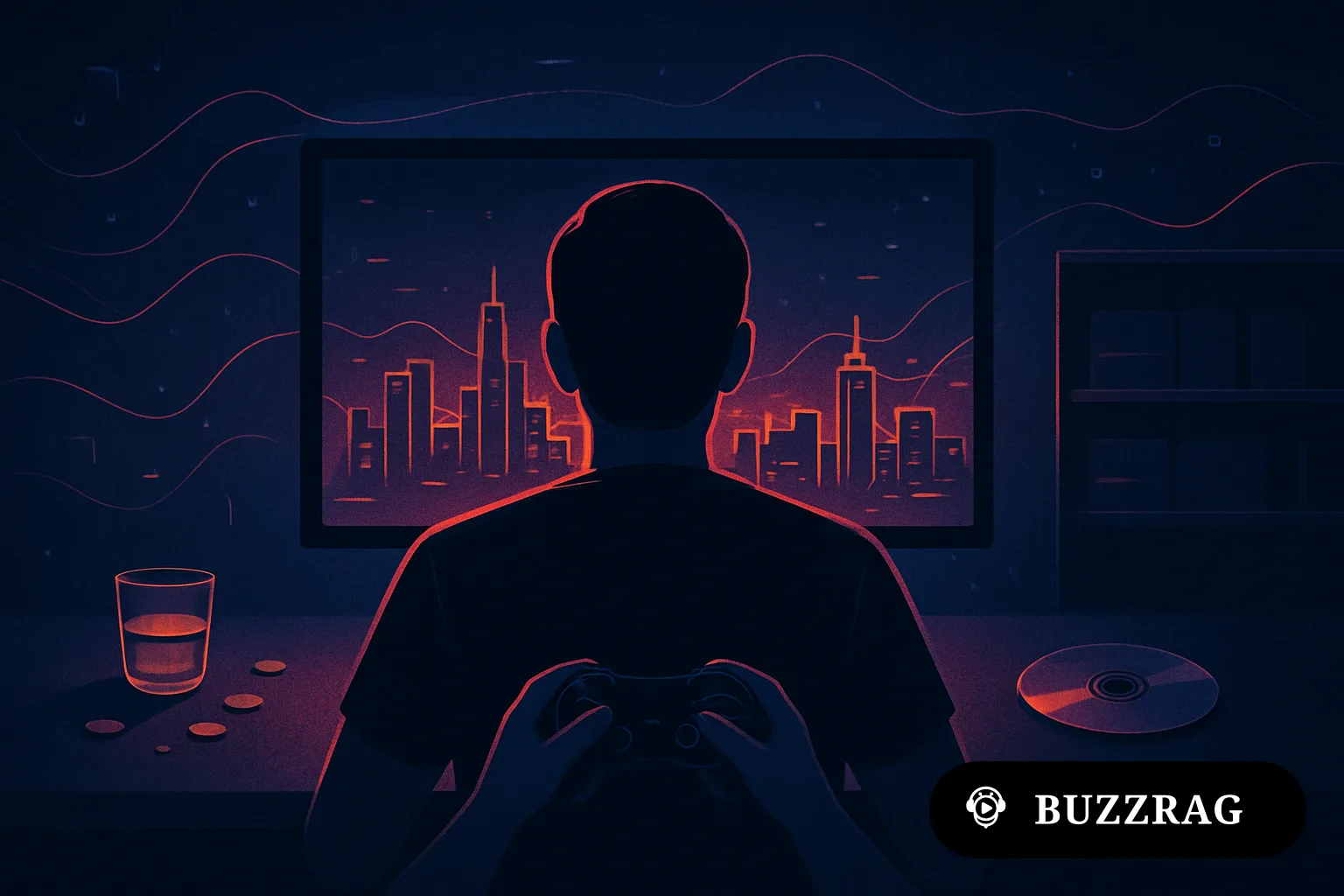
A personal essay turns a small in-game purchase into a much bigger question about immersion: how can an ordinary price tag in a sprawling crime game provoke anxiety? The headline’s comic-to-unsettling arc suggests the piece is less about whether six dollars is an accurate beer price than about how a convincing world makes its details feel consequential.
That reaction is worth taking seriously without treating one player’s response as universal. Games routinely use mundane costs, transactions and routines to make fictional places feel lived in; those details can deepen role-play, but they can also make players newly conscious of money and risk. The essay’s crime-and-anxiety framing offers a reminder that immersion is not automatically comfortable, and that small design choices can land differently depending on the person playing. The broader question for open-world games is whether everyday realism adds texture, or simply turns background details into another source of pressure.
The Witcher 4 Physical Edition Is Planned, but Disc Production Is Out of the Developer’s Hands
CD Projekt Red says it is planning a physical release for The Witcher 4, while acknowledging that it has “no influence” over the production of PlayStation 5 and Xbox discs. That distinction matters: a studio can intend to offer boxed copies without controlling every link in the manufacturing chain that makes them available.
Physical editions still matter to players who want to lend, collect or preserve games outside a digital storefront. But the gap between a publisher’s plans and the supply of platform discs highlights how much control has shifted toward hardware holders and production partners. The update is not a guarantee of particular formats, quantities or regional availability, and those details will determine whether the plan translates into a meaningful option at launch. For now, the practical test is whether players can buy a disc edition reliably—not just whether one is announced.
Players Are Finding GTA 6 Shortcuts the Game Doesn’t Explain
A guide to GTA 6’s less obvious control shortcuts is gaining attention, including a way to switch the radio on or off without opening a submenu. It is a small convenience, but in a game built around continuous movement and activity, shaving friction from common actions can make the world feel more responsive.
The interest also exposes a familiar design trade-off: complex games have more contextual actions than tutorials can comfortably teach, yet leaving useful controls undiscovered can make the interface feel needlessly cumbersome. Tips shared by players and guides help close that gap, but they also give developers a signal about where onboarding may be falling short. The useful question is not simply how many shortcuts exist; it is whether players can find them when they need them. If these discoveries keep circulating, clearer in-game control references could turn community knowledge into a better baseline for everyone.
Watch how players keep translating hidden systems and memorable characters into community knowledge—and whether studios respond by making their games easier to navigate. The physical-edition question also remains a test of how much choice players will retain as distribution keeps changing.