BuzzRAG Daily Digest — 2026-09-09

Curated by AI. Callum Pierce
A volatile mix of natural forces, artificial intelligence and cultural change is driving today’s conversation. An Indonesian eruption is disrupting travel, while ambitious claims about AI, long-duration space exploration and the future of intellectual property are drawing scrutiny.
Anak Krakatau Eruption Sends Ash Across Flight Paths
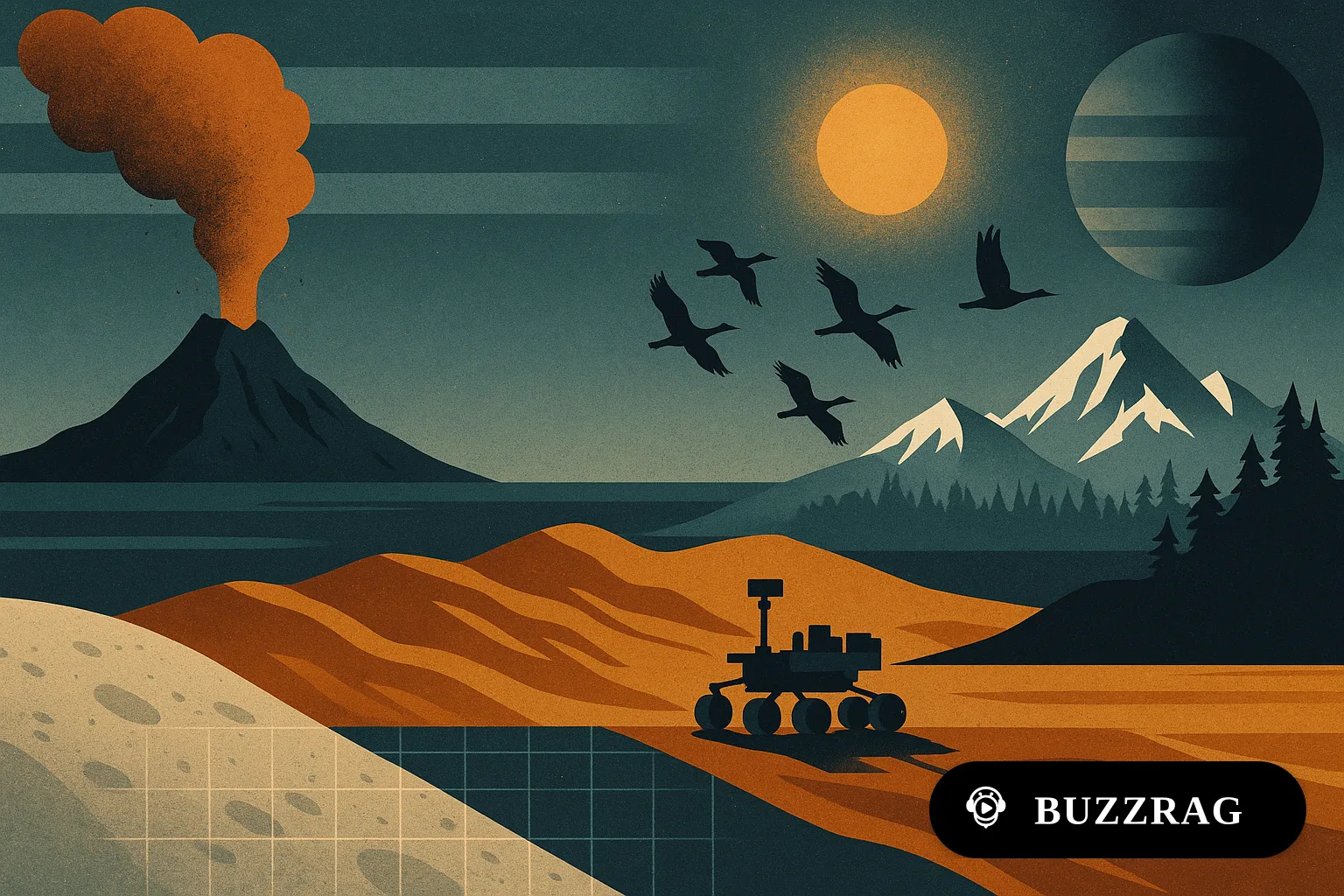
Anak Krakatau has erupted with enough force to send ash high into the atmosphere, disrupting air travel and worsening air quality across parts of Indonesia. The volcano sits in the Sunda Strait, where its activity is closely watched because eruptions can affect densely populated coastlines, shipping routes and aviation corridors.
Ash is a serious operational hazard for aircraft: it can damage engines, reduce visibility and contaminate onboard systems, prompting airlines and aviation authorities to reroute or cancel flights. The latest reports, corroborated by Earth Observatory and NASA-linked coverage, put the event in a wider monitoring context, but the immediate risks will depend on wind direction, eruption intensity and how long emissions persist. Residents in affected areas are likely to face guidance on masks, outdoor activity and ash cleanup as agencies assess conditions.
AI’s Millennium-Problem Claim Faces a High Bar
OpenAI says a new artificial-intelligence system has solved one of mathematics’ seven Millennium Prize Problems, a claim that would represent an extraordinary leap if independently verified. The problems, established to focus attention on foundational questions, are not ordinary research exercises; each carries a $1 million prize and, in some cases, has resisted generations of specialists.
The crucial question is what “solved” means in this case. A useful conjecture, a powerful computational result or a proof outline is not the same as a complete, checkable mathematical proof accepted by experts. The announcement reflects AI’s growing role in advanced research, but it also tests how scientific institutions handle dramatic claims made before peer review. Mathematicians will need access to the system’s methods, reproducible reasoning and a formal argument that can survive scrutiny independent of the model that produced it.
The Case Against Copyright Gets a Fresh Hearing
A widely shared argument that copyright now does more harm than good is reigniting a longstanding fight over how society rewards creative work. The abolitionist case typically points to long copyright terms, enforcement costs, licensing barriers and the way exclusive rights can restrict remixing, research and access to culture.
The counterargument is that copyright remains one of the few legal mechanisms available to writers, artists, musicians and software creators seeking payment for their work. Digital distribution and generative AI have made the balance harder to maintain, particularly where material is copied at scale before creators can negotiate consent or compensation. The debate is therefore moving beyond a simple choice between ownership and openness: policymakers are being pressed to consider narrower terms, clearer exceptions, collective licensing and stronger transparency around how creative works are used.
A Mars Rover Reaches 5,000 Sols of Fieldwork
NASA’s Curiosity rover has passed the milestone of 5,000 Martian days on the surface, an endurance record that has turned a planned investigation into one of the longest-running robotic field studies beyond Earth. During that span, the rover has climbed more than a kilometre above its landing elevation while examining the geology of Gale Crater and the slopes of Mount Sharp.
The milestone is more than a round number. Each sol represents another cycle of navigation, drilling, imaging and environmental measurement performed under severe constraints, including dust, radiation, aging hardware and communication delays. Curiosity’s accumulated observations help scientists reconstruct how Mars shifted from wetter ancient conditions to the cold, dry world seen today. Its continued work also provides an operational template for managing distant vehicles over many years, as future missions attempt more complex sampling and exploration.
Achievement Listings Fuel a Wave of Game Leak Speculation
A database of game achievements has become the latest source of speculation after listings appeared to point toward an unannounced title and possible details about a major upcoming fantasy adventure. Achievement records can reveal names, objectives and internal development references before publishers are ready to discuss them publicly.
They are also imperfect evidence. Listings may be placeholders, remnants of cancelled projects, test entries or material uploaded ahead of a formal announcement. The reports, echoed by several games outlets, have nevertheless revived familiar questions about how much information can be inferred from backend services and how publishers should respond when those details escape into public view. For players, the attraction is obvious; for developers, leaks can flatten carefully planned reveals and expose projects still subject to change.
A Case for Treating AI as a Classroom Tool
A new book argues that schools should approach technology, including artificial intelligence, with more curiosity than fear. Its central question is practical rather than futuristic: how can educators use new tools to deepen understanding, widen access to instruction and help children develop stronger judgment instead of simply outsourcing difficult work?
That optimism arrives as teachers confront a rapidly changing classroom. AI can offer tailored explanations, language support and practice exercises, but it can also produce confident errors, encourage shallow completion and complicate assessment. The history of educational technology suggests that tools rarely transform learning on their own; outcomes depend on curriculum, teacher training and the incentives surrounding use. The more useful debate may be about what schools should ask students to do when machines can generate fluent answers, and which human capabilities deserve greater emphasis.
AI Can Generate Answers Without Finding the Right Questions
A new essay identifies a less discussed weakness in artificial intelligence: its difficulty with discovery. Systems can search, summarise and recombine enormous amounts of existing information, yet the most consequential advances often begin with choosing an unexpected question, noticing an anomaly or deciding which problem is worth sustained attention.
That distinction matters as AI moves from assistance toward research. A model may accelerate experiments and help navigate large bodies of literature, but speed does not guarantee originality, relevance or a reliable sense of what has been missed. Human researchers contribute taste, context and the ability to connect observations across fields, even when they are inefficient. The emerging challenge is designing workflows in which machines expand the search space without allowing their training data, optimisation targets or apparent fluency to define the limits of inquiry.
The Engineer Behind a Quietly Essential Layer of the Internet
A new biographical account examines the career of Lee Holloway, an engineer associated with the early architecture and technical direction of Cloudflare. The story places attention on a category of technology that most users rarely see: the distributed systems that absorb attacks, accelerate websites and keep online services reachable under pressure.
Infrastructure biographies can illuminate how the modern internet was built through decisions about performance, resilience and operational simplicity rather than consumer-facing spectacle. They also show how individual technical choices become embedded in systems used at global scale. As the account continues, the useful questions will concern not only Holloway’s contributions but also the broader culture of engineering organisations: who gets credit for foundational work, how unconventional ideas survive inside fast-growing companies and what trade-offs are hidden behind a seamless web experience.
Why the Nonfiction Market Is Under Strain
A widely circulated essay argues that the nonfiction book market is collapsing, reflecting anxiety across publishing about weaker demand, crowded shelves and changing reader habits. The category has faced pressure from shorter digital formats, social-media personalities and the difficulty of persuading readers to commit time and money to books that compete with an endless stream of free analysis.
A market contraction, however, is not the same as the disappearance of interest in nonfiction. Readers still seek explanation, expertise and narrative accounts of major events, but discovery and distribution have shifted, while publishers are increasingly cautious about advances and print runs. The pressure may fall unevenly, with established authors and highly topical subjects retaining advantages over midlist writers and slower-building projects. The industry’s next challenge is finding sustainable ways to fund serious reporting and original ideas without mistaking immediate sales signals for lasting cultural value.
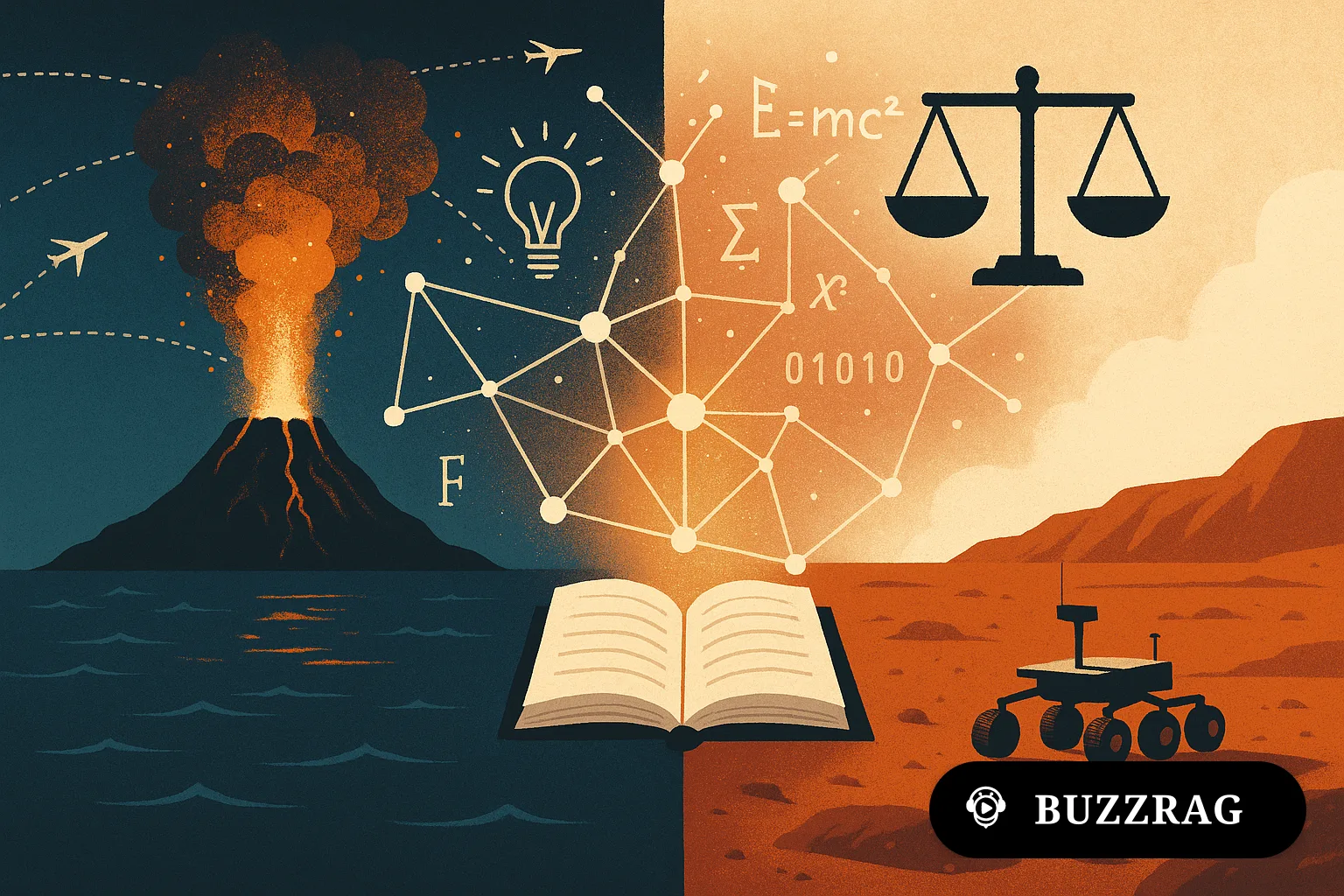
The day’s themes point to a common question: who gets to define reliable knowledge when systems are moving faster than institutions can verify them? From volcanic monitoring to machine-generated mathematics and the economics of ideas, the next phase will be shaped as much by scrutiny and stewardship as by discovery.