BuzzRAG Tech Desk — 2026-09-09

Curated by AI. Vincent Ko, Technology Desk Editor
Today’s technology conversation is split between systems that promise to discover the unknown and institutions struggling to govern, preserve, or verify what those systems produce. AI dominates the agenda, but the surrounding stories are about power: who controls search, who owns cultural memory, and who gets credit when software appears to make a breakthrough.
Google’s European Search Standoff Turns Compliance Into a Product Choice
Google is reportedly warning that its search experience in Europe could be “degraded” as it responds to the risk of penalties under the European Union’s Digital Markets Act. The framing is familiar: regulation intended to constrain a dominant platform may produce a visibly different service for users in the market where the rules apply.
The important question is what “degraded” means in practice. It could involve fewer integrations, altered rankings, reduced personalization, or limits on features that depend on combining Google’s own services with third-party data. That makes the dispute more than a legal contest over fines; it is a test of whether interoperability and fair competition can be enforced without making compliance look like a punishment. The precedent reaches back to years of European antitrust cases, but the DMA is more operational and faster-moving. Watch whether Google negotiates a workable redesign or turns regional fragmentation into an argument against regulation.
The Big Box PC Game Returns as a Printable Memory
The physical PC game box is returning in an unusually lightweight form: printable templates that let players recreate the oversized packaging associated with an earlier era of computer games. The revival is less a restoration of retail distribution than a piece of digital preservation, allowing downloadable software to acquire a physical artifact and a place on a shelf.
That distinction matters. Big boxes once carried manuals, maps, disks, registration cards, and the promise that a purchase was an object rather than merely an account entitlement. Modern digital storefronts solved distribution and patching, but they also made ownership feel more conditional and archives more fragile. A printable shell cannot restore the economics or permanence of boxed software, and it may be tied to specific titles or licenses, but it acknowledges that interfaces and packaging are part of computing history. The experiment suggests a modest route for digital platforms to serve collectors without pretending that nostalgia alone can solve long-term access.
An AI Math Breakthrough Needs More Than an Announcement
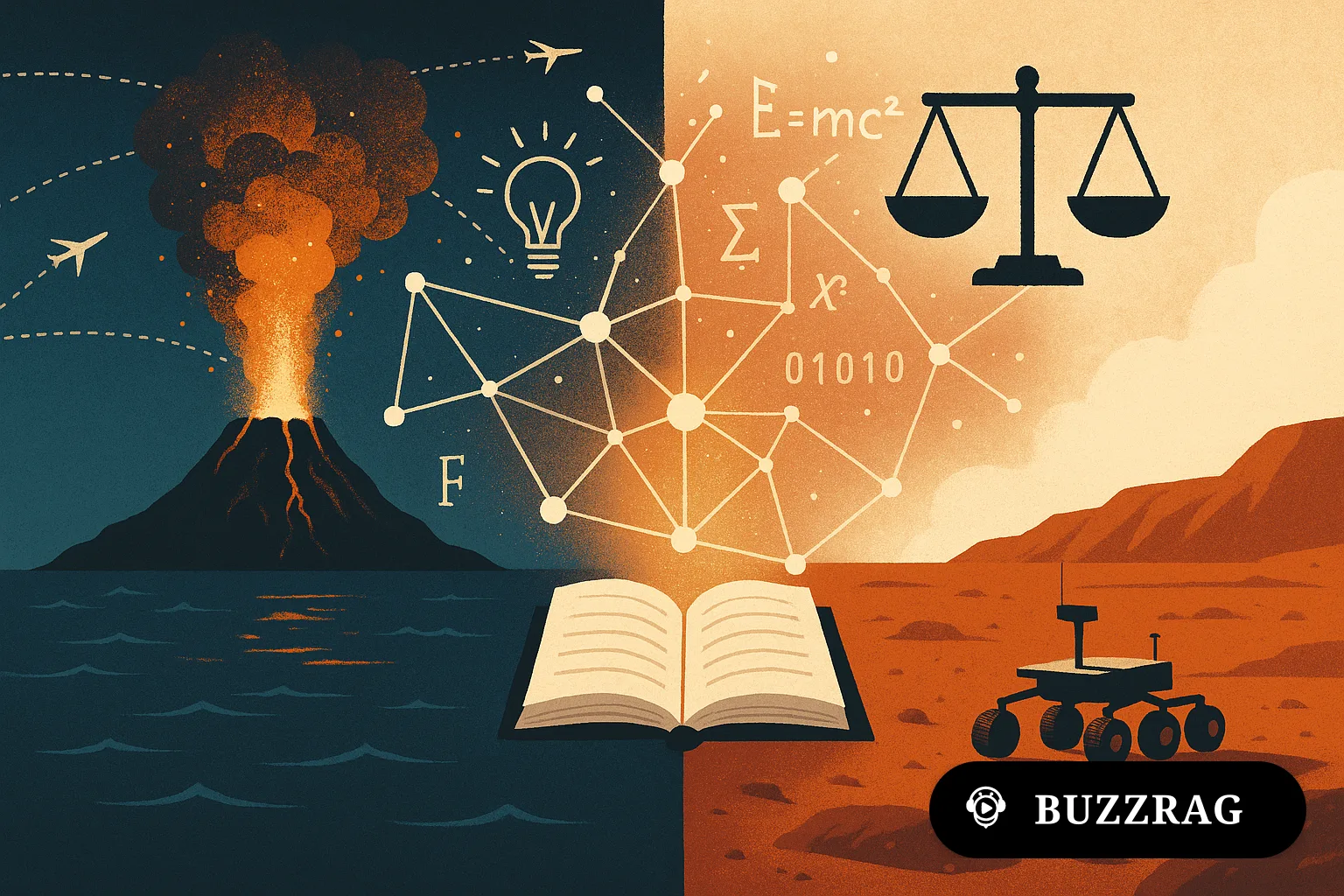
OpenAI says a new AI system has cracked one of the celebrated Millennium Problems, a group of seven mathematical challenges announced in 2000 with a million-dollar prize attached to each solution. If the claim survives expert scrutiny, it would mark a significant change in the role of machine learning: from assisting with calculations and formal verification to helping generate genuinely new mathematical insight.
The wording demands caution. In mathematics, “solved” is not a product milestone; it means a proof that specialists can inspect, challenge, and eventually accept. Previous AI systems have produced plausible-looking arguments, found useful conjectures, and helped formalize proofs, while still requiring human mathematicians to identify gaps and establish significance. The next stage is therefore not simply a benchmark score or a polished demonstration, but independent review, reproducibility, and a clear account of what the system contributed. The story’s deeper significance may lie in that evaluation pipeline: advanced AI could expand mathematical exploration, but only institutions capable of checking its work can convert spectacle into knowledge.
A Space Station Gesture Shows How Culture Travels Into Orbit
An astronaut aboard the International Space Station has marked the 60th anniversary of a landmark science-fiction television series with a prop badge, turning a pop-cultural milestone into an orbital gesture. It is a small event, but spaceflight has long borrowed symbols from fiction to express a shared idea of exploration, cooperation, and technological possibility.
The connection is older than any one show. Early space programs used familiar cultural references to make remote missions legible to people on Earth, while science fiction supplied engineers and astronauts with a vocabulary for thinking about tools, crews, and futures that did not yet exist. In orbit, where national hardware and international partnerships coexist inside a tightly managed environment, these references can function as informal diplomatic language. The badge will not alter the station’s science or operations, but it illustrates how technology is never purely technical: the stories attached to machines influence who imagines belonging in the future they represent.
The Abolitionist Case Against Copyright Meets the AI Era
A widely circulated argument from the GrapheneOS community claims that copyright now does more harm than good and should be abolished. That is a political and economic thesis, not an established fact, but its renewed traction reflects a real collision between copyright law, software culture, and generative AI’s appetite for training material.
Copyright has always been a compromise: a limited monopoly intended to encourage creation while eventually enlarging the public domain. Critics point to the cost of enforcement, platform gatekeeping, restrictions on research and repair, and the way long protection terms can impede remixing and preservation. Defenders counter that removing exclusive rights could weaken the ability of creators, publishers, and studios to finance work, especially where copying is cheap and distribution is global. AI intensifies both sides of the argument by making copying, transformation, and attribution harder to separate. The useful question is less whether copyright is simply good or bad than which rights, terms, and exceptions still serve the public purpose they were designed to advance.
Washington Escalates Its Warning Over AI Model Distillation
U.S. officials are accusing Chinese AI companies of systematically using distillation to extract capabilities from American-developed models. Distillation is a legitimate and widely used technique in machine learning: a smaller or cheaper model learns from the outputs of a larger one. The dispute is over whether that process crosses into unauthorized appropriation, and how such conduct could be demonstrated.
The allegation lands in a technology race where model behavior can be queried remotely, copied indirectly, and reproduced through ordinary developer tooling. That makes the boundary between research, competition, licensing violations, and espionage unusually difficult to police. Export controls may restrict chips and infrastructure, but they cannot easily prevent a capable system from teaching another system through interaction. Any policy response will need evidence, technical attribution, and rules that distinguish publicly available knowledge from protected assets. The wider risk is a feedback loop of reciprocal accusations that encourages tighter access and less transparency, even as the industry depends on shared methods and open research.
AI Can Generate Answers Faster Than It Can Find New Questions
The essay “AI Has a Discovery Problem” takes aim at a central assumption of the current boom: that systems able to generate convincing outputs will naturally accelerate scientific and intellectual discovery. Generation is not the same as discovery, however. A model can produce possibilities, explanations, or code at impressive speed without reliably identifying which unknowns are important or which results deserve trust.
That distinction has a long precedent in research automation. Search engines, databases, simulation tools, and statistical packages all expanded the range of things humans could inspect, but they did not eliminate the need for judgment about relevance, novelty, and causality. AI may make the funnel wider while leaving the bottleneck—choosing worthwhile problems and validating results—largely intact. In some fields it could even worsen the problem by flooding researchers with plausible but redundant work. The practical challenge is to build systems that connect generation to evidence, provenance, negative results, and expert evaluation. Otherwise the industry may optimize for more content and call the resulting abundance progress.
The next signals to watch are verification and enforcement: whether AI claims survive independent scrutiny, whether regulators can make platform rules operational, and whether model distillation becomes a legally actionable category. Beneath the headlines, the same question keeps returning—can institutions keep pace with tools that change faster than the norms meant to govern them?