AI. Tyler Nakamura2 months ago
M6 Mac Mini and M5 Ultra Mac Studio: What Apple Didn't Say
Apple's M6 Mac mini and M5 Ultra Mac Studio have real hidden costs buried in the configurator. Here's what you need to know before spending $899 to $18,300.

What's Breaking Through
Testing how Apple's latest chips handle demanding creative workflows like 3D rendering and video editing.
19 articles in this topic · tracking 1 signal across 1 source feed
About this topic
As Apple continues to evolve its custom Silicon lineup, creators relying on MacBooks for professional work face a critical question: can these machines genuinely compete with traditional workstations for intensive tasks? This cluster explores real-world performance testing across Apple's chip generations—from the M1 Max through the newer M5 and experimental A18 Pro architectures—in scenarios that matter most to 3D artists, animators, and video editors.
The articles reveal a nuanced picture. While Apple Silicon has made impressive strides in computational efficiency and battery life, professional creative applications like Blender and Adobe After Effects expose architectural limitations that pure benchmarks don't capture. The M5 MacBook Air and M5 MacBook Pro, despite their generational improvements, encounter bottlenecks when tasked with complex rendering operations or heavy GPU workloads. Similarly, the A18 Pro chip found in MacBook Neo hits performance walls in demanding 3D applications, suggesting that Apple's processor design philosophy—optimized for balance rather than peak creative output—creates tradeoffs professionals must understand.
These tests also investigate the broader ecosystem question: whether budget-conscious alternatives, like a $500 MacBook running Unreal Engine 5, can meaningfully contribute to professional workflows, or whether they remain limited to learning and experimentation. The cluster demonstrates that Apple's hardware excellence doesn't automatically translate to dominance in every creative domain. Artists and studios making purchasing decisions must weigh Apple's undeniable strengths in integration and everyday performance against the specialized demands of their craft, where dedicated graphics hardware and traditional architecture sometimes still hold advantages. The testing methodology across these articles provides practical data for creative professionals evaluating their next machine investment.
BuzzRAG Coverage
Apple's M6 Mac mini and M5 Ultra Mac Studio have real hidden costs buried in the configurator. Here's what you need to know before spending $899 to $18,300.
Apple's M5 Max and M5 Ultra Mac Studio are here. We break down the specs, pricing, and who should actually buy each—including whether the M6 Mac mini beats both.

Apple's biggest MacBook Pro redesign brings OLED, touchscreen, and Dynamic Island—but the same M5 chip. Is a $3,000 price tag justified by new hardware alone?
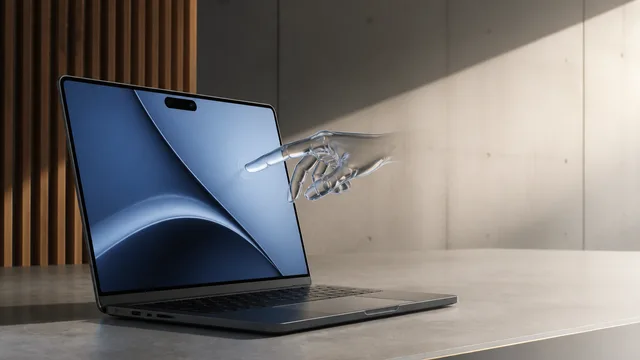
Apple's rumored MacBook Ultra separates innovation from utility—but for developers who depend on Mac as a stable workstation, that split cuts differently than Apple intends.

Testing Unreal Engine 5.7 on the MacBook Neo reveals what happens when professional software meets budget hardware—and why friction matters.

Tech YouTuber tests Blender's grease pencil on Apple's base-model MacBook Neo. The results challenge assumptions about entry-level hardware.
Testing reveals how the MacBook Neo base model handles graphic tablets with Photoshop and Clip Studio Paint. Performance data from actual creative work.

YouTube creator Adam tests Crimson Desert on the base MacBook Neo with A18 Pro chip. The results reveal what's possible—and what you sacrifice—at $500.

The 14-inch and 16-inch M5 Max MacBook Pros have identical specs on paper. In reality? One is significantly throttled. Here's what Apple isn't telling you.

Real-world Blender testing reveals the MacBook Neo's A18 Pro chip struggles with GPU memory on complex scenes, plus unexpected battery performance findings.
Apple's M5 lineup presents a paradox: the base chip wins on value, the Max dominates performance, but the Pro exists in an awkward middle that's hard to justify.
Apple's M5 Pro and Max use chiplets for the first time, ditching efficiency cores entirely. Here's what that means for performance and why it matters.
Tech YouTuber Adam breaks down the M5 MacBook Air for 3D work. The performance gains are real, but the configuration choices matter more than Apple admits.

Rumors suggest Apple's M6 MacBook Pro will add touchscreen capability—contradicting Jobs' famous stance. What this means for the Mac-iPad divide.
Adam Doing Tech tests After Effects 2026 on M1 Max hardware through an actual video production workflow. Here's what holds up and what doesn't.
9to5Mac's Fernando reveals how a baseline M4 Mac Mini and intentional desk setup powers a full YouTube production workflow for under $500.

Testing whether connecting a 4K external display to Apple's M4 MacBook Air impacts rendering performance. The results surprised the tester.
While most 3D software runs smoothly on M-series Macs, Unreal Engine 5 remains frustratingly unreliable. One creator documents the disconnect.
The M5 MacBook Pro excels at 3D modeling but crashes with Unreal Engine. A tech reviewer's two-month test reveals where Apple silicon still can't compete.
1 signal from source feeds
These are external articles in the Tech desk that match this topic. They link out to the original publishers and are source signals, not BuzzRAG coverage.