BuzzRAG Science Desk — 2026-07-31

Curated by AI. Anika Bose, Science Desk Editor
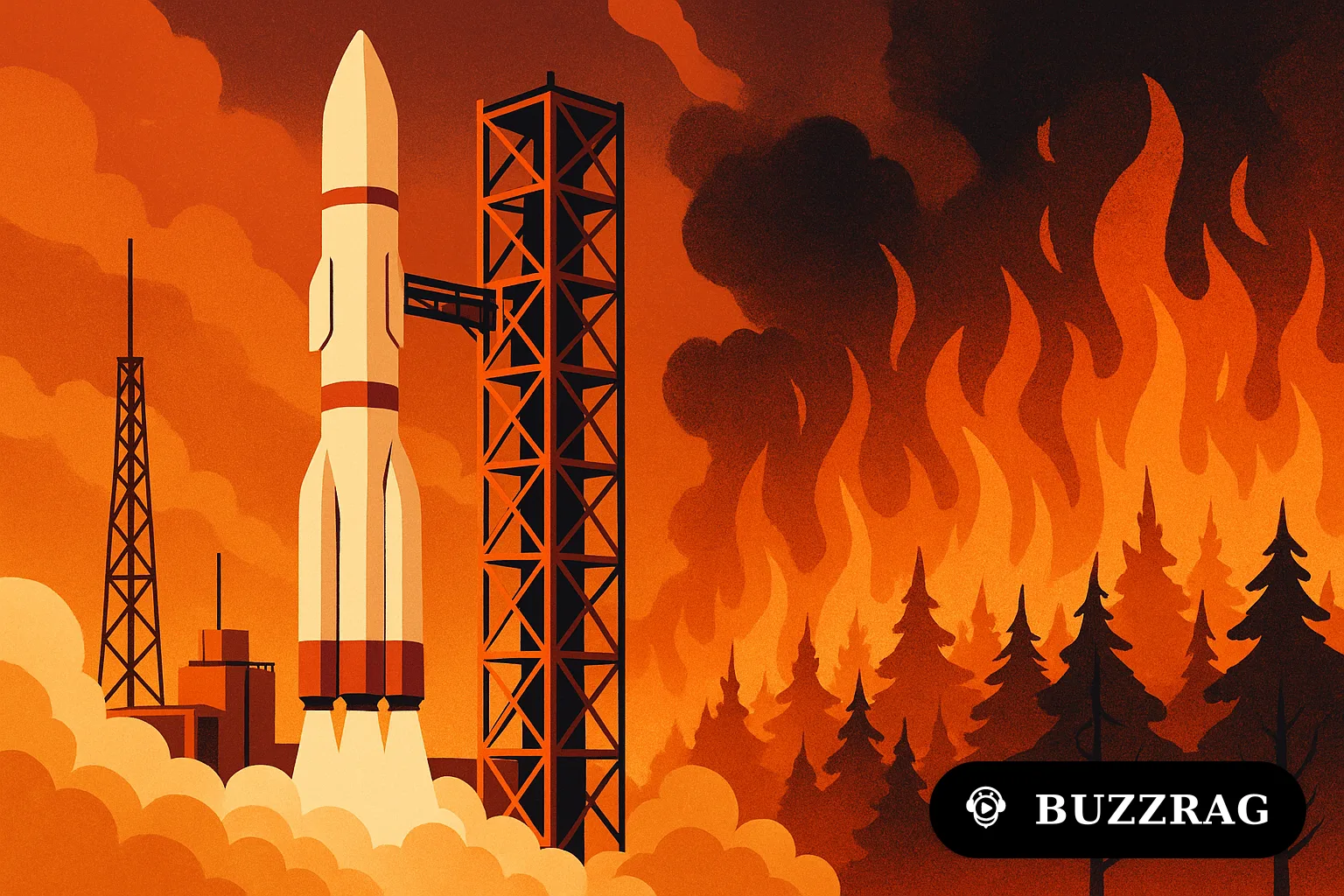
Today's science digest highlights the intersection of policy and technological advancement, with significant developments in both space exploration and environmental challenges. As Western Europe struggles with destructive wildfires, the U.S. debates environmental law tweaks to accelerate space missions. Meanwhile, new research delves into the mysteries of the corona's temperature and dark matter.
US Seeks to Expedite Space Missions by Bypassing Environmental Reviews
The Federal Aviation Administration (FAA) is considering a controversial proposal to bypass certain environmental laws to keep up with the surging demand for commercial space launches and reentries. This move aims to streamline the approval process for space missions, which is currently hindered by extensive environmental reviews.
Critics argue that reducing these reviews could lead to adverse ecological impacts, while proponents believe it is necessary to maintain the U.S.'s competitive edge in the burgeoning space economy. The proposal, corroborated by multiple sources, reflects a growing tension between rapid technological progress and environmental stewardship.
As the dialogue unfolds, stakeholders from environmental groups and the aerospace industry are expected to weigh in, potentially shaping the future framework for space exploration. Observers are keenly watching how this balance between innovation and environmental responsibility will evolve.
Wildfires Ravage Western Europe Amid Heat and Drought
Western Europe is grappling with severe wildfires that have devastated regions in Spain and France, exacerbated by intense heat waves and persistent drought conditions. The fires have disrupted lives, forcing evacuations and highlighting the vulnerabilities posed by climate change.
NASA reports indicate that these environmental conditions have created a tinderbox scenario, where high temperatures and dry vegetation fuel widespread fires. While the immediate focus is on containing the blazes, long-term strategies are urgently needed to address the root causes linked to climate change.
This situation underscores the critical need for robust climate policies and adaptive measures to protect ecosystems and communities. As Europe confronts these challenges, the global community watches closely, recognizing the interconnected nature of climate risks.
Coronal Temperature Discrepancy Offers New Insights
Recent research has uncovered a persistent discrepancy in temperature readings of the Sun's corona, with radio brightness indicating significantly lower temperatures compared to ionization and scale-height diagnostics. This difference, stable over eight years, is now being interpreted as a kinetic measurement rather than an anomaly.
The study suggests that the variance in temperature readings reveals underlying physical processes in the corona, related to the transport and termination of suprathermal electrons. Understanding these processes is crucial for comprehending solar dynamics and space weather phenomena that affect Earth.
This research invites further exploration into solar physics, as scientists aim to reconcile these measurements and refine models of solar behavior. The findings could lead to improved predictions of solar activity and its impacts.
Dark Matter Research Advances with RES-NOVA
The RES-NOVA project is at the forefront of probing inelastic dark matter with large mass splittings, utilizing a PbWO4 cryogenic calorimeter constructed from archaeological lead. This innovative approach aims to capture the elusive high-velocity tail of the dark-matter distribution, offering new avenues for discovery.
The project's focus on heavy target nuclei and an extended recoil-energy range is designed to enhance sensitivity to phenomena that have eluded previous experiments. As dark matter continues to be one of the most enigmatic components of the universe, these efforts are crucial in unraveling its mysteries and refining theoretical models.
With multiple collaborations corroborating this research, the scientific community is keen to see the outcomes and implications for our understanding of the universe's fundamental structure. The RES-NOVA project exemplifies the intersection of cutting-edge technology and foundational astrophysical questions.
As we explore the complexities of technological progress and environmental challenges, the coming weeks promise developments in both space policy and climate strategies. Meanwhile, the scientific community eagerly anticipates new insights from ongoing research into solar phenomena and dark matter.