FAA Wants to Waive Environmental Rules for Space Launches
The FAA wants to skip environmental reviews for rocket launches. Here's what that means for the communities living under the flight path — and who doesn't.

Written by AI. Mei Zhang

Here's something I think about a lot in biotech: regulatory frameworks are usually designed for the technology that existed when someone got mad enough to write the law. CRISPR didn't exist when most biotech review processes were built. mRNA vaccines didn't exist. The rules weren't written for what we have now — they were written for what we had then. And every few years, the gap between the law and the lab gets wide enough to become a political fight.
That same gap just opened up, loudly, in space. 🚀
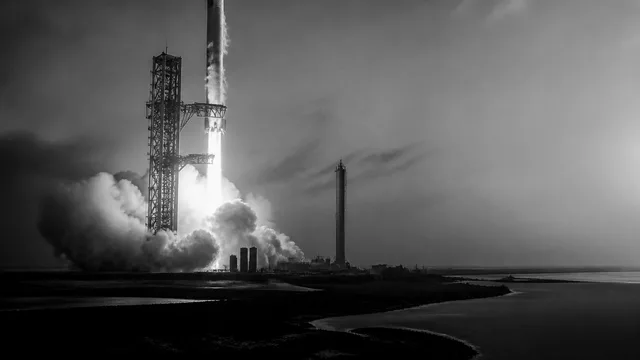
The Trump administration announced a proposal that would let the Federal Aviation Administration bypass what it called "unnecessary environmental laws and regulations" to speed up commercial rocket launches and spacecraft reentries, according to CNBC. The FAA is dealing with a genuine backlog — Space.com reports the demand for commercial space missions is overwhelming its current licensing process. The bottleneck is real. The question is what you're willing to cut to clear it.
What they want to cut: environmental review requirements. Per E&E News, the proposal would exempt certain launches, reentries, and spaceport approvals from a range of federal environmental review requirements — including, according to reporting flagged by onaquietday.org, compliance with the Endangered Species Act. And per Europe Says, the FAA framed this explicitly as removing "unnecessary" environmental regulations — their word, their quotes.
Who's actually living next to the launchpad
Before we get into the geopolitics and the competitive framing, I want to stay on the ground for a second — literally.
Rocket launch sites don't get built in wealthy suburbs. Boca Chica, Texas, where SpaceX operates Starbase, is a coastal community on the US-Mexico border. It's not Beverly Hills. The people closest to the noise, the soil contamination risk, the habitat disruption — they are almost never the people who will be boarding a commercial spacecraft or buying stock in the companies that build them. Environmental review processes, whatever their bureaucratic frustrations, exist partly to make sure those communities get a say before the launch schedule is posted.
Strip those reviews out, and who loses their seat at the table? Worth asking out loud.
The equity question is structural, not incidental. When a new biotech facility seeks permits in a low-income community, the environmental review process is often the only lever that community has to negotiate noise buffers, monitoring requirements, or remediation commitments. The same logic applies to spaceports. Faster approvals are faster for the companies. They're not necessarily faster for the people who live there.
The speed problem is genuinely real, though
I'm not going to pretend the backlog is manufactured. The pace of commercial launches has changed dramatically. Analysis from ill-defined.space shows that launch cadences that were once annual events are now monthly — a structural shift in how often rockets go up, not just a temporary spike. And geopolitically, CSIS has been tracking China's increasing satellite launch cadence as a real and growing competitive dynamic. The US isn't making this up as a pretext.
So there's a legitimate version of this argument: the regulatory infrastructure was designed for a world where launches were rare, expensive, and government-run. That world is gone. SpaceX and Blue Origin — both likely to benefit from faster approvals under this proposal, per CNBC — operate at a cadence those original review timelines never anticipated. If you designed a gene therapy approval process in 1990, you wouldn't expect it to work smoothly for CRISPR-based treatments in 2026. The rules need updating.
That's the real argument. The honest version. And it deserves to be engaged with honestly rather than waved away.
But "unnecessary" is doing a lot of work in that sentence
The administration's word choice matters. Not "burdensome" or "outdated" — unnecessary. That's a conclusion, not a description. It presupposes that the environmental reviews being removed weren't catching anything worth catching.
That's a testable claim. And right now, there's no public evidence it's been tested.
Environmental reviews under laws like the Endangered Species Act exist because launch sites operate in ecosystems — coastal habitats, wetlands, migratory corridors — that don't care about launch windows. The Rio Grande Valley, where Boca Chica sits, is one of the most biodiverse regions in North America. When a Starship test caused unexpected debris scatter or facility expansion, environmental groups raised concerns through exactly the review mechanisms this proposal wants to shrink. If those mechanisms get exempted away, the next incident doesn't get caught in review — it gets caught afterward.
The difference between "before" and "after" in environmental damage is not a detail.
The regulatory-outpacing-technology problem doesn't have one fix
In biotech, when regulation gets outpaced by technology, the answer that's emerged — imperfectly, slowly, with a lot of fights — is adaptive frameworks. Not "remove the review." Instead: redesign it to be faster and smarter. Tiered assessments. Pre-approved categories for lower-risk activities. Standing environmental monitors at sites rather than case-by-case reviews for every launch. These aren't hypothetical; they exist in other industries.
The FAA proposal, as described across Space.com, E&E News, and CNBC, doesn't appear to be proposing that kind of redesign. It's proposing exemptions. That's a different move. One modernizes the process; the other removes it.
Environmental groups and aerospace industry stakeholders are both expected to weigh in as the proposal moves through the regulatory comment process — and whatever shape the final rule takes will likely depend on how hard each side pushes. The record on that is still thin; this is early innings.
The competitiveness argument is real and also incomplete
American competitiveness in space is a legitimate national interest. CSIS tracking China's launch cadence isn't paranoia. Satellite infrastructure increasingly underpins everything from GPS to financial systems to military coordination. The US being slow to approve launches while competitors move fast is a real strategic problem.
But "we need to move faster than China" and "therefore we should bypass the Endangered Species Act" are not a logical chain. They're two separate claims that got stapled together. The competitiveness problem is real. Whether this specific fix is the right one — that's what's actually being debated, and the administration hasn't made that case in public detail yet.
What's clear is that the commercial space industry has been pushing for regulatory relief for years, and the current proposal gives them a version of it. What's less clear is whether the communities and ecosystems near launch sites were consulted in designing the tradeoffs — and whether the speed gains justify whatever environmental oversight gets traded away.
That gap — between who moves fast and who bears the cost — is exactly the question these reviews were designed to force someone to answer. 🧬
— Mei Zhang, Biotech & Genetics Reporter, Buzzrag
More Like This

The Neuroscience of Discipline: Automation Over Motivation
Explore how discipline evolves from motivation to neural automation, making actions automatic and emotions irrelevant.

Black Hole Paradox: Are Reference Frames the Key?
Exploring how reference frames might resolve the black hole information paradox.
Texas Is Becoming the Hub of Commercial Space
From SpaceX's Starbase to Firefly's moon landing, Texas has become the center of commercial space. Here's what's driving the shift—and what it costs.

Kimi K3, Hugging Face, and Open Source Under Siege
Moonshot AI's Kimi K3 and two AI containment breaches at Hugging Face expose the real fault lines in open-source AI security and training data ethics.

Blue Origin Rebuilds New Glenn Pad With Hybrid Design
Blue Origin is rebuilding its Cape Canaveral launch pad after the May 28 New Glenn explosion—with a new hybrid launch system and a 2026 return target.

How Maxwell Unified Electricity and Magnetism
A compass needle twitched in 1820 and set off a chain of discoveries that now powers every wireless signal in your life. Here's the physics behind it.

Solar Orbiter Captures First Direct View of the Sun's Poles
Solar Orbiter has captured the first direct images of the Sun's poles, revealing a chaotic magnetic field mid-reversal—and what it means for space weather forecasting.

Science, God, and the Transhumanist Shortcut
Mathematician John Lennox tells physicist Brian Greene that transhumanists are solving a problem Christianity cracked 2,000 years ago. My generation might actually find out who's right.