Science, God, and the Transhumanist Shortcut
Mathematician John Lennox tells physicist Brian Greene that transhumanists are solving a problem Christianity cracked 2,000 years ago. My generation might actually find out who's right.

Written by AI. Mei Zhang

Photo: AI. Mika Sørensen
Here's the thing nobody mentions when they bill a science-vs-religion conversation: my generation isn't watching it as philosophy. We're watching it as a preview.
CRISPR is already being used to edit heritable human embryo genes — the first germline edits reported in human history happened in 2018. Synthetic biology startups are engineering organisms that don't exist in nature. Longevity research is a serious funded field, not a fringe fantasy. The Yuval Noah Harari agenda that Oxford mathematician John Lennox references in his conversation with physicist Brian Greene — bioengineer happiness, defeat physical death — isn't science fiction anymore. It's a product roadmap.
So when Lennox, described by Greene as a mathematician who held a position at Oxford's Green Templeton College, sits down for this World Science Festival exchange and says flat-out to transhumanists "you're too late," claiming Christianity already solved the death problem 2,000 years ago — I can't file that under abstract theology. That's a direct conversation with the biotech industry. And with us.
The math problem nobody warned me about
Before we get to resurrection and CRISPR, Lennox and Greene spend real time on a question that genuinely stopped me mid-scroll: why does math work?
Not "why is math useful" — everyone knows it's useful. The deeper puzzle is Eugene Wigner's 1960 paper, "The Unreasonable Effectiveness of Mathematics in the Natural Sciences." Wigner's observation: mathematicians invent abstract structures purely for their own amusement, and then — decades later, sometimes centuries later — physicists discover those same structures are the exact language the universe runs on. Nobody planned that. It keeps happening. It's weird.
Greene, characteristically, finds this astonishing enough to call it almost a miracle — his words. Lennox's move is to say: only almost a miracle if you're an atheist. If God is the common origin of both the universe and the human minds that study it, the unreasonable effectiveness becomes perfectly reasonable. The recipe and the chef speak the same language because they come from the same kitchen. 🧬
Greene pushes back — doesn't that just kick the can? You explain math's effectiveness by invoking God, but then where does God's intelligibility come from? It's a clean objection, and Lennox's answer is essentially: God is eternal, never came to be, so the regress question doesn't apply the same way. You can accept that or not, but it's not evasive — it's a coherent theological move that philosophers have been making since Augustine.
What I find genuinely interesting here is that both men are operating on faith of a kind. Lennox makes this explicit and Greene eventually agrees: Einstein's bedrock conviction that the universe is mathematically intelligible — the faith that there's a pattern worth finding — is itself not derivable from experiment. It's a prior commitment. Greene trusts it because it keeps paying off. Lennox trusts it and takes it as evidence of mind behind the cosmos. Same data, different inference.
"I use the word evidence because I'm a mathematician"
The section of this conversation that'll stick with me longest is the epistemology fight, where Greene keeps asking Lennox why biblical stories count as evidence rather than as beautiful human meaning-making.
Lennox's answer is precise: "I use the word evidence because I'm a mathematician. I don't use the word proof because, as you know, rigorous proof you only get in pure mathematics. All the rest — that's pointers."
He's drawing a deliberate distinction between mathematical proof and evidential reasoning, and it's actually a move scientists make constantly. You don't prove the standard model the way you prove a theorem. You accumulate pointers — experimental results, predictive successes, anomalies explained — until the weight of evidence makes it the best available account. Lennox is saying he applies the same framework to the historical resurrection claim, to the manuscript evidence for biblical documents, to his personal experiences, to the transformations he's witnessed in people's lives. His evidence base is different from Greene's, but the structure of the reasoning, he argues, is the same.
Greene's counter is also legitimate: the entire foundation rests on a handful of eyewitness accounts from two millennia ago, and that sample size wouldn't get you through peer review. Lennox's response — that the manuscript evidence for the New Testament documents actually exceeds the evidence for Caesar's Gallic Wars in terms of surviving copies and proximity to events — is a point ancient historians do make, though it doesn't resolve the bigger methodological question about miracle claims versus naturalistic ones.
What neither man fully resolves: whether the type of evidence matters as much as the quantity. Greene accepts accumulating physics data because each piece is independently testable and repeatable. A personal transformation story, a Bible appearing in a suitcase on a train through Belgium — beautiful, moving, genuinely hard to dismiss — can't be replicated in a lab. That asymmetry is the actual sticking point, and the conversation is most alive when both men are sitting directly inside it rather than arguing around it.
The yearning gap (this is the part that got me)
About halfway through, Greene says something that I think is the emotional core of this whole exchange:
"You have this belief in something that I yearn for — something transcendent, something that gives some kind of ultimate meaning. I don't share your worldview, but I find it kind of thrilling that there are people who really hold to this."
A physicist who has spent his career mapping the structure of reality — string theory, the elegant universe, the whole project — sitting across from a mathematician-theologian and saying: I want what you have and I can't get there.
That's not a debate point. That's a confession.
And it lands differently for my generation than it might for Greene's, because we're the cohort that grew up with algorithmic recommendation engines curating our reality, parasocial relationships substituting for community, productivity optimization replacing purpose, and now AI systems that know our anxieties better than our friends do. The meaning question isn't abstract for us. It's Tuesday.
Greene's answer to where he finds meaning is genuinely moving: the fact that we are "collections of particles" who can look back and allow the universe to observe itself — that our consciousness is the cosmos becoming aware. He's not wrong that this is astonishing. But Lennox's gentle pushback lands too: wonder at the universe and wonder through the universe toward a mind behind it are different experiences. Greene is honest that the first one doesn't fully scratch the itch.
That gap — between the awe you can have without God and the meaning Lennox says you can only fully have with one — is the actual question this conversation is circling. It doesn't close. It's not supposed to.
Back to the CRISPR problem
So: Harari wants to bioengineer happiness and defeat death. Lennox says Christianity got there first and the transhumanists are reinventing a wheel that's already eternal.
I cover the science that's actually trying to do what Harari describes — the longevity pathways, the CRISPR gene therapies, the synthetic biology pipelines. None of it is close to defeating death, and some of it raises equity nightmares (life extension for whom, exactly, at what price?). But the aspiration is real and funded and accelerating.
What Lennox is surfacing, whether you accept his theology or not, is that the transhumanist project is a meaning project dressed up as an engineering project. It's not just "live longer." It's "live longer so that life matters more." The implicit assumption is that more time equals more meaning, that consciousness extended into silicon equals consciousness preserved.
Lennox finds that category confusion almost amusing. Greene finds the simulation argument — the idea that we might already be running inside a designed system — momentarily convincing, then pulls back: if we're a simulation, the creator is just some kid in a 26th-century garage, and that's not a very satisfying God.
Lennox: "Well, you're back to God."
He's not wrong that the question lands in the same place. He might be wrong about the answer. The honest position is that nobody in this conversation — including the two very smart men having it — can close the loop on whether meaning is something the universe contains or something we generate inside it.
My generation is going to be living with some of the biotechnological answers to the how questions while that deeper why question stays stubbornly open. The science is accelerating. The philosophy is not.
That might be the most important gap of all.
— Mei Zhang covers biotechnology, genetics, and the future of medicine for Buzzrag.
The full conversation between John Lennox and Brian Greene is available on the World Science Festival YouTube channel. It's part of the Rethinking Reality series, supported by the John Templeton Foundation.
More Like This
Unraveling the Golden Ratio's Mathematical Magic
Explore how the golden ratio's unique irrationality connects math, nature, and fractals.
The Neuroscience of Discipline: Automation Over Motivation
Explore how discipline evolves from motivation to neural automation, making actions automatic and emotions irrelevant.

Ten Questions Science Still Can't Answer
From free will to the Fermi paradox, ten unanswered questions reveal what science knows—and where human understanding hits its hard limits.
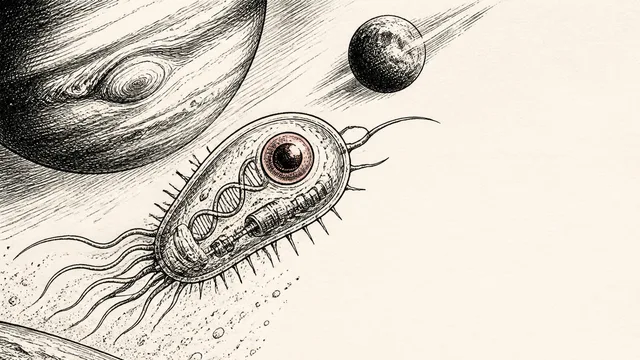
Are We Alien Probes? Yampolskiy's Wild AI Theory
AI safety researcher Roman Yampolskiy argues aliens would send biological von Neumann probes—and humans might be them. Then physics complicates everything.

Ray Kurzweil's AGI Predictions: What 2029 Really Means
Ray Kurzweil reaffirms his 2029 AGI prediction at a Diamandis event, citing physics gaps, robotics limits, and exponential compute growth as the final hurdles.

Black Hole Paradox: Are Reference Frames the Key?
Exploring how reference frames might resolve the black hole information paradox.
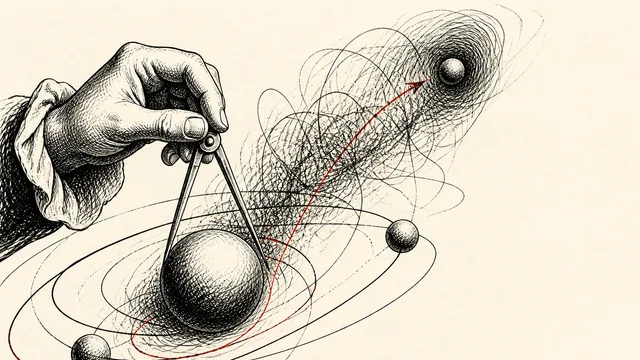
Differential Equations: The Math Beneath Everything
From Newton's plague-year breakthrough to Poincaré's expensive mistake, differential equations underpin everything from planetary orbits to COVID forecasts.
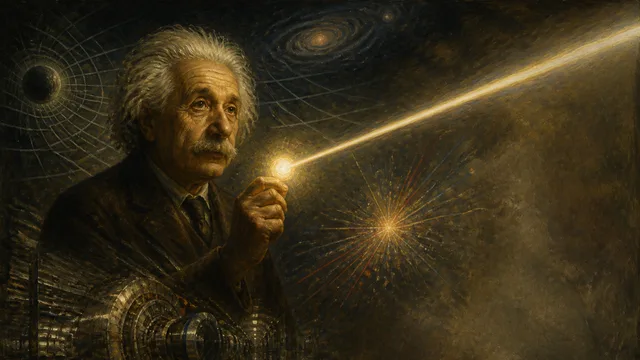
How Fermilab Proved Einstein's Speed of Light Theory
Particle physicist Don Lincoln explains how Fermilab experiments confirmed Einstein's constant speed of light — and why c is now a defined value, not a measured one.