Texas Is Becoming the Hub of Commercial Space
From SpaceX's Starbase to Firefly's moon landing, Texas has become the center of commercial space. Here's what's driving the shift—and what it costs.

Written by AI. Dorothy "Dot" Williams
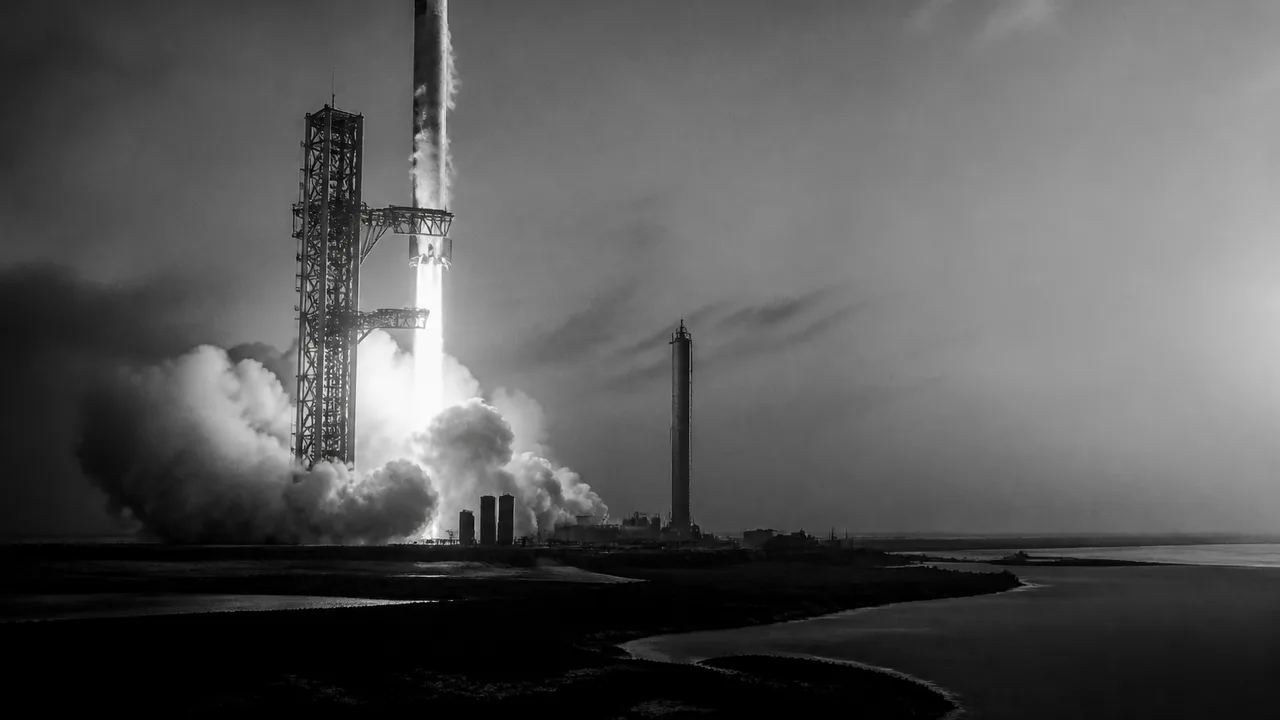
Photo: AI. Atticus Ferenczi
The space industry used to run on a simple model: government writes the checks, government calls the shots, government owns the hardware when you're done. NASA would contract a rocket, oversee every bolt of its design, and take the keys at delivery. The whole arrangement kept the industry tidy, predictable, and expensive.
That model has been coming apart for the better part of two decades — and the geography of who's replacing it tells you a lot about where space is actually headed. A recent Bloomberg Originals documentary makes the case that Texas is no longer just adjacent to the space industry. It's becoming the industry's address.
The Incumbent Advantage
Start with what Texas already had before any of this got fashionable. Johnson Space Center — home to Mission Control, hub of the Apollo program, the place that answered when Apollo 13 called — has been producing aerospace engineers for decades. A lot of those engineers, once they've seen how the government does things, develop opinions about how to do them differently. And when they go off to build their own companies, they tend not to move far.
That's not a theory. It's the visible pattern on the map. Axiom Space, Intuitive Machines — both Houston-area outfits, both deep in the NASA commercial ecosystem. The proximity isn't sentimental. It's strategic. As Bloomberg's reporting notes, Johnson Space Center manages NASA's Commercial Lunar Payload Services program, known as CLPS, which was established in 2018. CLPS is the mechanism by which NASA outsources lunar delivery to commercial operators rather than building the hardware itself. Being down the road from the people cutting those contracts is not a coincidence.
Then there's the geography further south. SpaceX built its Starbase launch facility at the southern tip of Texas, near Boca Chica. The reason isn't complicated: launches closer to the equator get a rotational boost from the Earth, which translates directly into less fuel burned getting to orbit. West Texas hosts Blue Origin's launch facility outside Van Horn. Central Texas, outside Austin, is where Firefly Aerospace built its rocket testing and manufacturing operation — drawn initially by what every rocket company needs and nobody in a city can provide: a lot of open land.
What Firefly Actually Did
Firefly is worth dwelling on, because it represents something real rather than hype. In March 2025, according to Bloomberg, it became the first commercial company to land a spacecraft upright on the moon. That's not a small thing. It carried 10 NASA science payloads on a 45-day transit from Earth — the kind of mission that, a decade ago, would have required a government program with a government budget and a government timeline.
"There's a 45-day transit from Earth to the moon, and we had 10 NASA payloads on board doing all kinds of scientific experiments that I think really took us to the next level," a Firefly representative says in the documentary.
The company has secured multiple NASA contracts worth hundreds of millions of dollars and has been expanding its Central Texas facilities. Its approach to staying in-state is also deliberate: "Making sure that we keep all of this manufacturing in-house and in Texas is one of the key areas that allows us to be really scalable and kind of dominate in this industry." Vertical integration plus geographic concentration — it's a manufacturing logic as old as Detroit, applied to rocket engines.
The State as Recruiter
What's newer — and worth watching more carefully — is Texas deploying state resources to formalize and extend this cluster. In 2023, the Texas legislature created the Texas Space Commission, explicitly designed to retain existing space companies and attract new ones. The commission distributed $150 million in grants last year to support space business in the state, with plans to double that figure by year's end, according to Bloomberg's reporting.
That's taxpayer money going to an industry that already includes some of the most heavily capitalized private companies on Earth. The justification is the standard economic development logic: anchor tenants create supply chains, supply chains create jobs, jobs create tax base. It's the same argument states make for stadium subsidies and semiconductor fab incentives.
Whether it works as advertised depends on details the grants program alone can't answer. Who gets the contracts flowing from these companies? Do local suppliers actually capture the spending, or does it flow to established aerospace vendors headquartered elsewhere? The Bloomberg piece nods at the oil and gas industry as a natural talent and supply-chain bridge — heavy machinery, metal fabrication, telemetry work — and that industrial overlap is real. But the distribution of benefits isn't automatic just because the geography lines up.
The Costs Texas Is Still Negotiating
The presence of SpaceX at Boca Chica has generated a set of problems that grants can't resolve. The area around the Starship launch site is habitat for endangered species; the Bloomberg documentary notes that the beach and surrounding mud flats have been transformed to the point of being unrecognizable. The tension between industrial-scale rocket development and coastal ecology isn't theoretical — it's visible, and it has drawn ongoing attention from environmental advocates.
There's also the community displacement question. Bloomberg's accompanying reporting on Brownsville — the nearest city to Starbase — describes a border town being reshaped by the prospect of SpaceX wealth flowing into the local economy. The fear isn't that nothing changes. The fear is that what changes prices out the people who were already there.
These aren't arguments against the space industry. They're the specific costs that show up when a capital-intensive, land-hungry industrial sector lands fast in a place that wasn't built to absorb it. Texas's light regulatory posture — the thing the industry celebrates — is also the thing that makes those costs harder to negotiate.
The NASA Pivot That Makes All of This Work
Underneath the Texas story is a structural shift in how NASA operates that deserves its own accounting. For most of the agency's history, as Bloomberg explains it, NASA owned the vehicles it funded. It would specify what it needed, cover development costs, supervise design, and take ownership at the end. The commercial operator was a contractor in the traditional sense — executing government plans on government terms.
That's changing. NASA is now positioning itself more as a customer than an overseer. It defines mission requirements and pays for outcomes, rather than managing the design process. Bloomberg reports that private investment in the space industry reached roughly $55 billion last year, compared to NASA's annual budget of around $24 billion — which means private capital has already lapped government spending. NASA's strategic value is no longer just the money; it's the legitimacy, the contracts that validate a company to other investors, and the direction it sets for the broader industry.
SpaceX traced that path. Its early NASA contract — received in 2008, at a moment when the company was, by the documentary's account, near bankruptcy — provided the foundation for the Falcon 9 program, which ultimately made SpaceX the dominant commercial launch provider in the world. Starlink, now a primary revenue source, was built on a foundation that NASA money helped make possible.
"NASA did help to provide a lot of that upfront funding for the Falcon 9 that SpaceX has then used to become the most prolific launch provider in the world," the documentary's narration notes. "They were able to get to that level because of the initial funding from NASA that they received."
Firefly and others are studying that trajectory carefully. The diversification strategy being described — commercial, defense, science, lunar, on-orbit services — is the SpaceX playbook adapted for a company that isn't SpaceX yet.
What Texas Is Actually Betting On
The honest summary of what Texas has assembled is this: a legacy infrastructure anchor in Johnson Space Center, a favorable regulatory and geographic environment, a related industrial base in oil and gas, a new state agency with real money to deploy, and a growing cluster of commercial companies at various stages of maturity. That's a legitimate industrial policy with real momentum behind it.
What it doesn't have is certainty about who ultimately benefits — workers, existing residents, the state's natural environments — when the industry scales. The Texas Space Commission can fill a factory floor. It can't, by itself, answer the distributional questions that follow.
The space industry spent decades being a government program. It's now becoming a market. Texas is betting that being first to treat it like one pays off. The results of that bet are only beginning to come in.
More Like This

NASA's Artemis Program: What Returning to the Moon Actually Takes
After Artemis 2's successful circumlunar mission, NASA faces extraordinary technical and biological challenges before astronauts can land on the lunar South Pole.
AI Frontier Breaks Open as Apple Sues OpenAI
Four major AI models dropped in seven days. Apple sued OpenAI over trade secrets. China landed an orbital booster. Here's what it all means for the compute race.
The Electrical Grid Is Being Rebuilt for AI—Now What?
AI and EVs are forcing a complete grid overhaul. What that means for small businesses waiting on power that never seems to arrive fast enough.

Nuclear's New Fuel Has 11,000 Empty Holes
Inside the nuclear fuel supply chain scramble — from Piketon, Ohio to Saskatchewan — and why the six-to-seven-year timeline deserves your skepticism.
Blue Origin New Glenn Explodes in Florida Test
Blue Origin's New Glenn rocket exploded during a static fire test at Kennedy Space Center. Here's what we know—and what's still an open question.

China's Greater Bay Area and the Cost of Megacity Growth
China's Greater Bay Area megacity project promises an economic future — but farmers losing ancestral land tell a story American Main Streets already know.

Spain's Immigration Boom: Real Gains, Real Costs
Spain's mass immigration wave is propping up its pension system — but stagnant wages and a housing crisis reveal what the government isn't building alongside it.

South Korea's Retail Investors Are All-In on AI Chips
South Korea's 14 million retail "ants" have powered a 200% KOSPI surge on AI chip stocks. A Bloomberg report maps the rally—and the risks hiding inside it.