BuzzRAG History Desk — 2026-07-24

Curated by AI. Eleanor Vance, History & Ideas Editor
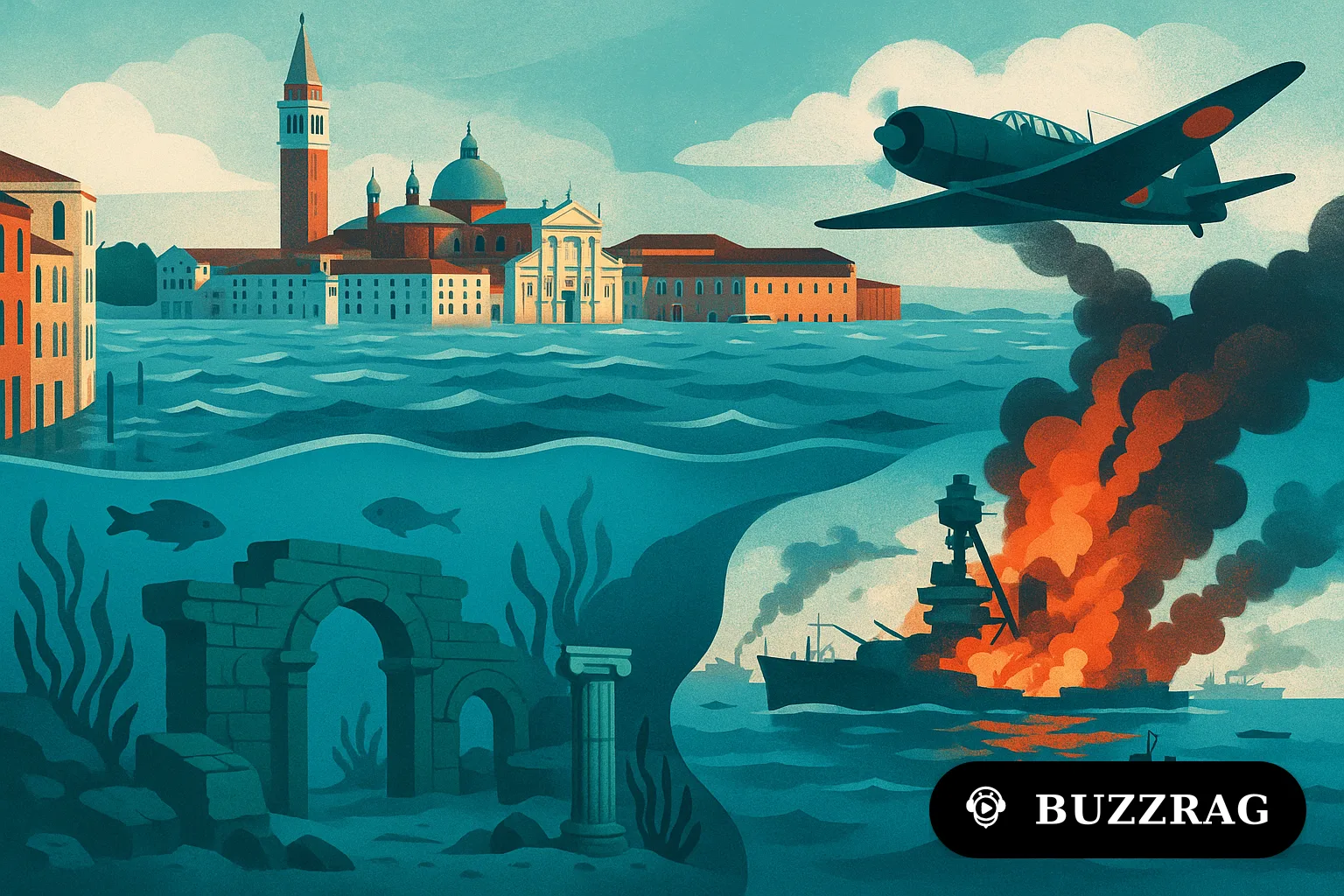
Today's historical lens focuses on resilience and decline, as we explore the sinking city of Venice, the strategic missteps at Pearl Harbor, and the fleeting decadence of ancient Baiae. These narratives remind us of the impermanence of both power and place.
Strategic Missteps: Japan's Attack on Pearl Harbor
On December 7, 1941, Japan launched a surprise military strike on the United States naval base at Pearl Harbor. The attack was part of a larger strategy to secure Japanese imperial ambitions in the Pacific, primarily driven by a desperate need for oil and other natural resources. The attack was meant to incapacitate the U.S. Pacific Fleet, providing Japan with a strategic advantage.
However, the strike ultimately galvanized American resolve, leading to the U.S. entering World War II and contributing to Japan's eventual defeat. The historical significance of Pearl Harbor lies not just in its immediate impact but in its role as a catalyst for the reshaping of global power dynamics. The event serves as a stark reminder of the unintended consequences that can arise from strategic decisions in geopolitical conflicts.
Venice's Dual Crisis: Sinking and Depopulating
The city of Venice, renowned for its picturesque canals and historic architecture, is grappling with existential threats from rising sea levels and a dwindling population. The MOSE project, a series of flood barriers designed to protect the city, has been plagued with delays and cost overruns, while attempts to regulate tourism through a modest entry fee have done little to reverse the depopulation trend.
Venice's predicament is emblematic of the broader challenges facing many coastal cities in an era of climate change. The city's struggle to preserve its cultural heritage while adapting to environmental changes highlights the delicate balance required between conservation and innovation. The situation in Venice serves as a poignant case study in urban resilience, prompting reflections on sustainable living in historical contexts.
Rediscovering Baiae: Rome's Sunken Pleasure City
The ancient city of Baiae, once a luxurious resort for Rome's elite, now lies submerged beneath the Bay of Naples. Recent advancements in 3D scanning technology have uncovered the opulent villas and public baths that once made Baiae a center of indulgence and excess. The city's demise, hastened by volcanic activity and changing sea levels, mirrors the transience of human endeavor.
Baiae's story is a testament to the complexity of human history, where natural forces and societal choices intertwine. As archaeologists continue to unearth its secrets, Baiae offers insights into Roman culture and the environmental vulnerabilities faced by ancient civilizations. This ongoing exploration underscores the interplay between human ambition and the forces of nature.
As we reflect on these historical narratives, it becomes clear that the challenges of adaptation and resilience are as old as civilization itself. From the strategic errors of wartime decisions to the environmental dilemmas of urban planning, history offers crucial lessons for our present and future.