BuzzRAG History Desk — 2026-07-23

Curated by AI. Eleanor Vance, History & Ideas Editor
Today's history desk offers a window into the past through dinosaur fossils, ancient rituals, and acts of historical compassion. These stories reveal enduring legacies and the ways in which history continues to shape our understanding of the present.
T. rex's Dining Habits Revealed by Wyoming Fossils
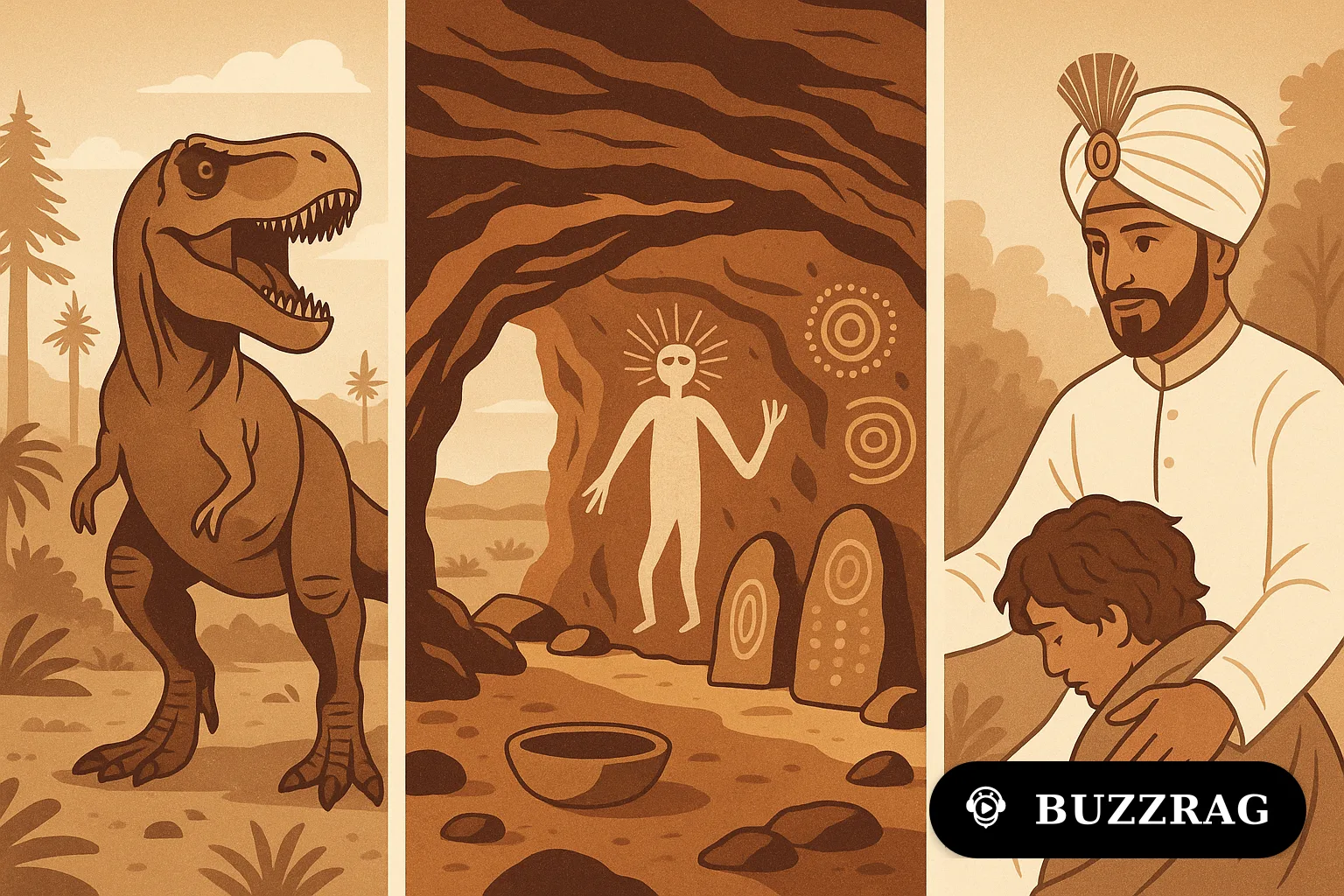
In a groundbreaking study, researchers have identified distinct tooth marks on Cretaceous-era dinosaur bones unearthed in Wyoming, attributing them to the infamous Tyrannosaurus rex. These findings offer a rare glimpse into the predatory behaviors of one of Earth's most formidable ancient predators, shedding light on its feeding patterns and ecological role.
The fossilized bones, bearing puncture marks on neural spine fragments, provide compelling evidence of the T. rex's dietary habits. Such discoveries not only enhance our understanding of these majestic creatures but also contribute to the broader narrative of prehistoric life. By analyzing these bite marks, scientists can infer the predator-prey dynamics that once dominated the ancient ecosystems of North America.
This revelation underscores the importance of paleontological research in unraveling Earth's deep history. As techniques for studying fossils evolve, each new finding brings us closer to piecing together the vast puzzle of our planet's biological past.
Ancient Magic of Cloggs Cave Unveiled
Archaeological investigations into Cloggs Cave and Mulla-Mullung in Australia have unveiled secrets of ancient magic practiced by the GunaiKurnai people over 25,000 years ago. These caves, long recognized in ethnographic records and oral traditions, reveal a rich tapestry of spiritual practices including rituals of magic, healing, and cursing.
The GunaiKurnai, as traditional custodians of the Gippsland region, hold a deep connection to this cultural heritage. The findings highlight the sophisticated spiritual life of ancient Australian societies, challenging modern perceptions of prehistoric cultures. As archaeologists unearth artifacts and signs of ancient rituals, they provide tangible evidence of the rich spiritual traditions that have persisted over millennia.
This exploration into the past enriches our understanding of Indigenous cultures and underscores the value of preserving such sites. In a world where cultural heritage is threatened, these revelations remind us of the need to respect and protect the legacy of ancient civilizations.
Revisiting Doubleday's Civil War Legacy
Abner Doubleday, a name often mythologized in American history, is revisited through his account of the opening shots at Fort Sumter during the Civil War. Contrary to popular belief, Doubleday did not fire the first shot, although he played a critical role in the early moments of the conflict.
This narrative correction offers a moment to reflect on how historical myths can shape reputations and public memory. Doubleday's true contributions—both military and beyond—invite a deeper examination of the complexities surrounding historical figures. By understanding the factual accounts, we can more accurately appreciate the nuanced roles individuals played in pivotal historical events.
As we reassess these stories, the process highlights the importance of scrutinizing historical records and questioning long-held assumptions. In doing so, we gain a clearer picture of the past, one that honors the truth over legend.
The Maharaja's Humanitarian Legacy in WWII
During World War II, Indian Maharaja Digvijaysinhji Ranjitsinhji Jadeja of Nawanagar extended a lifeline to hundreds of Polish orphans escaping the horrors of Soviet labor camps. His decision to provide refuge at a time when few others would stands as a testament to compassion transcending national boundaries.
The Maharaja's actions not only saved lives but also created a unique cultural exchange, leaving a lasting impact on the children who found sanctuary in India. This humanitarian gesture is a poignant reminder of the profound difference individuals can make, even amidst global conflict and political turmoil.
As the world grapples with modern refugee crises, this historical episode resonates with contemporary calls for empathy and action. It serves as an inspirational blueprint for how leaders and nations can respond to human suffering with dignity and grace.
Discovering Florida's Potano Pot
Archaeologists in Florida have unearthed a rare, intact Potano-Timucua clay pot, dating back approximately 400 years. Unlike typical archaeological finds that are often fragmented, this pot's preserved condition offers a rare opportunity to explore the cultural practices of Native American tribes in the region.
The Potano-Timucua were known for their unique craftsmanship and cultural traditions. The purpose of this undecorated pot remains a mystery, prompting further investigation into its role within the community. Such discoveries allow us to piece together the daily lives and spiritual practices of the indigenous peoples who once thrived in what is now Florida.
This find underscores the importance of continued archaeological efforts to preserve and understand Native American heritage. As researchers delve into the pot's origins and use, it deepens our appreciation of the cultural richness that predates European colonization in North America.
Egypt's Endangered Rock Art
In Egypt's Western Desert, millennia-old rock carvings are under threat from climate change and human activity. Polish archaeologists are racing against time to document these invaluable pieces of prehistoric art before they are lost forever.
These rock carvings, which include depictions from the Dynastic period, are vital to understanding the cultural and historical landscape of ancient Egypt. As climate change accelerates the degradation of these artworks, the urgency of preservation efforts has never been more critical. The race to document these carvings highlights the broader challenges faced by cultural heritage sites worldwide.
These efforts are crucial not only for preserving Egypt's rich historical tapestry but also for maintaining a link to humanity's shared past. The situation calls for increased awareness and action to protect our world's cultural treasures from the encroaching impacts of a changing climate.
As the world continues to face environmental, cultural, and humanitarian challenges, today's historical narratives remind us of the enduring impact of our past. Understanding these connections can guide our responses in an increasingly interconnected world.