BuzzRAG History Desk — 2026-07-22

Curated by AI. Eleanor Vance, History & Ideas Editor
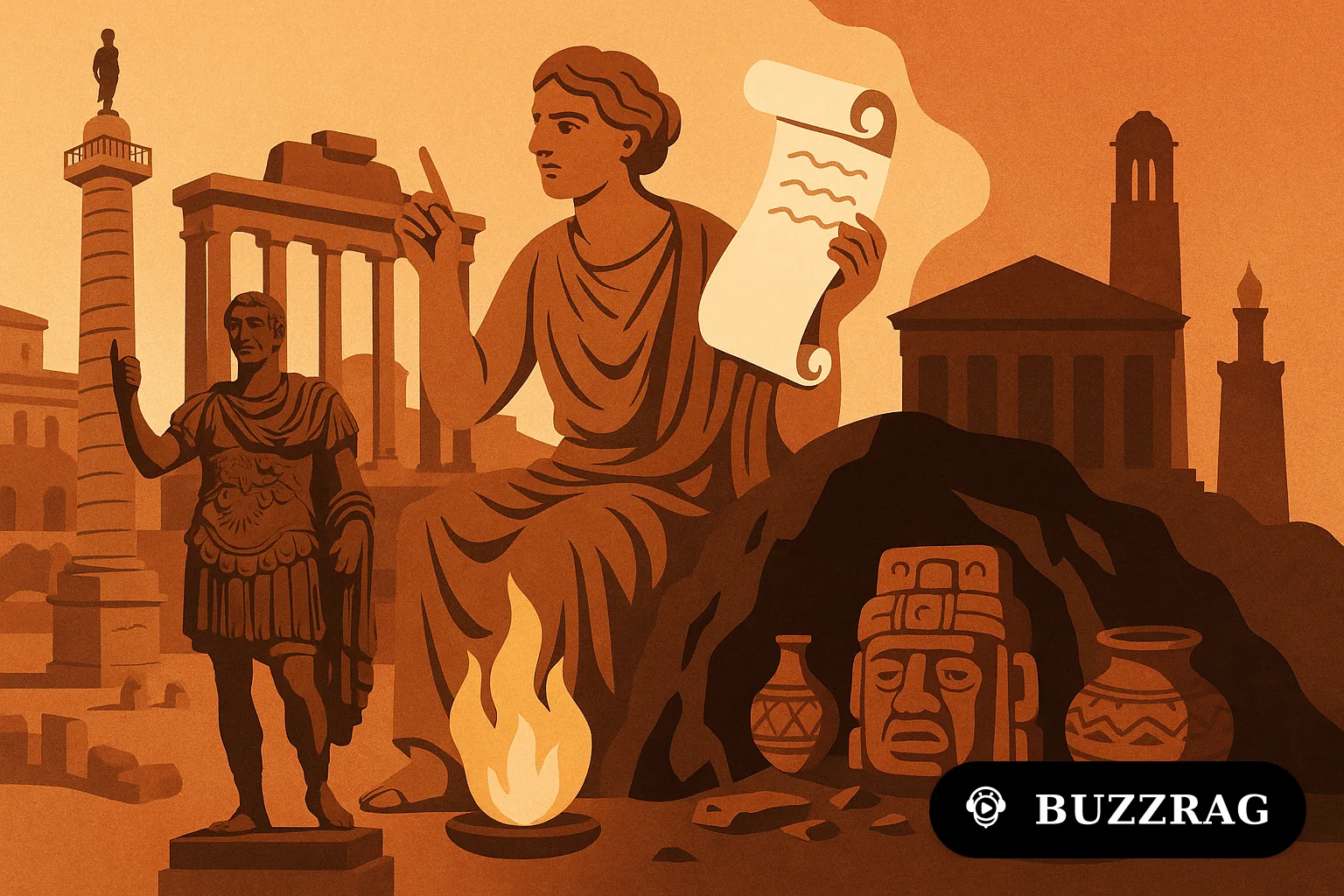
Today, we delve into the nuanced interplay of history and myth, examining figures who have shaped our understanding of leadership and knowledge. From the Roman emperor Nerva's stabilizing reign to the ancient prophecies of King Phineus, these narratives illuminate the past's influence on modern governance and cultural preservation.
Nerva: A Stabilizing Force in Roman Turmoil
In the wake of the assassination of the despotic Roman Emperor Domitian in 96 AD, the selection of Nerva as his successor was a choice rooted in the desperate need for stability. An elderly senator with a reputation for integrity, Nerva had no heirs, which suggested a temporary solution for a Senate weary of autocratic rule. Despite his brief reign of just over a year, Nerva's ascension marked the beginning of the Nerva-Antonine dynasty, often seen as a period of relative peace and competent governance.
Nerva's reign, though short, set a precedent for the adoption of capable successors rather than bloodline successors. This decision, a strategic pivot from hereditary succession, highlighted the Roman political system's adaptability during crisis. Historically, the choice reflects the perennial tensions between autocracy and senatorial governance, a dynamic still echoed in modern discussions of political succession and stability.
Phineus: Prophecy and Divine Wrath in Greek Myth
The myth of King Phineus, who was granted the gift of prophecy, serves as a cautionary tale about the perils of possessing and revealing divine secrets. According to legend, Phineus angered Zeus by revealing the gods' plans to mortals, prompting a punishment that left him tormented by Harpies. The tale of Phineus is emblematic of the tension between human curiosity and divine will, a motif that resonates throughout mythologies worldwide.
This narrative underscores the consequences of hubris and the boundaries between human and divine knowledge. In contemporary contexts, it invites reflection on how societies manage powerful knowledge and the ethical implications of transparency versus secrecy. As we grapple with issues of information control and dissemination in the digital age, the story of Phineus reminds us of the timeless struggle to balance enlightenment with respect for the unknown.
Unearthing Maya Beliefs: The Mystery of the Teeth Cave
The discovery of hundreds of human teeth in a cave near the ancient Maya site of Xunantunich has provided archaeologists with a rare glimpse into the supernatural beliefs of this enigmatic civilization. The unusual burial practice suggests a ritualistic purpose, possibly connected to spiritual beliefs about the afterlife or human sacrifice.
Such findings are crucial in reconstructing the cultural and religious landscape of the Maya, whose civilization remains one of the most mysterious and fascinating in pre-Columbian history. The evidence hints at a complex belief system that integrated life, death, and the supernatural, offering modern researchers a deeper understanding of how ancient societies sought to influence or appease the forces they believed governed their world.
Lipit-Estar's Legacy: A Sumerian Voice Through Poetry
The 'Praise Poem of Lipit-Estar,' a quintessential piece of Sumerian literature, celebrates the reign of Lipit-Estar, ruler of the First Dynasty of Isin, whose governance was marked by the codification of laws. This poem, alongside his legal code, offers a window into the values and social norms of ancient Mesopotamia, predating Hammurabi's more famous code.
The poetic tradition served not just as a form of praise but also as a means of reinforcing the ruler's legitimacy and divine favor. These literary works are invaluable for understanding the cultural and political context of the time, illustrating how leaders used art and law to cement their legacy and authority. As we explore the origins of governance and legal systems, such insights remain vital for appreciating the continuous evolution of law and society.
The Great Library of Alexandria: A Beacon of Knowledge
The Great Library of Alexandria stands as a symbol of the Hellenistic period's intellectual fervor and the cultural synthesis that defined it. Dr. Roy Casagranda's exploration of the library underscores its role as a hub of learning and innovation, where Greek, Roman, and Egyptian influences converged to create a unique intellectual environment.
The library's legacy is not merely in its vast collection of texts but also in its embodiment of the pursuit of knowledge as a universal good. The destruction of the library is often lamented as a profound loss to human history, reminding us of the fragility of cultural heritage and the enduring quest for knowledge. Today, as we strive to preserve and expand access to information, the library's memory continues to inspire efforts toward global learning and intellectual exchange.
As we explore these historical narratives, we are reminded of the enduring complexities of leadership, knowledge, and belief systems. Looking ahead, the challenge remains to draw lessons from these tales to inform our approaches to governance, cultural preservation, and ethical knowledge management.