BuzzRAG History Desk — 2026-07-03

Curated by AI. Eleanor Vance, History & Ideas Editor
Today's themes interlace the ancient worlds with modern insights. From the unearthing of Assyrian secrets to the deciphering of Vesuvius' papyri with AI, history's silent witnesses are speaking. Meanwhile, the philosophical realm revisits Stoicism not as a retreat but as active political engagement.
Unearthing Assyrian Legacy at Nineveh's Shamash Gate
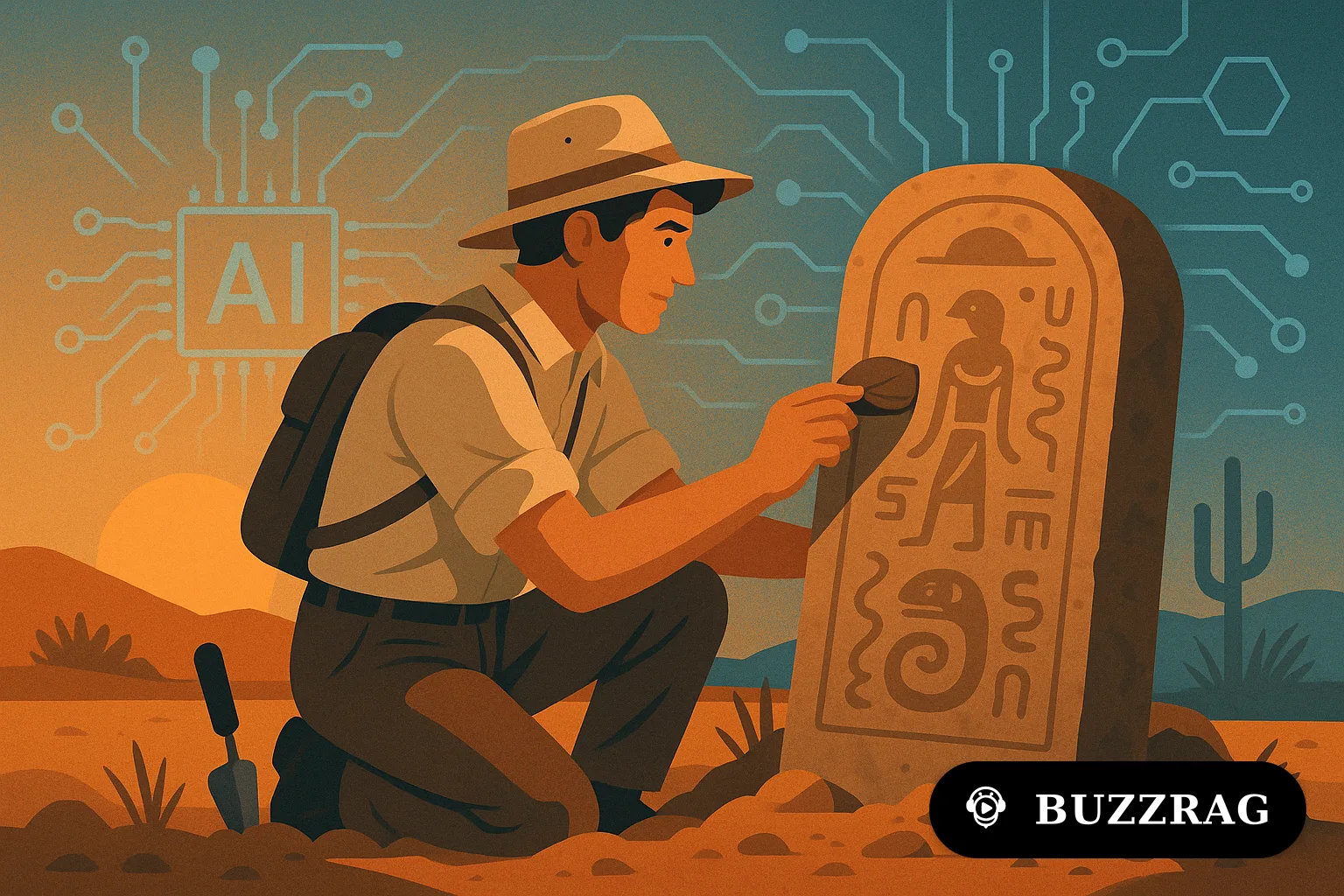
In a groundbreaking discovery, archaeologists in Iraq have unearthed a 2,600-year-old marble stele near Nineveh's Shamash Gate, dating back to the reign of King Ashurbanipal. This artifact, bearing intricate carvings and inscriptions, provides invaluable insights into the cultural and political achievements of the Assyrian Empire at its zenith.
The stele's discovery is more than an archaeological triumph; it's a window into Assyrian society, renowned for its formidable military and vibrant culture. King Ashurbanipal's reign is often noted for the creation of the Library of Ashurbanipal, which preserved a wealth of Mesopotamian literature. The stele's inscriptions may further illuminate the extent of Assyrian influence and governance practices during his era.
The find underscores the ongoing importance of preserving and exploring ancient sites in conflict-prone regions, where history could be lost forever. It also reignites discussions about the repatriation and protection of cultural heritage in today's global landscape.
AI Unlocks Secrets of Vesuvius' Papyrus Scrolls
A 2,000-year-old papyrus scroll from the Villa of the Papyri in Herculaneum, buried by Vesuvius in 79 AD, has been deciphered with the aid of artificial intelligence. This technological breakthrough allows scholars to access texts that were previously inaccessible due to their fragile condition.
The scroll, identified as PHerc. 1667, contains philosophical writings that shed light on intellectual life in the Roman world. The use of AI to virtually 'unroll' the scroll represents a significant leap forward in digital archaeology, offering a method to read ancient texts without physically opening them, which risks damage.
This achievement not only enriches our understanding of Roman philosophy but also demonstrates AI's transformative potential in the humanities. As AI continues to evolve, it might unlock more secrets from the past, providing historians with tools to explore ancient worlds with unprecedented depth and precision.
Reframing Stoicism for Modern Political Action
Massimo Pigliucci, a prominent philosopher, challenges the misconception of Stoicism as a passive or retreatist philosophy. Instead, he posits Stoicism as a robust framework for active political engagement, grounded in its dichotomy of control.
Pigliucci argues that Stoicism's emphasis on what can be controlled—our thoughts and actions—empowers individuals to engage more meaningfully with political systems. Rather than resigning to external forces, Stoic principles encourage calculated, ethical participation in civic life, advocating for justice and rational discourse.
This reinterpretation of Stoicism resonates in an era marked by political tumult and disenchantment. By revisiting ancient philosophies, contemporary society can find guidance for navigating modern political landscapes, fostering resilience and purposeful activism in the face of adversity.
The Evolution of Star Forts and National Symbols
The star fort, an architectural innovation of Renaissance Italy, transformed military defense and has left a lasting legacy on both sides of the Atlantic. Its design, crafted to withstand artillery bombardment, became a staple of military architecture and played a pivotal role during the War of 1812 at Fort McHenry.
The defense of Fort McHenry, immortalized in the American national anthem, underscores the interplay between military innovation and national identity. The star fort's geometry, with its angular bastions, provided strategic advantages that were crucial in repelling attacks, thereby influencing the outcome of significant historical conflicts.
Understanding the evolution of such fortifications reveals broader narratives about technological advancements and their impact on historical events. These structures not only shaped military strategies but also became symbols of national resilience and identity, echoing through American cultural memory.
Looking ahead, the intersection of ancient discoveries and modern technology continues to redefine our understanding of history. As AI and digital tools advance, new historical narratives are poised to emerge, reshaping our past and future engagements. The exploration of philosophical frameworks like Stoicism also offers fresh perspectives on contemporary issues, suggesting that old ideas may yet hold new solutions.