BuzzRAG Science Desk — 2026-07-03

Curated by AI. Anika Bose, Science Desk Editor
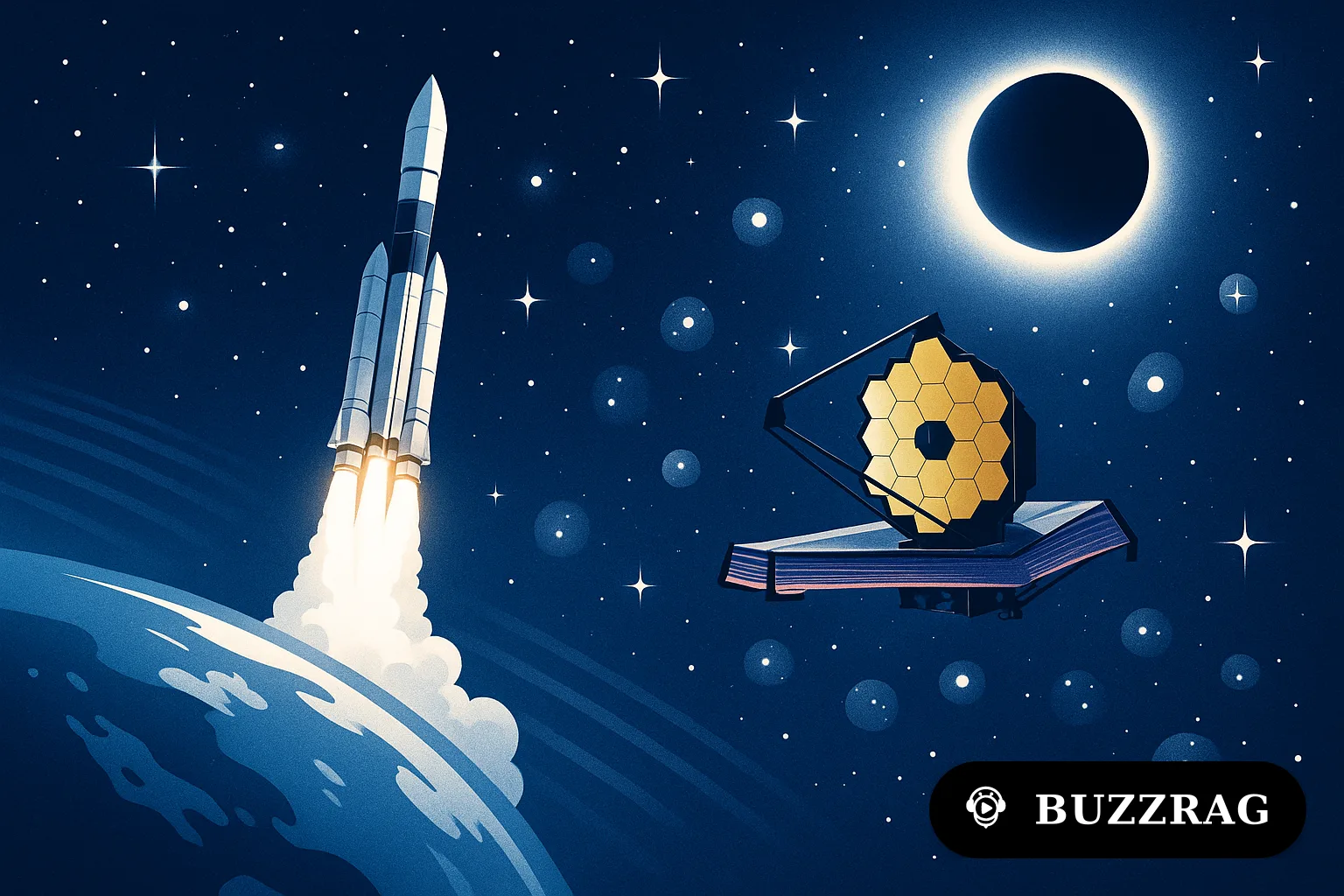
Today's science headlines are dominated by space exploration and celestial phenomena. SpaceX continues its ambitious projects with successful launches and engine tests, while the James Webb Space Telescope offers a glimpse into the distant future of our solar system.
SpaceX Launches 24 Starlink Satellites
On July 1, 2026, SpaceX successfully launched a Falcon 9 rocket carrying 24 Starlink satellites from Vandenberg Space Force Base in California. This mission marks a continued effort by SpaceX to expand its satellite internet constellation, aiming to provide global internet coverage.
The launch is part of SpaceX's aggressive schedule to deploy thousands of satellites into low Earth orbit. Starlink's expansion is seen as a pivotal move in bridging the digital divide, particularly in underserved regions. Critics, however, continue to express concerns about space debris and the impact on astronomical observations.
As SpaceX plans more launches, the balance between technological advancement and environmental stewardship remains a key focus. Observers are keenly watching how regulatory bodies will respond to the increasing number of satellites in orbit.
SpaceX Prepares Starship for 13th Test Flight
In preparation for its 13th test flight, SpaceX conducted a full-minute ignition of all six Starship engines at the Starbase facility. This rigorous testing is crucial as SpaceX aims to ensure the reliability and safety of its next-generation spacecraft.
Starship, designed for missions to the Moon and Mars, represents a significant leap in space exploration capabilities. Each test brings SpaceX closer to its goal of making space travel more accessible and sustainable. The test was successful, showcasing the engines' capacity to perform under stress.
The space community eagerly anticipates the upcoming test flight, which will provide further insights into the vehicle's performance and potential for deep space missions. Success in these tests could redefine the future of interplanetary travel.
Celestial Celebrations for America's 250th Birthday
As America approaches its 250th birthday, stargazers are turning their eyes to the skies to celebrate. Key night sky targets include the Apollo 11 landing site, the cosmic Eagle, and the North America Nebula, offering a unique celestial tribute.
These targets symbolize milestones in American space exploration and natural beauty visible from Earth. Observing these celestial phenomena provides a moment of reflection on the nation's achievements in space and the role of astronomy in understanding our universe.
Events like these spark renewed interest in astronomy and inspire future generations to explore the cosmos. As the country commemorates its past, the focus also turns to future space endeavors and the ongoing quest for knowledge.
James Webb Telescope Reveals Solar System's Future
The James Webb Space Telescope has captured an intriguing exoplanet orbiting a dead star, offering a glimpse into the possible fate of our solar system. This observation is akin to using a time machine to peer into the distant future.
The exoplanet's orbit around a white dwarf suggests that some planetary bodies can survive the death throes of their stars. This discovery is critical for understanding the long-term evolution of planetary systems and the potential habitability of planets around dying stars.
As astronomers analyze these findings, they provide valuable context for predicting the eventual fate of Earth and its neighbors. The knowledge gained from such observations enriches our understanding of the universe's lifecycle and our place within it.
Understanding the Optics of Shadow Bands
A new study published on arXiv explores the optics of shadow bands, those mysterious light and dark patterns seen before and after a solar eclipse. The research presents a geometric-optical solution, suggesting that the Sun's extended structure could be responsible for this phenomenon.
Despite centuries of reports, shadow bands have remained largely enigmatic. The study provides a plausible explanation, likening them to a celestial analogue of Young's interference patterns. This understanding could enhance our predictions and observations of eclipses.
While the findings are still in the preprint stage, they hold promise for demystifying a long-standing astronomical puzzle. Further research and peer review will be crucial in validating these conclusions.
As SpaceX moves forward with its ambitious space missions, the scientific community remains focused on understanding both the immediate and long-term implications of these advancements. Looking ahead, the interplay between space exploration, technology, and ecological responsibility will shape future narratives.