BuzzRAG Culture Desk — 2026-10-23

Curated by AI. Mateo Ruiz, Arts & Culture Editor
Today’s culture conversation moves between the dancefloor and the screen, asking who gets to shape shared spaces and whose work receives recognition. A major music award sits alongside artist-led reflection, experimental releases and a reminder of how performers become part of the cultural landscape.
On the dancefloor, who gets to set the rules?
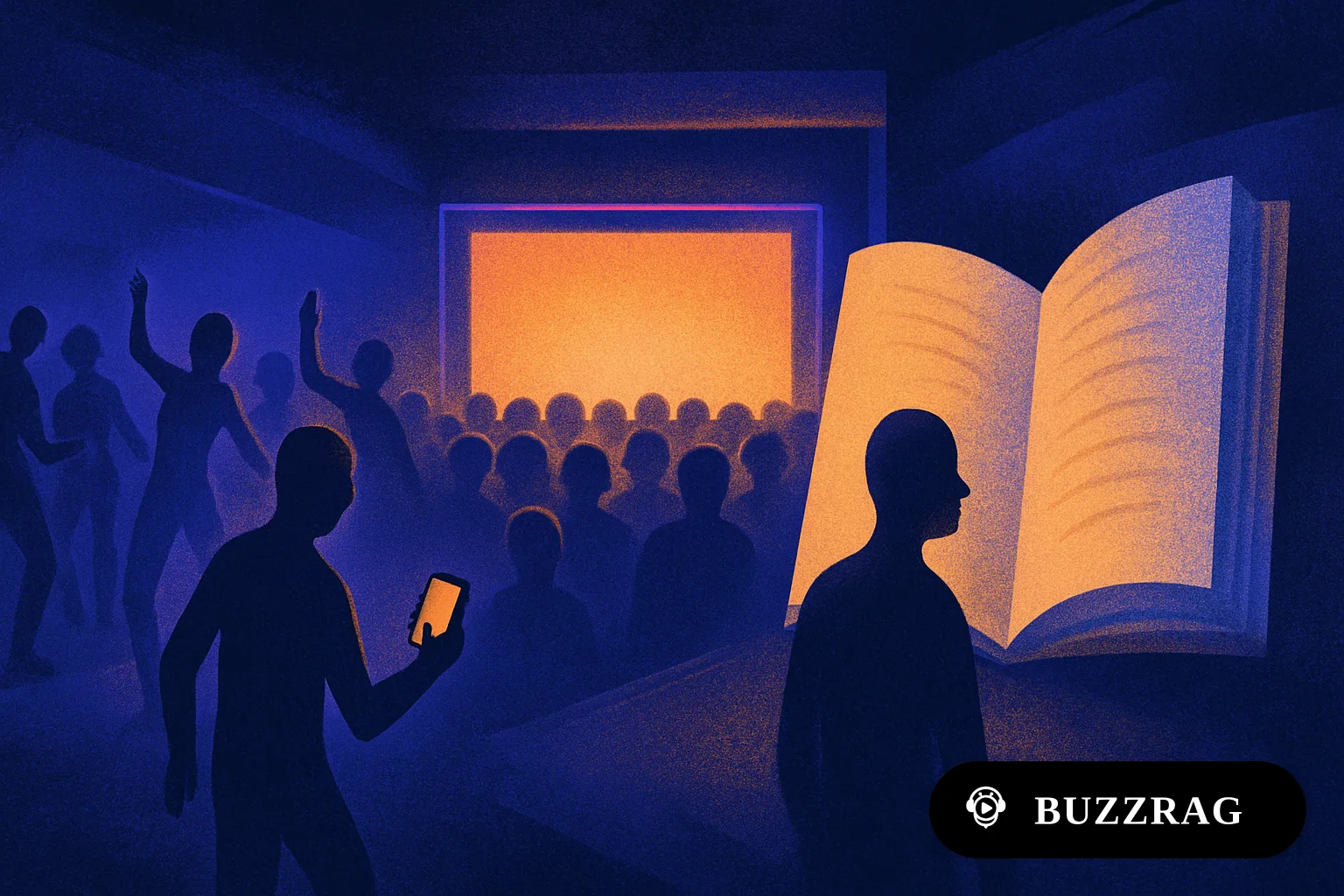
A debate about club etiquette has grown beyond a viral plea to stop talking during DJ sets. DJs and dancers are weighing how phones, conversation and drug use are changing the experience of being in a room together—and whether the dancefloor should be treated as a protected space or an open social one.
The argument, sparked by DJ Jane Fitz ahead of the Houghton festival, touches a familiar tension in nightlife: clubs promise collective release, but no two people arrive with the same idea of what a night out should be. Calls for more attentive listening can defend the music and the people who make it; they can also risk turning an informal scene into a test of who belongs. The harder question is how to preserve room for dancing without pretending that a club has ever been separate from the messy social life around it.
Sophie Sleigh-Johnson revisits ‘The Indoor League’
Writer Sophie Sleigh-Johnson turns her attention to The Indoor League in a new essay for The Quietus’s “Low Culture” series. The title alone points toward a subject that sits outside the usual prestige canon, a useful change of scale in a cultural conversation often dominated by the latest supposedly essential release.
The piece’s appearance in a series devoted to low culture invites readers to consider how taste gets ranked, and what those rankings leave out. That is not simply a case for treating every old or overlooked entertainment as a hidden masterpiece. It is a chance to look at the habits, pleasures and assumptions carried by popular forms—and at how critics can approach them without either sneering or forcing them into high-art respectability. The essay makes an unlikely subject a prompt to take everyday culture seriously on its own terms.
Shit and Shine return with ‘0 aa Riot’
The Quietus has brought attention to 0 aa Riot, a new release from Shit and Shine. The post’s sparse presentation offers little detail about the record itself, so the notable development here is the arrival of another work under a project name associated with music that sits beyond tidy genre boundaries.
That kind of release asks listeners to meet it without relying on a familiar chart narrative or a neat critical label. Experimental music can be discussed as a niche pursuit, but its value also lies in the permission it gives artists to make the form strange, unruly or difficult to classify. The useful next step is to hear how 0 aa Riot works on its own terms: what sounds it puts in collision, and whether that friction feels like provocation, play or something less easily named. For now, the review’s visibility is an invitation to listen rather than a verdict.
Sandra Hüller on success, uncertainty and the work
Sandra Hüller reflects on a year in which she has become a presence across several of its most prominent films, while resisting the idea that this makes her “someone special.” In conversation about the new film Fatherland, she discusses damaged dreams, Hollywood’s appetite for feelgood stories and the possibility—still uncertain—of appearing in a major superhero production.
That mix of candour and ambiguity is more revealing than a standard career victory lap. Hüller’s recent visibility raises a familiar question about film culture: how does an actor retain a sense of artistic agency when the industry increasingly frames performers as marketable events? Her interview puts the focus back on the person doing the work, not just the roles or the scale of the projects. With several high-profile appearances in play, her choices—and the contrasts between the films—could say as much about the year’s cinema as any single breakthrough narrative.
Raye takes the 2026 Mercury Prize
Raye has won the 2026 Mercury Prize, beating a field that included Paul McCartney, Olivia Dean, Jade and Nia Archives. The result gives one of Britain’s most watched music awards a headline moment that cuts across generations and styles, putting a familiar songwriting figure and several newer voices in the same conversation.
A prize can’t settle the argument over what the best album of a year is, but it does shape which work gets a fresh hearing. Raye’s win also lands in a pop landscape where artists increasingly move between musical traditions rather than fitting one clean category. The wider value of the shortlist is its range; the next test is whether the award brings listeners to the other nominees as well as to the winner. For the Mercury, influence is measured not only by the announcement-night result, but by what people choose to play afterward.
Tom Skerritt, a familiar face across screen generations, dies
Actor Tom Skerritt has died, leaving behind a screen career shaped by roles as fathers, police officers and commanding figures. Viewers may remember him as Captain Dallas in Alien, Viper in Top Gun or the small-town sheriff at the center of the television series Picket Fences—parts that made him a recognisable presence across film and television.
That kind of career is easy to underestimate because it is built not on one defining image but on a steady ability to anchor an ensemble. Skerritt often supplied authority and texture around the lead, helping make fictional institutions and families feel lived in. His varied credits also trace how screen storytelling changed across decades and formats, from cinematic spectacle to long-running television. A retrospective of his work is a reminder that cultural memory belongs not just to stars at the center of the frame, but to the performers who made the worlds around them convincing.
‘The Cycle’ offers a new horror-thriller scare
The horror thriller The Cycle, written and directed by Jordan Downey, has drawn a strong response from Film Threat, which describes it as an effective fright. The review’s central endorsement is clear, though the available details offer little about the story or the particular choices that make the film work.
Horror often thrives on that gap between what can be explained and what audiences feel in the dark. A positive notice is a starting point, not a substitute for seeing how the film builds tension, uses its setting or gives its characters room beyond the scares. The more telling measure will be whether viewers respond to its craft as well as its jolts—and whether it finds an audience beyond genre devotees. For a crowded release landscape, a compact, independent thriller can make its mark by giving horror fans a distinct experience rather than simply repeating familiar beats.
The next cultural test is whether this week’s attention turns into deeper listening, viewing and conversation: across a full Mercury shortlist, an experimental release, or a club night shaped by the people in the room. Watch how artists and audiences negotiate the space between shared experience and individual taste.