BuzzRAG Daily Digest — 2026-10-23

Curated by AI. Callum Pierce
Today’s mix ranges from long-view climate science to intimate questions about the places people live, gather and create. Meanwhile, deep-space imagery and new research into the Sun’s magnetic cousins offer reminders that some of the biggest stories unfold far beyond everyday view.
A 35-year satellite record puts El Niño in perspective
A 35-year record of satellite altimetry is giving scientists a way to compare this year’s El Niño with some of its strongest predecessors. Rather than treating the event as an isolated weather headline, the long view can show how its evolving ocean patterns line up with earlier episodes.
Altimetry satellites measure changes in sea-surface height, offering a broad view of ocean conditions that helps researchers track the movement and buildup of warm water associated with El Niño. Comparing decades of observations can reveal similarities and differences among events, while helping scientists test how well their explanations and forecasting tools hold up. The record is a comparison, not a verdict on what every region will experience: El Niño’s effects vary across the globe and interact with other climate influences. As analysis develops, the key questions will be how this event’s ocean signature changes over time and what those measurements imply for seasonal forecasts.
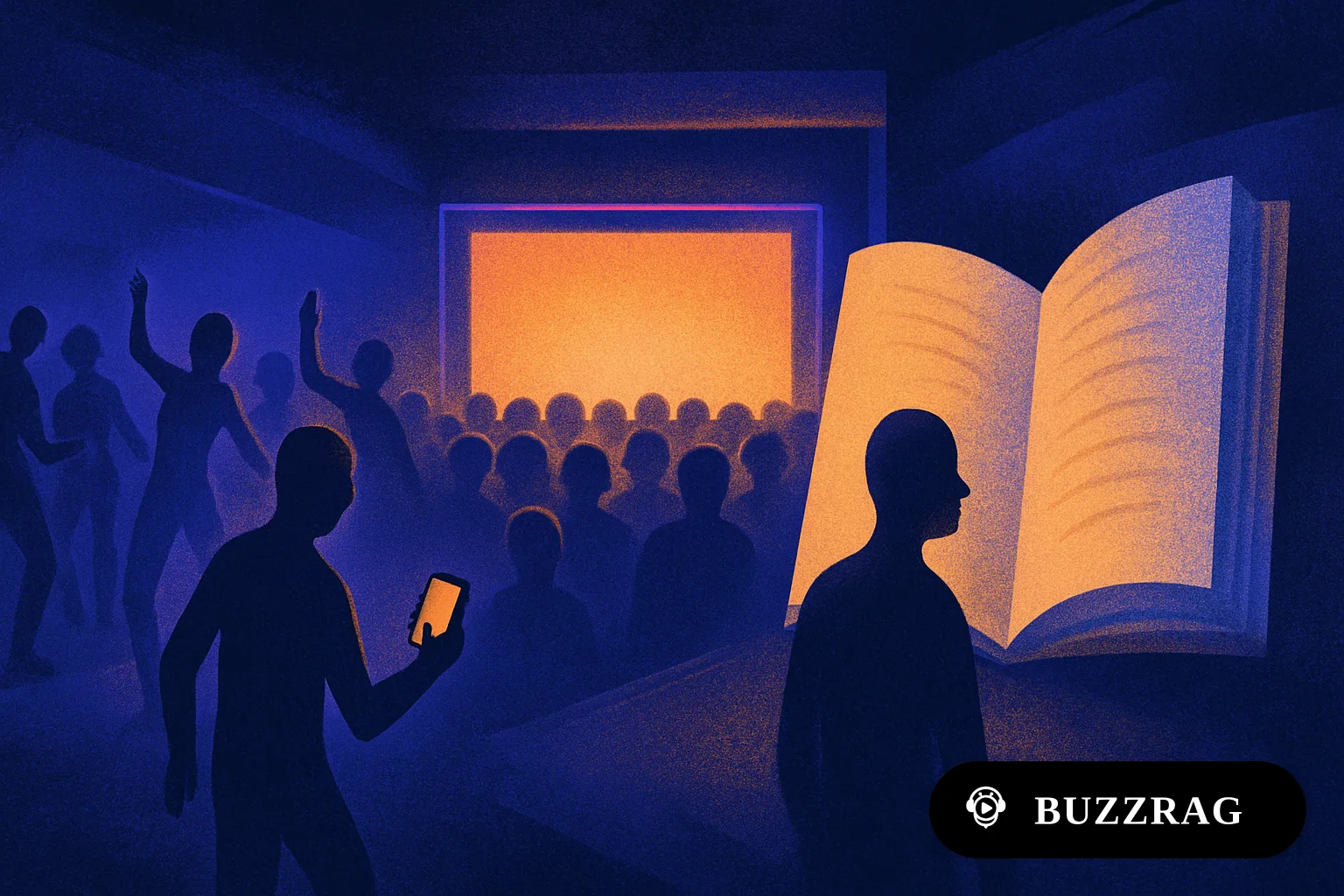
Can club nights reclaim the dancefloor?
A debate over talking on the dancefloor has grown into a broader argument about what people want from a night out. DJs and dancers are weighing whether chatter and phone use are disrupting the shared focus of a club, after a social-media appeal for punters to stop talking helped bring the issue into view. The discussion also touches on changing drug use and the influence of online performance on how people behave in a room.
There is no single rulebook for a good club night. Some people regard immersion in the music as central; others see conversation and social connection as part of the experience, not an intrusion. Phones can document a moment while also pulling attention away from it, and drug use raises separate questions about safety and culture. The disagreement puts pressure on promoters and venues to decide whether to set expectations or leave the atmosphere to the crowd. The underlying question is less about enforcing silence than about who gets to define the dancefloor—and how a room can make space for different ways of participating.
An essay turns its attention to The Indoor League
A new Low Culture essay by Sophie Sleigh-Johnson takes The Indoor League as its subject. The available listing identifies the work and its author but offers little detail about the essay’s argument, so the piece arrives as an invitation to explore a cultural object that has prompted a dedicated critical reading rather than as a fully explained thesis.
The title suggests an interest in the meanings attached to indoor recreation, competition or spectacle, but the listing does not establish which themes the essay pursues or what conclusions it reaches. That distinction matters: criticism is not simply a summary of its subject, and the essay’s value may lie in the particular connections it draws. Readers approaching it can look for the details that shape Sleigh-Johnson’s interpretation and ask what the subject reveals about the culture around it. With no further context in the supplied listing, the safest account is also the most useful one: this is a new critical essay, and its specific claims are best assessed in the full text.
Inside London’s £2,000 one-bedroom rent
A BBC report asks London residents what they pay for their homes, foregrounding one stark figure: £2,000 for a one-bedroom property. The format puts individual experiences at the centre of a citywide housing debate, turning an abstract rent level into a monthly cost that renters have to weigh against income, location and the practicalities of finding somewhere to live.
A single account cannot represent every borough or household, and the supplied report summary does not specify the renter’s neighbourhood or circumstances. Still, personal rent figures can make the range of London housing costs more tangible than a headline average alone. They also invite questions about what tenants receive for the price, how much choice they have, and what compromises are required to stay in the capital. The wider affordability picture depends on more than one bill: wages, household size, transport costs and the supply of available homes all shape what a rent means in practice. The report offers a human-scale entry point into those larger pressures.
An octopus survives a hunt gone wrong
A new wildlife sequence follows an octopus that escapes death after a hunt goes wrong. The scene is part of a forthcoming instalment of a celebrated ocean documentary series, with the dramatic turn placing the animal’s survival—not simply the pursuit—at the centre of the moment. The brief description does not identify the hunter or explain the exact sequence of events.
Encounters like this can show how quickly the balance between predator and prey changes underwater. An animal that appears to be in danger may still find an opening to escape, while a failed hunt can expose the risks faced by both sides. The sequence also offers a reminder that marine life is not a simple chain of predictable victories: timing, terrain and chance can alter the outcome. Its strongest contribution may be the close observation itself, letting viewers follow an individual animal through a tense episode. The wider series aims to bring such encounters to a broad audience, though the snippet provides no further details about the location or species involved.
Fourteen Italian startups draw investor attention
A Sifted feature gathers 14 early-stage startups in Italy that venture capitalists say are worth watching. The list frames the country’s young businesses through the perspective of investors, giving readers a snapshot of where experienced funders see potential across an ecosystem that can be less visible internationally than Europe’s largest startup hubs.
The supplied listing does not name the companies, sectors or investors, so it is not possible to assess the selections individually or infer a shared investment thesis. A “watch” list is a signal of attention, not proof that a company will succeed: early-stage firms face uncertain markets, competition and the challenge of turning a promising idea into a sustainable business. The feature is most useful as a starting point for questions about which industries are attracting capital and what conditions help Italian founders grow. Readers should look to the full report for the criteria behind the choices, and for whether the VCs’ selections reflect a broad range of businesses or a narrower set of trends.
Shit and Shine return with ‘0 aa Riot’
The Quietus listing spotlights “0 aa Riot,” a release by the experimental music project Shit and Shine. The supplied material provides the title and an accompanying image, but no review excerpt, track details or account of the sound. That makes the release itself the news here, while leaving its musical character open for listeners to discover rather than inviting assumptions from the striking name alone.
For an adventurous project, a new recording can be a chance to push at the borders between noise, rhythm and song, but the listing does not confirm how this one does so. Any description of its instrumentation, structure or mood would go beyond the information available. The more useful question is how the release fits into the group’s ongoing work and what choices listeners will hear across it. The title may signal an irreverent approach, yet the music—not the name—will determine the experience. Readers looking for a critical judgment will need the full review or recording; for now, the listing marks a new entry in the project’s catalogue.
Andromeda appears in a Southern Hemisphere spring sky
The October 23 Astronomy Picture of the Day turns its lens toward Andromeda in Southern spring. The daily feature pairs a celestial image with an explanation from a professional astronomer, offering a brief point of entry into the night sky. The supplied listing identifies the subject and seasonal setting, but does not describe the image’s equipment, exposure or specific visual details.
Andromeda is a nearby large galaxy and a familiar target for observers, but what can be seen depends on conditions, location and the instrument used. A seasonal framing also makes the picture a reminder that the sky changes with the observer’s position on Earth: the same objects rise and set at different times across the year and appear in different parts of the sky in each hemisphere. The daily format can turn a single image into a prompt for learning, whether the explanation focuses on the galaxy itself or on how it was captured. The full caption is needed for those particulars; the headline alone establishes a southern-sky perspective on a distant object.
Sandra Hüller on fame, damaged dreams and a busy film year
In a new interview, actor Sandra Hüller reflects on being at the centre of several major films. The conversation begins with her latest work, Fatherland, which takes her back to a divided Germany, and ranges across damaged dreams, feel-good Hollywood stories and the possibility of a role in an upcoming superhero production. Hüller’s remark that she struggles to see herself as someone special adds a note of self-questioning to a year defined by unusually high visibility.
The interview sets the public image of a sought-after performer against a more ambivalent account of recognition. Hüller is described as an actor often asked to convey self-possession on screen, while the article foregrounds moments that complicate that impression. Her comments also point to the different demands of projects that revisit history, pursue broad entertainment or invite speculation about a high-profile franchise. The supplied excerpt does not establish which future roles are confirmed, so the possible appearance remains just that. The conversation’s appeal lies in the contrast between a packed professional calendar and an actor’s own uncertain relationship with fame.
A magnetic-reconnection model makes testable predictions for cosmic filaments
A new astrophysics paper develops observational predictions for filaments formed through collision-induced magnetic reconnection, a model that gives magnetic fields an active role in shaping these structures. The work aims to make the proposal more testable with data from modern telescopes, moving the discussion from a general formation mechanism toward features observers might be able to look for.
Magnetic reconnection occurs when magnetic-field configurations change and release energy; in this model, collisions help drive the process involved in forming filaments. The abstract says the paper identifies two types of kinematic features, but the supplied excerpt cuts off before describing them, so their details cannot be summarized here. Predictions that can be compared with observations are important because they allow competing explanations to be assessed against evidence rather than plausibility alone. The next step is for astronomers to examine whether suitable observations show the proposed signatures and how consistently they appear. The paper offers a route to that test, not confirmation that the mechanism is responsible for every filament.
The common thread is the value of looking closer: at decades of ocean measurements, the norms of a crowded dancefloor, the cost of a home, or a fleeting encounter beneath the sea. Upcoming observations and fuller accounts will help distinguish what these signals reveal from what remains an open question.