BuzzRAG Culture Desk — 2026-10-22

Curated by AI. Mateo Ruiz, Arts & Culture Editor
Today’s culture conversation moves between music that tests the edges of form and screen stories asking what people owe one another. Across both, a shared question keeps surfacing: how do we find connection—whether through tradition, technology, satire or the melodrama of a long-running serial?
Shovel Dance Collective sets a communal course
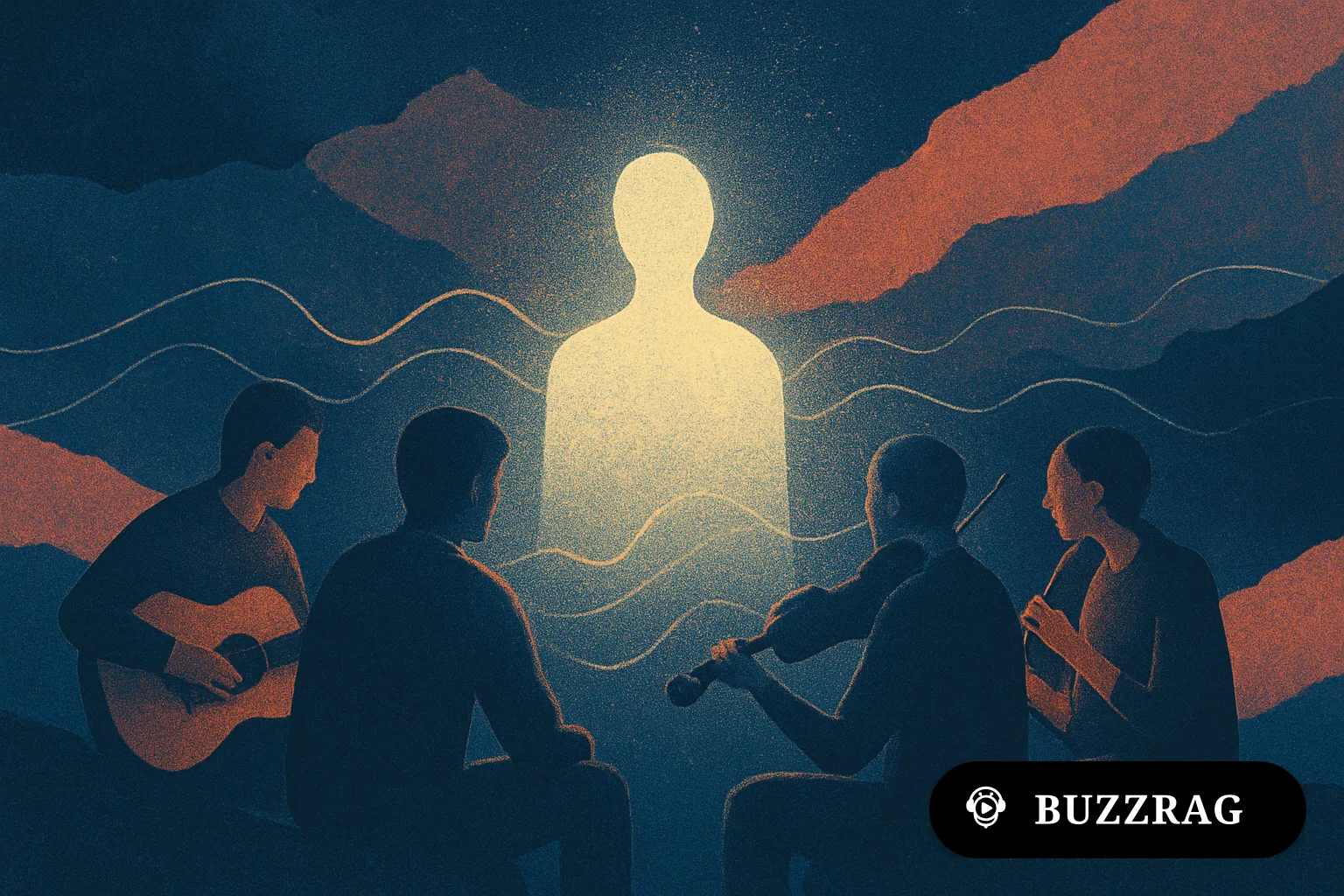
Shovel Dance Collective’s “Tally Ho! Hark Away! Everything in Readiness” arrives with a title that sounds less like a private confession than a call to assemble. The group’s collective identity is part of the invitation: the work’s framing points toward music made in company, with old-fashioned rallying language given a strikingly present-tense charge. The available coverage makes this a moment to listen for how the record’s character emerges from that shared voice rather than from any single front-person’s story.
That framing also opens a useful question about tradition: when musicians draw on inherited forms, are they preserving a fixed past or making it usable again? The title’s brisk, almost ceremonial language suggests readiness as both a mood and a challenge, a way of facing the present together. As listeners encounter the record, the interesting measure will be whether its collective energy feels like pageantry, protest, or something more intimate—and how those registers can coexist without turning folk practice into museum glass.
Reigns turns toward “Antigeist”
Reigns’ “Antigeist” is drawing attention as a new release, though the available listing offers little detail about its sound or making. That uncertainty makes the title itself a suggestive point of entry: it puts “geist”—spirit, atmosphere, or the animating force of an era—under pressure, without settling what the opposition in “anti” is meant to resist. The record’s first encounter is therefore less a ready-made thesis than an invitation to hear how the music fills in its own terms.
A title like this can set expectations before a note is played, especially for listeners drawn to work that sounds wary of easy categories. But the more compelling test is musical: whether Reigns builds an atmosphere that complicates the title, sharpens it, or leaves it deliberately unresolved. In a release landscape crowded with instant explanations, a little opacity can be productive. The listening question is not simply what “Antigeist” means, but whether the work makes that meaning felt through its choices of texture, pace and emotional temperature.
Taika Waititi takes on love and loss in “Klara and the Sun”
Taika Waititi has adapted Kazuo Ishiguro’s novel “Klara and the Sun” for the screen, bringing a story about an ailing adolescent and her robot companion into the conversation at the London film festival. The film’s central relationship gives an old speculative-fiction question an intimate scale: can a constructed being offer care, and what does that care mean to the people around it? Waititi’s own interview, with its joking talk of robot children and a “cheese-o-meter,” suggests a director willing to mix levity with the story’s heavier concerns.
The novel’s premise puts technology alongside love and grief rather than treating it as a separate gadget problem. That shift matters: artificial intelligence becomes a lens on human dependence, vulnerability and the ways people project hope onto what they make. The adaptation’s challenge is to preserve that moral ambiguity without reducing the robot to a novelty or the family’s pain to a lesson. The film’s reception will turn on whether its tonal balance can make room for tenderness, unease and humor at once.
Zoumer previews “Life Delay” with a new collaboration
Danish-Algerian pop experimentalist Zoumer, the project of Yasmina Derradj, has announced the EP “Life Delay” and shared its first single, “Round and round,” featuring mishmish. The announcement gives listeners an early point of entry into a release whose title suggests time slipping, stalling or looping back on itself. A featured collaboration also makes the single a small introduction to the social life of the project, not just a preview of its upcoming material.
That mix of pop and experimentation can make an EP announcement feel like more than a release-date marker: it signals how an artist wants familiar song forms to behave, and who gets to shape them. The title “Life Delay” leaves room for the record to approach interruption as frustration, drift or possibility; the first single will begin to establish which direction it takes. For now, the useful thing to watch is how Derradj’s collaboration with mishmish frames the EP’s wider emotional and musical world, and whether the project turns its sense of delay into momentum.
Dis Fig finds tenderness amid the wreckage
Dis Fig’s “What To Make Of These Mortal Hands” is being described as a cinematic work of extremes, one seemingly built to document collapse while searching for tenderness inside the damage. That pairing is more compelling than catastrophe for its own sake: the title puts attention on mortal hands, suggesting bodies and human agency even as the work faces a world coming apart. The album’s scale, as presented in the review, seems to make room for both force and fragility.
“Cinematic” can mean expansive, but it can also mean that sound is organized around scenes, shifts and emotional consequence. Here, the important tension is whether the extremes overwhelm the moments of care or make them more vivid. A work about collapse risks turning ruin into spectacle; tenderness offers another way to look, one attentive to what survives and who is still reaching for whom. The record’s lasting impact may depend on how convincingly it keeps those impulses in conversation, rather than treating hope as a tidy escape from the wreckage.
Sacha Baron Cohen argues for satire’s right to offend
Sacha Baron Cohen has defended satire and the right to offend while discussing his new film built around Ali G, describing the character as a vehicle for exposing prejudice, bias and stupidity. He says the project aims to confront audiences with the dangers of fanaticism and conspiracy theories. The claim puts a familiar comic defense back on the table: that provocation can reveal assumptions people would rather leave unexamined, rather than simply offering the comfort of a joke at someone else’s expense.
But intent is only one part of satire’s test. The other is where the joke lands, who has the power to answer back, and whether an audience is being asked to examine prejudice or invited to enjoy it at a distance. Baron Cohen’s defense makes those questions central to the film’s reception, especially in a media climate where conspiracy narratives can travel as entertainment and political persuasion at once. The debate to watch is not whether satire should be allowed to offend, but whether this particular work makes its target clear—and whether its method can still cut through the noise.
A job offer sparks “General Hospital” exit speculation
A surprise job offer for Molly Lansing-Davis has prompted viewers of “General Hospital” to wonder whether Molly and Cody Bell may be leaving the show. The speculation centers on performers Kristen Vaganos and Josh Kelly, but the available report does not confirm an exit; the storyline has simply given fans a fresh reason to read the characters’ next moves as possible signs of change. That distinction matters in a genre where a single plot turn can carry both emotional weight and production-level uncertainty.
Soap audiences are unusually skilled at treating narrative details as clues, and that interpretive game is part of the form’s appeal. A job opportunity can be a character milestone, a device for reshuffling relationships, or a genuine opening for a performer to depart—but without confirmation, none of those readings should be treated as fact. The story’s next beats will determine whether the offer becomes a turning point or a temporary source of suspense. For now, the fan conversation shows how deeply viewers invest in the continuity of a serial world and the people who inhabit it.
The next test is whether these works turn their big themes—collective memory, machine-made intimacy, social fracture—into experiences that feel particular rather than programmatic. Watch for the artists’ own choices to complicate the headlines, and for audiences to decide which provocations, collaborations and fictional departures actually resonate.